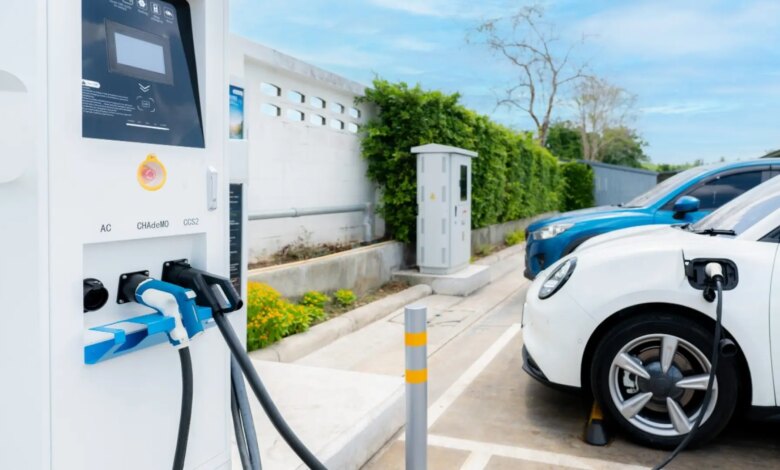
The advent of ultra-fast charging stations is radically changing how electric vehicles are used. Long charging stops are becoming a thing of the past: modern models can replenish their batteries in a time comparable to a regular gasoline refueling. This opens up new opportunities for long-distance travel and makes electric vehicles far more appealing to a wider audience.
In recent years, automakers have actively invested in battery development and infrastructure. Chinese companies such as BYD are already implementing stations where charging takes just a few minutes. As a result, drivers no longer have to worry about lengthy stops on the road and can plan their routes as freely as owners of internal combustion engine cars.
Technology and records
BYD, a leader in battery technology, has introduced a platform capable of operating at up to 1,000 volts and 1,000 amps. This enables a range of up to 400 kilometers after just 5 minutes of charging. The company recently announced a new version where power has increased to 1,500 kW. Such charging speeds require special liquid-cooled cables weighing just 2 kilograms. Already, 200 stations with 1,000 kW capacity are operating in China, and by year’s end the number is expected to reach 15,000, with new sites offering even higher power.
Such figures are still rare in Europe, where most charging stations are limited to 300 kW. However, Chinese manufacturers are not stopping at this point and continue to expand the network, making fast charging available not only in major cities but also in smaller towns.
Chinese and European solutions
China leads not only in battery manufacturing but also in controlling the extraction and processing of rare earth metals. This gives local companies an edge in developing new technologies. For example, Xpeng offers models with 80.1 kWh batteries that can be charged from 10 to 80% in just 12 minutes at up to 525 kW. These figures make electric vehicles convenient for daily commutes and long-distance travel.
European brands are keeping up as well. Polestar, part of the Geely Group, recently introduced the XFC technology developed together with the Israeli company StoreDot. During tests, a Polestar 5 prototype charged from 10 to 80% in 10 minutes, with power reaching 370 kW. The use of silicon cells instead of traditional ones enabled a steady charging speed throughout the process.
Market impact
Reduced charging times are changing not just drivers’ everyday habits, but also the structure of the market. Now, long-distance trips in electric vehicles no longer require complex planning—just a few short stops of 5–10 minutes are enough. This is especially important for those who often travel between cities or work in transportation.
Interestingly, these changes are already affecting sales. In China, for example, electric cars are becoming market leaders, and affordable models like the Geely EX2 are causing a stir not only among local buyers but also Europeans. This is evidenced by a sharp increase in demand for electric vehicles in the Middle Kingdom, which is already influencing the strategies of European manufacturers.
In the coming years, competition between brands is expected to lead to even faster and more affordable solutions. Many companies are already investing in infrastructure development to provide drivers with maximum convenience and freedom of movement.
The future of charging
The transition to ultra-fast charging requires not just new technologies, but also large-scale investment in the station network. Chinese manufacturers are building multi-level infrastructure: main stations, auxiliary points, and peripheral facilities. This allows coverage of both major cities and remote areas where charging used to be a problem.
In Europe, it is still difficult to find stations with capacity above 300 kW, but demand for such services is growing. More and more drivers are choosing electric vehicles not only for savings but also thanks to the convenience of new technologies. In the near future, expect new records and an expanding network of fast-charging stations across the continent.
BYD is one of the world’s largest manufacturers of batteries and electric vehicles. The company actively invests in developing new technologies and is expanding its network of charging stations both in China and abroad. By controlling the entire production chain—from raw material extraction to vehicle assembly—BYD can implement innovations faster than its competitors. This enables the brand to maintain its market leadership and set new standards for the entire industry.