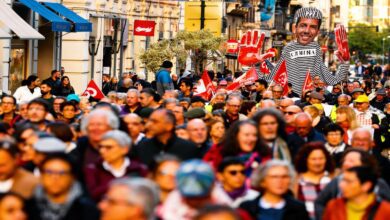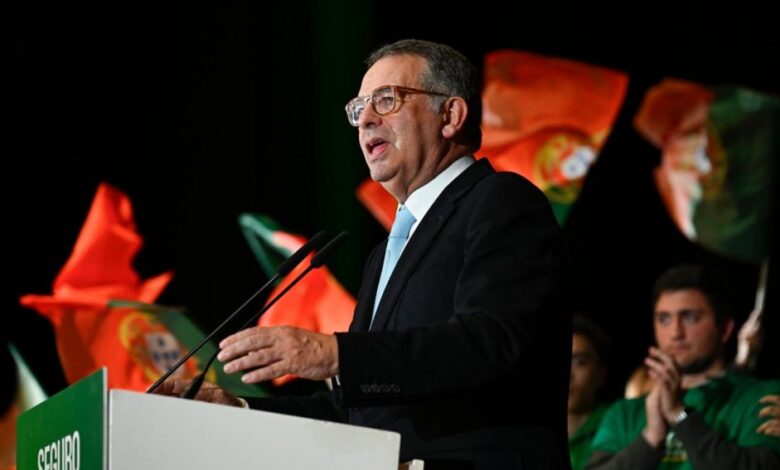
Portugal finds itself at the center of a political intrigue: the presidential election held on January 18, 2026, failed to deliver an outright winner. For the first time in years, the race for the country’s highest office is so fiercely contested that the presidency will be decided in a runoff. Two candidates with sharply opposing views have made it to the final round—socialist António José Seguro and far-right leader André Ventura from the Chega party. Both secured the support of millions of voters, but neither crossed the threshold needed to claim victory in the first round.
The situation is further complicated by the fact that 11 contenders ran in this election, leading to a highly uneven distribution of votes. However, after 99% of ballots were counted, it became clear: Seguro and Ventura would move on to the next stage. In Lisboa, only a few thousand votes remained uncounted, but they could not alter the balance of power.
Two front-runners
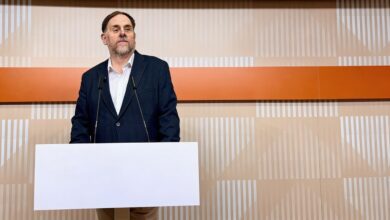
António José Seguro, representing the Socialist Party, captured 31% of the vote. His main rival, André Ventura, received 24%. The remaining candidates—including João Cotrim de Figueiredo, Luís Marques Mendes, and Henrique Gouveia e Melo—did not cross the 15% mark.
Interestingly, after the preliminary results were announced, Gouveia e Melo personally called Segura to congratulate him on his success. Meanwhile, some of the defeated candidates have already begun to voice their support for one of the frontrunners. For example, Poiares Maduro openly stated that in the second round he will vote for Segura and criticized Ventura’s strategy.
Turnout and Mobilization
These elections will be remembered not only for the clash between the left and the right, but also for record turnout. By midday, polling stations were already busier than during previous elections at the same time. The final numbers surpassed the figures seen in the last twenty years. The Portuguese seemed to feel that this time, their vote could truly change the course of history.
This surge in activity is explained not just by the intensity of the political struggle, but also by the sense that the country is on the brink of change. Many voters came to the polls for the first time in years, and some — for the first time ever. This came as a real shock to the political elite, which had grown accustomed to apathy and low turnout.
A Divided Country
Since 1974, Portugal has not seen such an unpredictable presidential election. At the start of the campaign, five candidates had a realistic chance of reaching the second round. In the end, the race narrowed to a confrontation between traditional social democracy and the new right-wing populism.
André Ventura, leader of Chega, has become a symbol of the protest electorate in recent years. After the 2025 parliamentary elections, his party emerged as the main opposition. Now, Ventura challenges not only his political rivals but also the entrenched system. His supporters are convinced that the country needs radical change, while traditional parties have reached their limit.
Symbols and Reality
Although the president in Portugal does not hold executive power—that role belongs to the prime minister—the position is far from merely ceremonial. The head of state can dissolve parliament and acts as a guarantor of political stability. As a result, this election carries special weight: it reflects not only the competition for the office, but also deep social and political divisions.
A sense that the old rules no longer apply is growing in society. The rise of the far right, disenchantment with the established parties, and the search for new leaders make this campaign stand out. Portugal faces a crossroads, and the second round will determine the direction the country takes next.
The European Context
These elections matter not only for Portugal itself. They have become a kind of test for European social democracy as a whole. Can a left-wing candidate hold their ground amidst the rise of populists? Or will the country follow the path of others, where new forces are pushing traditional parties aside?
One thing is clear: Portugal’s political landscape is changing before our eyes. The second round promises to be just as intense as the first. Ahead lies a battle that could mark the beginning of a new era for the country and the entire region.