East Africa has once again become the focus of anthropological research: an international team of scientists has presented compelling evidence for the existence of yet another species of ancient hominins that inhabited the region more than three million years ago. New discoveries in the Burtule area shed light on the mystery of the unusual foot found in 2009 and offer a fresh perspective on human evolution.
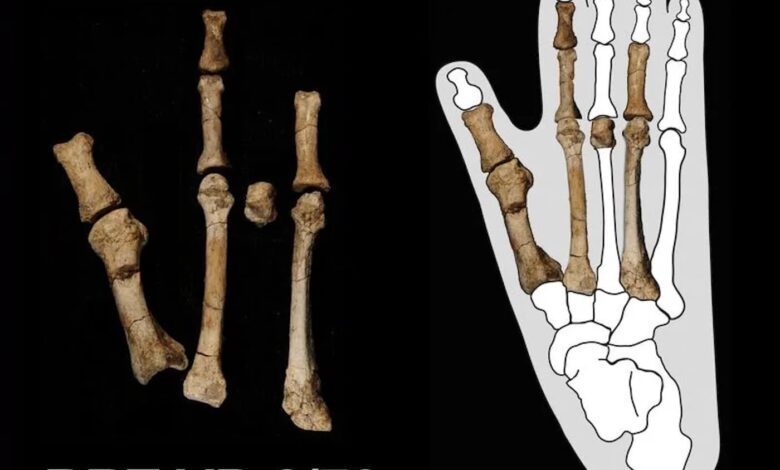
For a long time, it was believed that during the era of Lucy—the famous Australopithecus afarensis—only one species of our ancestors lived in the region. However, the discovery of a foot fragment with an opposable big toe cast doubt on this theory. The bone’s anatomy suggested an ability to climb trees, which contrasted with the known terrestrial lifestyle of Australopithecus afarensis, who walked confidently on the ground.
Unexpected findings in Burtule
In 2009, paleontologists in Ethiopia unearthed a foot fragment that immediately sparked debate within the scientific community. The fossil dated to the same era as Lucy, but its bone structure was different: the big toe was set apart from the rest, typical of ancient primates who spent much of their time in trees. This feature allowed them to grasp branches but made prolonged walking on the ground more difficult.
In the following years, scientists discovered fragments of jaws and teeth that led to the identification of a new species—Australopithecus deyiremeda. However, for a long time, it was not possible to prove that the mysterious foot and the discovered jaws belonged to the same individual. Skeptics pointed to a lack of sufficient material for definite conclusions, and the debate on species diversity during that period reached an impasse.
Comprehensive analysis of the remains
Recent excavations in the same area uncovered new fragments: researchers found parts of upper and lower jaws, as well as twelve individual teeth. Geological analysis showed the remains are about 3.4 million years old. This matches the dating of the previously discovered enigmatic foot.
Using computed tomography, scientists studied the structure of the teeth in detail. The results revealed a perfect match with those of Australopithecus deyiremeda. The size and shape of the canines and incisors drew special attention: they appeared more primitive compared to the corresponding teeth in Australopithecus afarensis. This allowed researchers to conclude that the remains indeed belong to a new species.
Diet and lifestyle of ancient hominins
To better understand their diet, researchers performed an isotope analysis of tooth enamel. The carbon content pointed to a diet consisting mainly of leaves, fruits, and nuts typical of forest ecosystems. This diet links Australopithecus deyiremeda to more ancient human ancestors—Ardipithecus and Australopithecus anamensis—who also preferred forest foods.
In contrast, Australopithecus afarensis, to which Lucy belonged, had already adapted to the open savannahs and included grasses in their diet. Their feet were more rigid and suited for long walks on the ground, indicating different survival strategies between the two species.
Coexistence without competition
Analysis of the findings showed that both hominid species lived in the same region at the same time, but did not interfere with each other. Australopithecus deyiremeda mostly inhabited forests, using their grasping feet to climb trees, while their neighbors, the Afar australopithecines, ventured into open areas and improved their upright walking skills.
This division of ecological niches allowed the two species to coexist without direct competition for food and territory. This discovery challenges previous ideas of linear human evolution and confirms that there were many parallel evolutionary branches in early hominid history.
Evolution: More Than One Path to Humanity
New evidence indicates that the evolution of human ancestors was a complex and diverse process. Different hominin species experimented with various ways of moving and finding food. Some retained the ability to climb trees, while others developed more upright walking. As a result, only one of these branches led to the emergence of modern humans, while the others disappeared, leaving behind mysterious traces in the form of bones and teeth.
If you didn’t know, Lucy is one of the most famous fossil remains of Australopithecus afarensis, discovered in 1974 in Ethiopia. Her skeleton became a symbol of anthropology and enabled scientists to study the anatomy of ancient hominins in detail for the first time. Lucy got her name from a Beatles song that researchers listened to during the excavation. The discovery of Lucy was a key moment in understanding human evolution and still inspires new scientific research today.