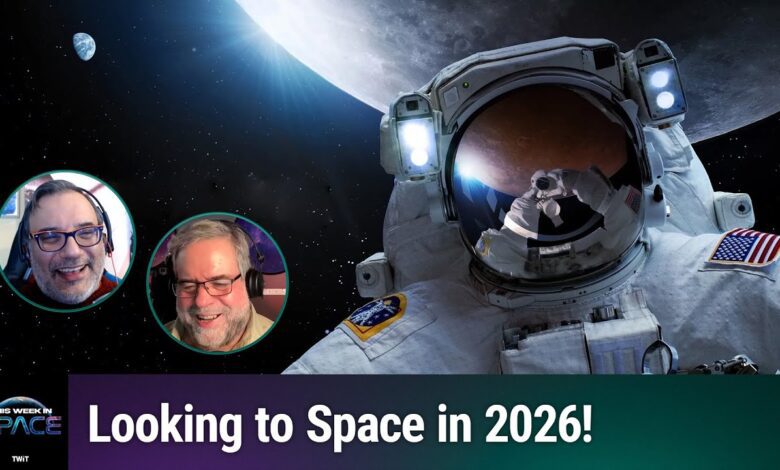
The year 2026 is already being called a landmark for global space exploration. For the first time in decades, humanity is preparing to send a crew to the Moon, while several countries and private companies are locked in a fierce race for supremacy in deep space exploration. Against this backdrop, the leadership of the world’s largest space agencies is changing, adding intrigue and unpredictability to an already eventful year.
All eyes are on the mission set to return humans to the Moon. After years of preparations and technical tests, the launch of a crewed spacecraft toward Earth’s satellite is scheduled for February. The mission is already being described as historic, since the last time anything similar happened was back in 1972. Despite a recent incident on the International Space Station, when one astronaut had to return to Earth early for medical reasons, NASA officials assure that plans for the lunar expedition remain unchanged.
The lunar race
While Americans prepare for their major comeback, China is wasting no time. They are finishing preparations to send an unmanned craft to the Moon’s south pole. This mission could be a breakthrough: if successful, China will gather unprecedented data on the Moon’s lesser-studied regions and strengthen its role in the lunar race. Meanwhile, the fierce competition is only fueling global interest, as what’s at stake is not just prestige but tangible resources that could reshape the future economy.
Meanwhile, budget debates for NASA continue in the US. Despite concerns, the agency’s funding is expected to remain at last year’s levels, enabling not only the continuation of current projects but also laying the groundwork for new, ambitious programs. This includes developing technologies for upcoming lunar landings and preparing for Mars missions.
Private initiatives
The year 2026 marked a turning point as private companies ceased to be mere contractors for state agencies. SpaceX, for example, is planning a series of test flights with its giant Starship vehicle. The company openly admits: the goal is not only to perfect reusable landing technology but also to ready the lunar module for Artemis III’s next mission. If these tests succeed, SpaceX could become a leading player in future lunar expeditions.
Boeing is keeping pace as well: this year, the company intends to relaunch its Starliner spacecraft, although this time without a crew. This step is needed to address technical issues identified in previous flights. A successful mission would return Boeing to the forefront of crewed spaceflight and make it a serious competitor not only to SpaceX but also to international firms.
Prospects for Mars
Plans to return samples from Mars, which until recently seemed realistic, are now under threat. The Mars Sample Return project, once highly anticipated, may be canceled due to technical and financial challenges. This decision has sparked heated debate within the scientific community: some argue that resources should be redirected to nearer-term goals, while others insist on continuing the exploration of the Red Planet at any cost.
Even without Martian samples, 2026 still promises to be a year rich in discoveries. New lunar missions, tests of next-generation spacecraft, and the launch of robotic probes to distant planets—all of this is shaping a unique landscape for contemporary space exploration, where the boundaries between government and private initiatives are gradually disappearing.
New leaders
This year, special focus is on the leadership transition at NASA. The new administrator, Jared Isaacman, has already established a reputation for making unconventional decisions and responding quickly to emerging challenges. Under his leadership, the agency is demonstrating flexibility and willingness to adapt—qualities crucial for remaining competitive in the evolving global space market.
Isaacman is betting on partnerships with private companies and international collaborators, as well as on the development of new technologies that will make space more accessible to all of humanity. His approach is already showing results: projects that recently seemed like science fiction are now becoming reality.
RUSSPAIN reminds that Jared Isaacman is an entrepreneur and pilot, founder of Shift4 Payments, and a participant in the world’s first fully private orbital mission, Inspiration4. His appointment as head of NASA came as a surprise to many, but it is precisely his experience and unconventional thinking that have allowed the agency to reach a new level of development. Isaacman actively supports the adoption of innovations and the expansion of international cooperation in the space sector.