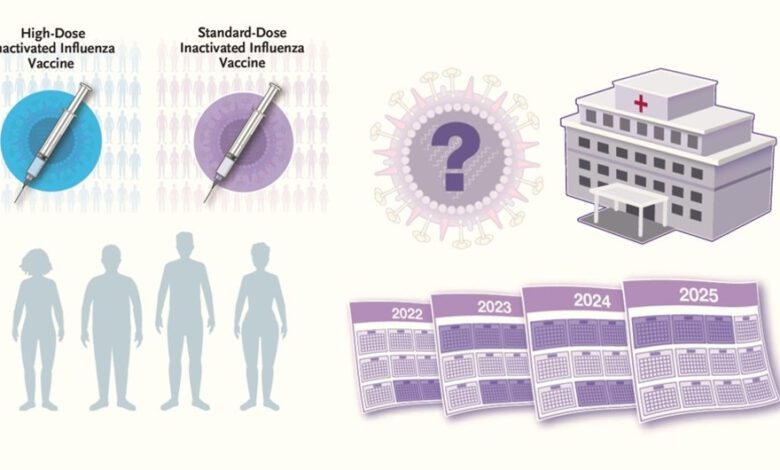
A large-scale study on the effectiveness of high-dose influenza vaccines in citizens over 65 has concluded in Spain. Over the course of three flu seasons, more than 330,000 elderly Spaniards received either the standard or the enhanced vaccine dose. The results were mixed: hospitalizations due to influenza decreased, but the risk of developing pneumonia remained virtually unchanged.
Seasonal flu causes hundreds of thousands of deaths worldwide each year, and in Spain, the elderly are particularly vulnerable. For them, standard vaccines are often not effective enough, which prompted researchers to seek new solutions. In recent years, pharmaceutical companies have offered vaccines with four times the usual amount of antigen. These enhanced drugs formed the basis for the Spanish experiment.
Study details
From 2022 to 2025, research participants received one of two vaccine versions: either the standard dose with 15 micrograms of hemagglutinin, or the high-dose version with 60 micrograms. Both groups were balanced by gender, age, and presence of chronic illnesses. The average age of volunteers was nearly 74, and half suffered from at least one chronic condition.
In each season, influenza type A virus predominated, allowing scientists to objectively assess the effectiveness of new vaccination approaches. Hospitalizations for flu or pneumonia were recorded in both groups; however, the differences were not as significant as expected. In the high-dose group, 0.68% of participants were hospitalized, compared to 0.73% among those who received the standard dose.
Flu and pneumonia
The most notable difference was the rate of hospitalizations specifically for influenza: among those who received the high dose, this rate was 0.06%, while in the standard dose group it was 0.11%. This suggests a risk reduction of nearly 44%. However, when it came to pneumonia, the difference was minimal—the effectiveness of the high-dose vaccine was just 0.5%.
Scientists also assessed the impact of vaccination on the risk of hospitalization for cardiopulmonary complications. Here, the high-dose vaccine showed an effectiveness of 5.7%. Despite these modest numbers, researchers note that even a small reduction in risk can matter for the healthcare system, given the scale of the problem among the elderly.
Unexpected findings
The results of the Spanish study did not align with the findings of previous meta-analyses, which noted a decreased risk of pneumonia with high-dose vaccines. This has raised questions among experts: perhaps the outcome depends on the method of administration or individual patient factors. In any case, these findings are already being discussed within the medical community and could influence future vaccination guidelines for the elderly.
In recent years, alternative vaccine administration methods have been actively debated in Spain. For example, recent animal experiments have shown that applying vaccines to the skin may stimulate a stronger immune response compared to traditional injections. While these methods are not yet widely used, interest in them is growing.
Looking ahead
Spanish doctors and epidemiologists continue to analyze the data to determine how best to protect older citizens from seasonal infections. Whether to adopt high-dose vaccines on a large scale remains an open question. It is quite possible that new vaccines or vaccination protocols will emerge in the coming years, leading to more significant results.
For now, elderly Spaniards are advised not to skip their annual vaccinations, especially those with chronic conditions. Doctors emphasize that even a minor reduction in the risk of hospitalization can be crucial for health and quality of life.
If you didn’t know, the University of Copenhagen (Københavns Universitet) is considered one of Europe’s leading research centers and actively collaborates with Spanish research institutes in the fields of medicine and epidemiology. In recent years, Spanish specialists have increasingly participated in international clinical trials, enabling the introduction of advanced methods for preventing and treating infectious diseases into the national healthcare system.