Winter Resilience: How Clubiona Spiders Survive Freezing Temperatures
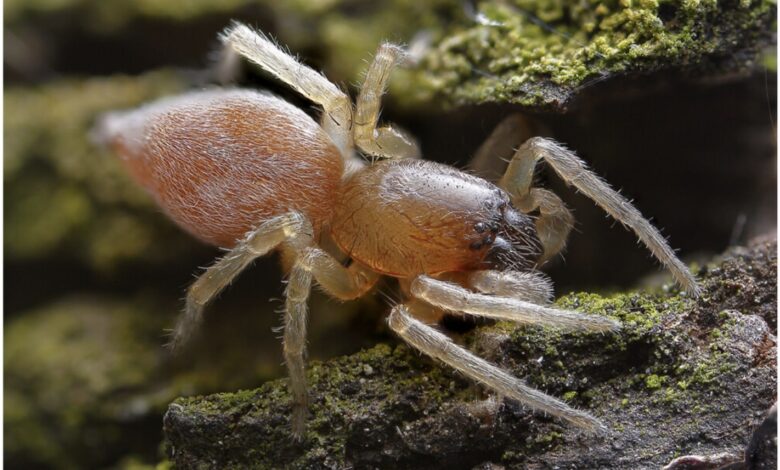
While most spiders cannot withstand harsh frosts, some species, such as Bolyphantes index from Norway, demonstrate remarkable cold resistance. Now, representatives of the Clubiona genus, found almost worldwide, have joined their ranks. Scientists have taken an interest in their ability to remain active even during the winter months, as such behavior is highly unusual for spiders.
The secret to these arthropods’ survival lies in special proteins that act as natural antifreeze. Similar molecules have previously been found in polar fish and some insects, but in Clubiona, they evolved independently—an example of convergent evolution. This means that similar cold-resistance mechanisms developed in unrelated organisms.
Experiments and Discoveries: How Clubiona Antifreeze Proteins Work
During their research, an international team led by Laurie Graham from Queen’s University (Canada) collected 43 Clubiona specimens in the winter of 2022–2023. Extracts from their bodies produced a striking effect: the freezing point of water dropped by more than four degrees Celsius. Even when the extract was significantly diluted, ice crystals stopped growing, underscoring the high efficiency of these proteins.
To isolate these proteins, scientists used five cycles of ice-affinity purification. Mass spectrometry revealed several antifreeze protein isoforms, each assigned a separate registration number in the GenBank database. Notably, glycosylated regions—attached carbohydrates—were found in the protein structures, which, according to experts, provide additional stabilization to the molecules at low temperatures.
Genetics and structure: the uniqueness of Clubiona proteins
Using transcriptomics, researchers determined that at least three Clubiona species were present in the sample: C. pallidula, C. lutescens, and C. brevipes. The antifreeze protein sequences turned out to be unique to this genus and were not found in other spiders or insects. This discovery highlights the distinctive protective mechanism of Clubiona.
The three-dimensional structure of the proteins was modeled using the AlphaFold2 system. It was shown that the molecules have a β-solenoid fold with a flat surface lined with threonine residues. This configuration allows the proteins to efficiently bind to ice crystals and inhibit their growth. Unlike similar proteins in fish, the Clubiona molecules almost completely bound to the frozen fraction during repeated purification cycles, indicating high efficiency.
Practical significance: potential applications of Clubiona proteins
Understanding the mechanism of action of Clubiona antifreeze proteins opens up new possibilities for biotechnology. Scientists believe that such molecules could be used to protect crops from freezing, extend the shelf life of food products, and even in medicine—for example, in the cryopreservation of cells and tissues.
Experiments with Clubiona proteins have shown that their effect surpasses many known counterparts. This could lay the foundation for developing new drugs and technologies capable of protecting living organisms and materials from low temperatures.
In case you didn’t know: Who is Lori Graham and what is Queen’s University known for?
Laurie A. Graham is a biochemist specializing in the study of proteins associated with resistance to extreme conditions. She leads a research group at Queen’s University in Canada, one of the country’s oldest and most prestigious universities. Queen’s University was founded in 1841 and is renowned for its achievements in medicine, biology, and engineering. The university is home to scientists who have made significant contributions to the advancement of molecular biology and biotechnology. In recent years, Graham’s lab has been actively searching for new antifreeze proteins that could be used in agriculture, the food industry, and medicine. These studies have strengthened Queen’s University’s reputation as a center for cutting-edge biotechnological research. Laurie Graham and her team collaborate with international scientific organizations, and their work is regularly published in leading scientific journals. Discoveries made in Graham’s laboratory have already attracted the attention of major companies interested in commercializing new biomolecules. The university also supports startups working in the field of biotechnology and actively incorporates innovations into its educational programs. Thanks to projects like the study of Clubiona proteins, Queen’s remains one of the leaders in global science.