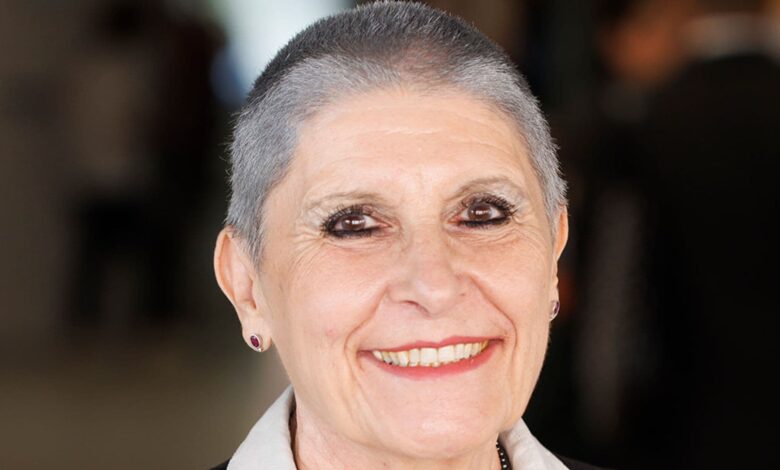
Twenty-four years ago, Begoña Barragán received news that divided her life into ‘before’ and ‘after.’ Today, as the head of the Spanish Association of Patients with Lymphoma, Myeloma, and Leukemia (AEAL), she recalls that period with remarkable clarity. Her story is more than just a personal drama—it serves as a powerful reminder of how easy it is to overlook dangerous warning signs from our own bodies, dismissing them as everyday stress. Despite the fact that blood cancers account for a significant share of new cancer cases in Spain, the vast majority of the population—around 82%—know almost nothing about lymphomas. More than half of Spaniards are unaware that rare forms of the disease even exist, underscoring just how vital stories like Begoña’s are.
At that time, her life was filled with worries. A recent move to a large house that required her attention, work, and three teenage children—all of this seemed a sufficient explanation for her constant exhaustion. At 41, she considered her condition completely normal for such a demanding phase of life. Begoña admits she kept postponing a visit to the doctor until the very last moment, when her health became critical. The family doctor, upon hearing her complaints, immediately ordered tests, the results of which set off alarm bells. She was urgently hospitalized, and the diagnosis was made very quickly, as her physical state was already severely compromised. All the symptoms—debilitating fatigue, evening fevers, night sweats, and weight loss—were present, but she persisted in attributing them to anything but a serious illness.
Hearing the word “lymphoma” was a real shock. Begoña recalls that the “-oma” ending instantly conjured up something ominous. When she directly asked if it was cancer, she received a confirmation, and in that moment, it felt like the ground disappeared beneath her feet. The worst part was not the worry for herself, but fear for her children. The most terrifying childhood nightmare came back to her: her own mother had died of cancer when Begoña was just five years old. The thought that history might repeat itself, leaving her children orphaned, was unbearable. It was a devastating moment, one of the hardest in her life, when the past and future merged into a single, excruciating point of pain.
The treatment process was a test not only for the body, but also for the spirit. The hardest part was accepting her own vulnerability and the fact that she was no longer in control. Accustomed to organizing everything and keeping things in her own hands, she had to stop and learn to ask for help, to allow others to take care of her. Years later, she says that this experience taught her the most important lesson: how to set priorities, listen to herself, and understand that weakness is not a flaw. She realized the value of those who stayed by her side and understood that illness, while it changes a person, does not erase their identity. You remain yourself, with your dreams and beliefs, but you look at the world from a different perspective.
This transformation led her to her life’s work. Faced with a lack of information and support, she decided to create an organization to help others in a similar situation. This is how AEAL was born. Today, under her leadership, the association not only provides psychological support but also offers reliable information, consultations, and advocates for patients’ rights before medical institutions. Begonia emphasizes that at such a moment, people need not only sympathy, but also practical tools, answers, and a strong voice to be heard. Looking back, she highlights several pillars: the unwavering support of her husband and children, who were her main motivation; the reliability of her doctors; and the invaluable communication with those who had been through the same experience. It is precisely this sense of unity and unspoken understanding that became the foundation of her association.
To those who have just received a similar diagnosis, she wants to say the most important thing: you are not alone. The initial fear and the sense that your world has collapsed are natural. But it is important to remember that there is a path forward, and you do not have to walk it alone. Modern medicine offers many therapeutic options, and most importantly, real support networks exist. She advises trusting doctors, but also allowing yourself to feel every emotion, without demanding the impossible from yourself. And to remember the words a stranger once said to her in the hospital as they cleared a room for her: “It will be hard, but it will pass.” This simple phrase became her mantra during the darkest days. And it turned out to be true.