Collective behavior: from nature to technology
In today’s world, managing large groups of autonomous units is an increasingly pressing challenge. This applies not only to biological systems, but also to artificial ones—such as robot swarms or fleets of autonomous drones. The issue of effectively coordinating such groups has become crucial in medicine, industry, rescue operations, and even urban planning. Scientists found a key to solving this problem by observing animal behavior, particularly that of penguins.
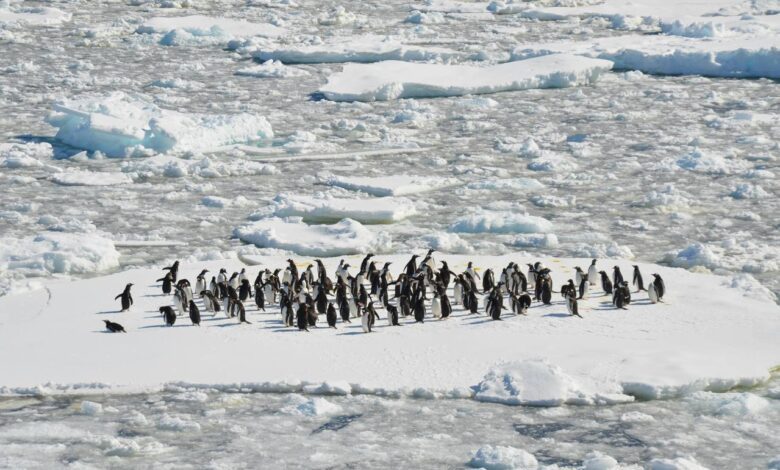
Emperor penguins, native to the harsh Antarctic, display a remarkable ability to self-organize. With no leader or centralized control, thousands of birds form tightly packed groups to survive the extreme cold. Within these clusters, optimal temperature is maintained, and individuals regularly rotate positions so that each has a chance to warm up in the center. This natural mechanism inspired researchers to develop new models for managing artificial systems.
Leaderless self-organization: principles and algorithms
Self-organization in nature has been studied for a long time, but this approach is just beginning to emerge for artificial systems. Recent experiments show that even the simplest robots can spontaneously form complex structures by following certain rules. This approach opens up new possibilities for creating autonomous systems capable of operating without external control.
The developed models are based on two key principles inspired by penguins. The first is the drive for warmth: the colder the environment, the stronger the desire to join a group. The second is repulsion, which prevents agents from colliding. These simple rules allow a group of elements—be it birds or robots—to form stable and dynamic structures that adapt to changing conditions.
Robots Learn from Nature: Experiments and Findings
Russian scientists from Perm National Research Polytechnic University (PNIPU) have developed a mathematical model describing the behavior of a group of robots moving toward a heat source. During experiments, the researchers analyzed how individual elements interact and how these interactions give rise to coordinated movement of the entire group. The model takes into account the unique characteristics of each agent, enabling more accurate predictions of cluster formation and the onset of collective movement.
Using a swarm of Kilobot robots, researchers have confirmed that artificial systems can exhibit the same transitions as living swarms. With a small number of units, the group forms a stationary, crystal-like structure. However, once a certain threshold is reached (about 110 robots), spontaneous vortex-like movement emerges, enabling even heat distribution among all group members.
Real-world applications: Healthcare, drones, and extreme environments
The principles of self-organization are being applied in a variety of fields. In medicine, scientists are developing nanorobots capable of delivering drugs directly to affected cells. These microscopic capsules can gather at a specific site and release medication only when a certain temperature is reached, minimizing side effects on healthy tissue.
In the future, similar algorithms could be used to control swarms of autonomous drones operating in harsh climates—such as the Arctic or on the lunar surface. Thanks to the versatility of the model, these systems are able to adapt to different tasks, ensuring survival and operational efficiency even in the most extreme situations.
Universal laws: Nature and technology speak the same language
Studies have shown that the same physical principles underpin collective behavior in both natural and artificial environments. Regardless of the nature of the agents—whether penguins, bacteria, or robots—universal self-organization mechanisms enable the creation of stable and efficient systems. This opens new horizons for designing complex technical solutions, where each element acts autonomously but in the interest of the entire group.
In the future, such models could form the foundation for developing intelligent swarm systems capable of making independent decisions and adapting to changing conditions. This approach is already reshaping our understanding of technology’s capabilities and its interaction with the environment.
In case you didn’t know, Perm National Research Polytechnic University (PNRPU) is one of Russia’s leading technical universities, founded in 1953. The university is actively engaged in scientific research in applied physics, robotics, and information technology. In recent years, PNRPU has carried out a number of major projects involving the development of autonomous systems and artificial intelligence. The university collaborates with leading research centers in Europe and Asia, and its graduates are in high demand by major global technology companies. Special focus is given to interdisciplinary research, allowing the university to find unconventional solutions to complex engineering challenges. PNRPU regularly participates in international conferences and exhibitions, showcasing innovative advancements in robotics and automation. With a strong scientific tradition and state-of-the-art facilities, the university consistently ranks among the top technical institutions in Russia. In 2025, PNRPU continues to expand its research activities, introducing cutting-edge technologies into education and industry.