Biological Structures in Engineering
Modern 3D printing methods require tools capable of forming parts with microscopic precision. This is particularly important in medicine, where tissues are grown from cells, and in microelectronics. However, producing ultrafine print heads is costly and complex. Metal and plastic nozzles with minimal orifices are expensive, and if they become clogged, they must be discarded.
There are organisms in nature with unique adaptations for working with liquids—such as scorpion stingers, snake fangs, and the mouthparts of insects. Biomimetics enables us to use these natural solutions for technological purposes. This approach helps lower the cost of consumables and reduces the amount of non-biodegradable waste.
Choosing the Perfect Natural Tool
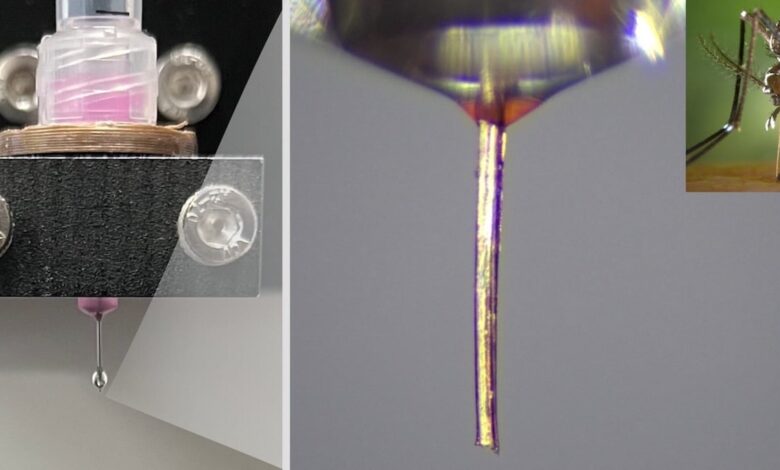
A group of bioengineers studied the structures of various animals and chose the female mosquito Aedes aegypti. The researchers carefully extracted the proboscises from lab-reared insects. Each proboscis was attached to a standard plastic syringe nozzle using glue. The resulting device was mounted on a specially designed platform, which they named the necroprinter.
The mosquito proboscis is a strong and flexible structure capable of transferring liquids. The internal diameter of the channel is only 20 micrometers—nearly half that of the thinnest industrial equivalents and significantly thinner than a human hair. This natural needle proved rigid enough not to deform during printing, retaining its shape even upon contact with a surface.
Experiments with a biological nozzle
Engineers filled a syringe with bio-ink and began testing the new system. The main goal was to determine the strength limit of the biological tip. Experiments showed that the proboscis could withstand internal pressures of up to 60 kilopascals. During testing, they found the optimal balance between the print head’s movement speed and material supply to avoid line breaks and excessive stress on the channel walls.
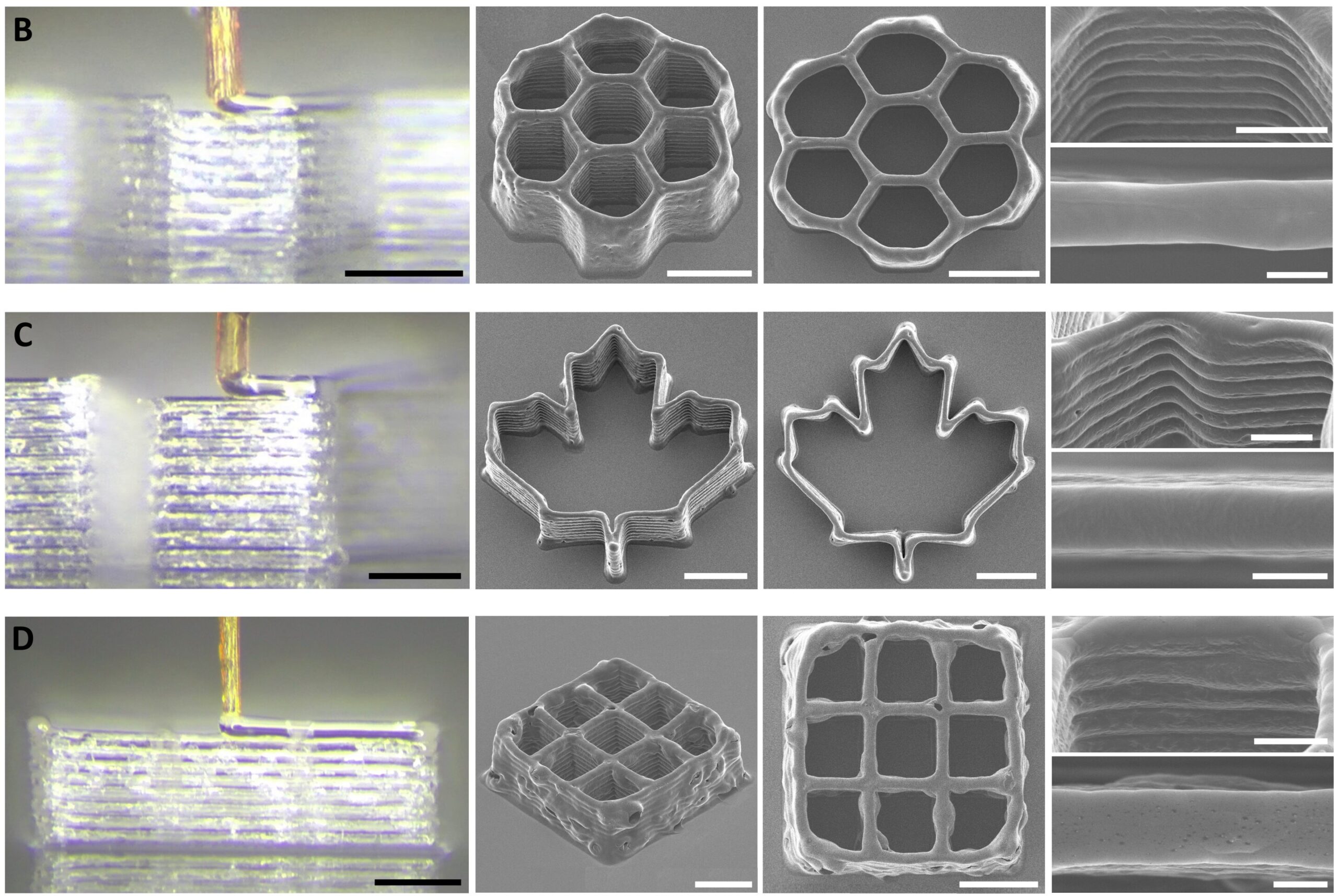
Using this technology, scientists created several microscopic objects to demonstrate the capabilities of the method. Among them were a lattice structure resembling a honeycomb and a highly detailed outline of a maple leaf. The lines on the finished products ranged from 18 to 28 micrometers in width.
Potential for medicine and microengineering
Tests have shown that the proboscis can be used to pass not only polymer solutions but also suspensions containing living cells, including cancer cells and erythrocytes, without damaging them. This opens up possibilities for creating cellular frameworks and conducting clinical analyses at minimal cost.
The use of biological needles makes the production of micro-nozzles significantly cheaper. Breeding laboratory mosquitoes costs just a few cents, and the tips themselves are completely biodegradable. In the future, such solutions could be applied in various fields—from medicine to microengineering.
The work of the researchers demonstrates how natural structures can inspire new technological solutions. Biomimetics is becoming increasingly important in engineering, helping to develop efficient and eco-friendly tools for the most challenging tasks.