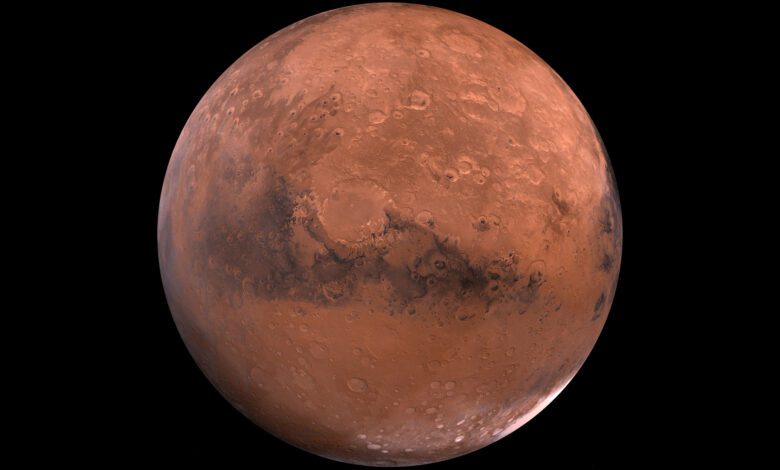
Plans to return humans to the Moon and send the first missions to Mars are moving closer to reality. As early as next year, NASA is preparing a crewed lunar flyby, followed by the landing of two astronauts on its surface a year later. In the 2030s, a long-awaited mission to Mars is on the agenda. However, an invisible but extremely dangerous obstacle stands in the way of these ambitious goals: cosmic rays. Beyond Earth’s magnetic field, crews are constantly bombarded by particles capable of damaging not only technology, but also living cells.
In the night sky we can distinguish stars, planets, and sometimes meteors. But cosmic rays remain out of sight. This stream of particles—protons, helium nuclei, heavy ions, and electrons—rushes to us from the depths of the Galaxy and the Sun. Their energy is so great that they can knock electrons out of atoms and disrupt molecular structures. For humans, this means the risk of damage to DNA, proteins, and other vital cell components, which over time can lead to serious illnesses, including cancer.
Limits of protection
Earth reliably shields us from most of this flux thanks to its magnetic field and atmosphere. But stepping outside this ‘fortress’ makes cosmic rays a constant threat. In open space, astronauts are exposed to particles that can not only penetrate a spacecraft’s hull, but also create secondary radiation, further increasing the danger.
Scientists are faced with the challenge of understanding exactly how cosmic rays affect living organisms and finding ways to minimize the damage. The ideal solution would be to send tissue samples, organoids, or laboratory animals directly into space. However, such experiments are extremely expensive and difficult to conduct. That’s why, more often, the impact of cosmic radiation is simulated on Earth using particle accelerators. Facilities in the USA and Germany already allow for sequential irradiation of samples with different components of cosmic rays. In Germany, a new international accelerator complex is under construction, which will be able to reproduce even higher energies typical of real space conditions.
Experimental limitations
However, even the most advanced simulators cannot fully recreate real conditions. Typically, the entire dose of radiation an astronaut would receive over months of flight is delivered in a single session. It’s like studying rainfall by using a tsunami. In reality, cosmic rays are a complex mix of particles acting at the same time. Scientists suggest building a multi-beam accelerator capable of generating several streams of particles with different characteristics simultaneously. So far, this project exists only on paper.
For now, we have to make do with what is available and look for alternative protection methods. The most obvious solution is physical shielding. Materials rich in hydrogen, such as polyethylene or hydrogels, can slow down charged particles. These are already in use or planned for use in spacecraft design. However, the effectiveness of such shields is limited: particularly dangerous galactic rays can easily penetrate them, and sometimes even generate additional radiation inside the vessel.
Biological solutions
That’s why researchers are paying increasing attention to biological strategies. One approach is the use of antioxidants, which protect DNA from radiation-induced damage. In mouse experiments, the synthetic antioxidant CDDO-EA helped preserve the cognitive functions of irradiated animals at the level of the control group. Mice that received the drug performed as well on tasks as those that were not exposed to radiation.
Another approach is to study organisms with exceptional resistance to radiation. For example, during hibernation, some animals become less sensitive to radiation, although the mechanisms behind this phenomenon remain unclear. There is evidence that artificially inducing a hibernation-like state in animals increases their radioresistance. Tardigrades are of particular interest—microscopic creatures capable of surviving in extreme conditions, including high doses of radiation. While astronauts cannot be put into hibernation or dehydrated, studying the protective mechanisms of these organisms may help preserve the viability of other biological specimens—such as microbes, seeds, or even companion animals intended for long-term missions.
Internal reserves
The third approach focuses on boosting the body’s own defense systems. On Earth, evolution has equipped living beings with mechanisms to withstand stress—including hunger, heat, and radiation. Recent studies show that certain diets or medications can trigger these protective processes even in space, increasing cellular resistance to damage.
It is clear that physical shielding alone is not enough to fully protect crews. Only a combination of biological methods, new experiments, and the construction of specialized accelerator facilities will bring humanity closer to safe interplanetary travel. For now, experts estimate that it will take decades before the problem of cosmic ray protection is solved. Increased investment in research could speed up this process and bring us closer to the moment when flights beyond Earth become routine rather than heroic feats.
If you didn’t know, NASA (National Aeronautics and Space Administration) is the leading US space agency responsible for both crewed and unmanned missions beyond Earth. The Artemis program aims to return humans to the Moon and prepare for expeditions to Mars. As part of these projects, new technologies for crew radiation protection are being developed, along with international research into biological and physical safeguards in deep space conditions.