In the north of Spain, far from the hustle and bustle of popular tourist routes, a small town stretches along the tranquil banks of the Pisuerga River, its name echoing like the music of the past. Here, time seems to have slowed, allowing the stark Romanesque style, graceful Gothic, and opulent Renaissance to blend in perfect harmony. Travelers seeking not just beautiful scenery, but the true soul of Castile, will find it all here: from ancient city gates and the arcades of the central square to living history etched in every stone. The surrounding landscapes, part of the Palentine mountain range and the Las Loras Geopark, only enhance the appeal of this place, offering endless opportunities for outdoor adventure and cultural enrichment. And it also boasts a unique, delicious industrial identity all its own.
Stone witnesses of the past
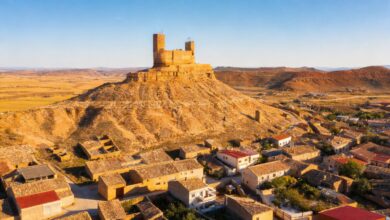
This refers to Aguilar de Campoo, a town that, back in 1517, became the first stop of the future Emperor Charles V on his way to Valladolid. The town’s silhouette is defined by the majestic ruins of a 12th–14th century castle crowning the hill and the preserved fragments of powerful defensive walls. The main church is the Collegiate Church of San Miguel, a Gothic building founded in the 14th century, which still retains a magnificent transitional Romanesque portal. Its tower rises proudly above the central square. Nearby lies a true gem—the Monastery of Santa María la Real. Today, it houses the foundation of the same name, a leading center for the study of Romanesque art, and a unique Museum of Territory and Romanesque Art. To gain a complete impression of the region’s sacred architecture, it is also worth visiting the secluded Church of Santa Cecilia and the active Monastery of Santa Clara. These two monuments eloquently illustrate why this locality is considered the gateway to the world of Romanesque architecture in northern Palencia and an important stop on the Northern Way of the Camino de Santiago.
The sweet soul and pulse of city life
The heart of the town is best felt at Plaza Mayor—a spacious, arcaded square that’s perfect for leisurely observing the everyday bustle amid buildings from different eras. Here, it becomes clear why the locals, known as ‘agilarenses,’ are often called ‘gallete-ras,’ or ‘cookie-makers.’ This isn’t just a nickname. The town has been, and remains, one of the country’s main centers for biscuit production. Brands like Gullón, Siro, and Fontaneda are inextricably linked to its economic and social history. The town’s defensive past is recalled not only by the remains of its walls, but also by six preserved gates. Standing out among them is Puerta de Reinosa, adorned with an ancient Hebrew tombstone—a silent testament to the cultural diversity of this medieval settlement. Just a few minutes’ drive away lies a reservoir, adding a watery expanse to the landscape and offering beautiful spots for walks. When water levels recede, the remains of submerged villages emerge, sparking the imagination.
Between cliffs, water, and the cinema screen
Here, nature asserts its rights with undeniable persistence. Numerous trails lead from the town into the Palencia mountains, such as the picturesque Oradada Canyon or the Las Tuerces peak, famed for its whimsical rock formations shaped by wind and water. The cultural calendar offers another compelling reason to visit: every August, Aguilar Film Festival, one of the country’s oldest short film festivals, draws directors and enthusiasts from all over Europe. The town’s medieval atmosphere, its authentic streets, and squares often make it a natural set for historical films and series. This unique blend of heritage, nature, and that unmistakable scent of fresh baked goods makes Aguilar de Campoo a must-visit destination in the province of Palencia. It’s a perfect fusion of history, art, and everyday life, enchanting travelers in any season.