Spain’s tourism map is undergoing notable changes in 2026. While Madrid and Barcelona continue to set attendance records, a growing number of travelers are seeking alternative routes. Their aim is to find peaceful cities rich in history, enjoying a pleasant climate and, importantly, free from stifling crowds. This trend hasn’t gone unnoticed abroad, and the British media has already turned its attention to Spain’s lesser-known destinations.
For the British, Murcia has become a genuine discovery. A prominent UK tabloid called this southeastern city on the Iberian Peninsula a true surprise for the seasoned traveler. The paper praises Murcia’s 1,200-year history, baroque architecture, sun-drenched plazas, and, of course, its cuisine, rooted in fertile orchards and the gifts of the Mediterranean. Murcia is increasingly being called the “garden of Europe,” and it seems this epithet is starting to gain recognition internationally.
A British perspective
The choice made by the British is no coincidence. The United Kingdom has long been one of Spain’s main sources of tourists, sending millions of its citizens to Spanish resorts every year. So when influential media begin to recommend less-promoted destinations, it gives these cities a major boost for development. Murcia offers a different experience—more relaxed, authentic, and often more affordable. The city is remarkable for its historical heritage. Founded during the era of Al-Andalus, it has preserved traces of Arab influence in its street layout, which blend harmoniously with later architectural styles.
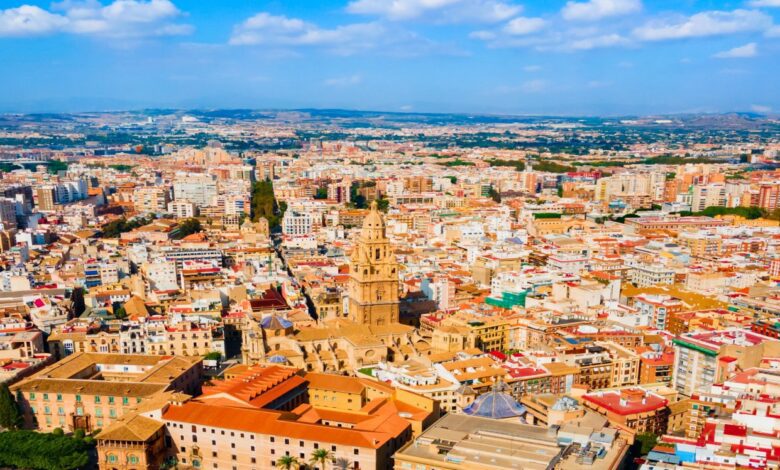
The undisputed jewel and symbol of the city is the Cathedral, located in the very heart of Murcia. This magnificent building blends Gothic, Renaissance, and Baroque architecture, with its towering bell tower visible from nearly anywhere in the city, serving as a landmark for first-time visitors. Exploring Murcia is a pleasure in itself. The city is perfectly flat and compact, making it ideal for leisurely strolls. There’s no need to rush—you can simply flow along its wide streets and open squares, soaking up the atmosphere and discovering details that guidebooks often overlook.
A city for living
Green spaces are another hallmark of the region’s capital. Jardín de Floridablanca, one of Spain’s oldest public parks, remains a center of social life to this day. During the hot months, its shaded walkways and proximity to the Segura River make it a cool oasis for locals and visitors alike. Ancient ficus trees, vibrant flowerbeds, and a tranquil atmosphere make it a must-visit. The abundance of such parks and gardens scattered throughout the city reinforces Murcia’s image as a green paradise.
The nickname “Garden of Europe” is no exaggeration. Millions of square meters of vegetable gardens, parks, and orchards surround the capital, shaping its unique landscape. The mild Mediterranean climate, with its many sunny days, has for centuries favored agriculture, which remains a driving force of the local economy. Fruits, vegetables, and vineyards not only beautify the surroundings but also form the backbone of the local cuisine.
The taste of the region
To taste Murcia is to discover simple yet rich flavors, where the huerta is at the heart of everything. The city’s culinary level is attested by Almo Restaurante, a Michelin-starred establishment located in the old quarter. The best way to explore local gastronomy is through tapas. Traditional recipes coexist here with modern interpretations, while the proximity to the sea enhances menus with fresh fish and pickled treats, creating a culinary experience highly prized by seekers of authentic flavors.
What makes Murcia truly special is its ability to preserve the authentic local atmosphere that many popular destinations have long lost. Its markets, open-air terraces, and festivals are not tourist attractions but an integral part of everyday life. This genuine spirit is exactly what wins over those who discover this remarkable city.
RUSSPAIN reminds readers that Murcia is the capital of the autonomous community of the same name in southeastern Spain. The city was founded in 825 by the Emir of Cordoba, Abd ar-Rahman II, under the name Madinat Mursiya. Thanks to its location on the fertile plain by the Segura River, it has historically been an important agricultural center. Today, it is also a major university city, renowned for its vibrant student community and rich cultural life.