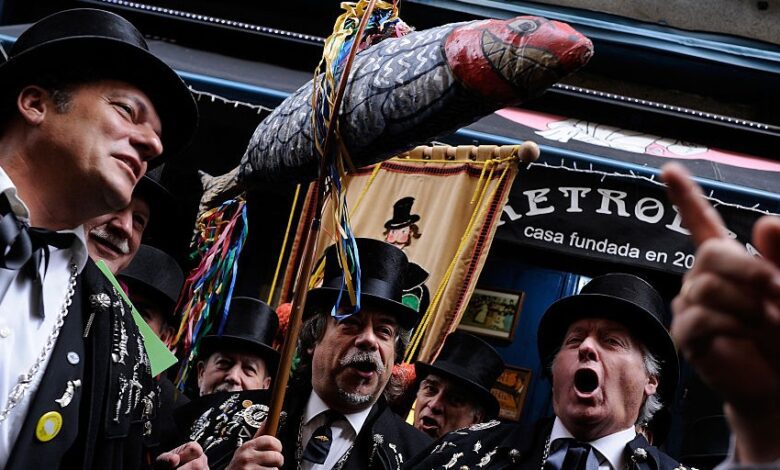
In Spain, the end of the carnival is marked not just by festivities, but by a true ritual capable of astonishing even seasoned tradition enthusiasts. The Burial of the Sardine is more than a farewell to celebration—it’s a powerful symbolic act that bridges eras and highlights changes in society. On this day, the streets fill with theatrical processions where mourning and laughter go hand-in-hand, and the sardine becomes the main character in a drama played out before thousands of spectators.
The essence of the ritual lies in a satirical farewell to the excesses and revelry that reigned during the carnival. Participants dress in deliberately somber costumes, parodying funeral processions, and escort the symbolic sardine to its final ‘resting place.’ The climax arrives when the sardine figure is burned, reduced to ashes amid applause and laughter. This fire is not just a spectacle—it’s an act of collective cleansing, marking the start of a new, more restrained period associated with Lent.
Origins and evolution
The roots of this unusual ritual go back to ancient times, when the people of Europe bid farewell to winter with fiery ceremonies and satirical processions. Over time, these customs merged with the Christian calendar, and Carnival became the final outburst of freedom before the strict days of Lent. In the 19th century, the Burial of the Sardine became especially popular among city dwellers and students in Spain, who delighted in mocking official ceremonies by turning them into a carnival of absurdity. The sardine, as a symbol of a simple and accessible product, perfectly suited the role of the main character in this spectacle.
The tradition has not only endured but has become part of the country’s cultural code. In art, it found expression in Francisco Goya’s famous painting, where the carnival procession appears as a blend of merriment and subtle irony. This theme continues to inspire artists and filmmakers, while the festival itself draws crowds of spectators every year from all corners of Spain.
Festival geography
Although the Burial of the Sardine is celebrated in many cities, Murcia holds a special place. Here, the ritual has become part of the spring festivities and has grown into a true spectacle. Vibrant carnival parades move through the streets, participants hand out toys and souvenirs, turning mourning into a celebration for the entire family. The festivities conclude with the grand burning of the sardine, accompanied by fireworks and music. This festival is officially recognized as an event of international tourist interest and every year attracts visitors from all over the country.
In Madrid, the procession winds through the city’s iconic sites, organized by a lively brotherhood renowned for their creativity in crafting new satirical characters. In the Canary Islands, for example, in Las Palmas de Gran Canaria, the burial of the sardine is part of a grand carnival, with the festivities often culminating right on the oceanfront. In Tenerife and in the city of Águilas, where the carnival is also recognized as an event of international standing, the ritual is known for its spectacle and large crowds.
Symbolism and Modernity
The Burial of the Sardine is not just a farewell to merrymaking, but a profound symbol of change and renewal. The fire that consumes the sardine is seen as a purifying force, enabling the community to leave behind what is unnecessary and begin a new cycle. Each city gives the ritual its own nuances, yet its essence remains unchanged: it is a shared experience where satire and tradition are woven seamlessly together.
Interestingly, similar rituals can be found in other regions of Spain, where carnival becomes a stage for the contest between old and new. For instance, in Navalcacruz, winter is bid farewell with masks and symbolic battles, which are detailed in the article about the ancient masquerade that transforms village life. These traditions highlight just how diverse and vibrant Spanish culture is, with each region adding its own note to the festive chorus.
In 2026, the Burial of the Sardine will take place on February 18, though dates may vary depending on local customs. It’s important to check the schedule in advance so you don’t miss the season’s main event. In any case, this ritual remains one of the most vibrant and talked-about moments on Spain’s calendar, uniting generations and reminding us of the eternal cycle of life.
Francisco Goya, whose name is inseparably linked to Spanish art, created one of the most famous interpretations of the Burial of the Sardine. His painting, made in the early 19th century, captures the atmosphere of a carnival procession with masks, grotesque faces, and hidden irony. Goya managed to depict the duality of the festival: beneath its outward merriment lies a profound meaning tied to change and renewal. Through his work, the Burial of the Sardine became not just a folk ritual, but also part of Spain’s cultural heritage, inspiring new generations to rethink tradition.