In Galicia, amid its lush green landscapes, there are hidden corners where history, nature, and mystery are intertwined. These are not your standard tourist routes, but places with a special, almost mystical aura that attract travelers in search of unique experiences. Ruined structures, weathered by time, offer a completely different experience, far removed from the hustle and bustle of popular attractions. They have become points of interest for admirers of symbolism, unusual architecture, and stories frozen in stone. Their open access makes them ideal destinations for cultural excursions and spontaneous trips.
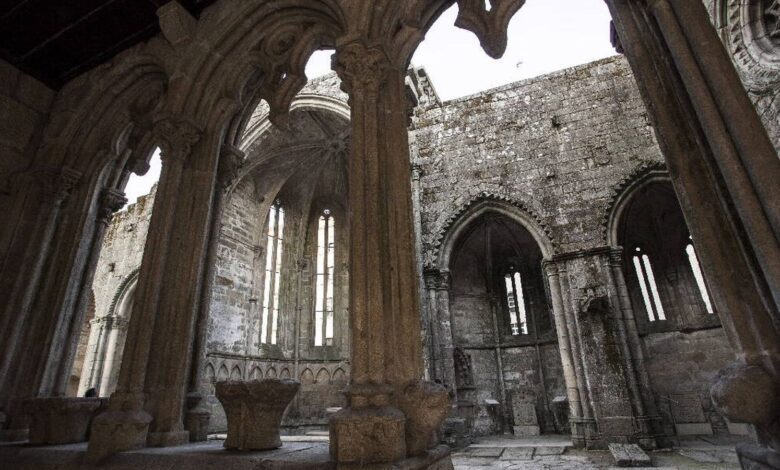
One of the most captivating sites is undoubtedly the ruins of Santa Mariña de Dozo in Cambados—a place many call the most melancholic cemetery in the region. This Gothic church in a maritime style, built on the foundations of an old 12th-century Romanesque chapel and expanded at the end of the 15th century, has preserved its single nave, transverse arches, and chapels adorned with biblical scenes and depictions of the seven deadly sins. In 1943, it was declared a National Monument and included in the Association of Unique Cemeteries of Europe. Its vaults, open to the sky, and connection to the Camino de Santiago pilgrimage route create a unique atmosphere, making it a must-visit location.
Equally intriguing is the unfinished Sanctuary of Fátima in Chantada. This ambitious project was initiated in the 1940s by priest Emilio Eire Lamas after his visit to Lisbon. He dreamed of building in Galicia the first church in Spain dedicated to this figure, selecting a site on the ruins of an ancient settlement in Sentulle, nearly 600 meters above sea level. Although construction was never completed, its remains continue to draw curiosity with the scale of the vision and the beauty of the surrounding landscapes. In the heart of Pontevedra, the ruins of Santo Domingo capture attention— all that remains of the Gothic church founded in the 13th century. Five polygonal apses, a fragment of a rose window, and parts of the altar area from the former Dominican monastery have survived to this day.
The trail of abandoned treasures continues in the province of Ourense, where Casa da Escusalla in Lobios offers a completely different experience. This 18th-century Baroque manor, once associated with members of the clergy, is historically linked to the symbolism of ancient religious orders. Today, it is half-hidden by dense vegetation, but you can still make out its U-shaped structure, the Chapel of Saint Joseph, and mysterious inscriptions that have sparked numerous local legends. Finally, in Vigo, Villa Solita stands out—a bourgeois mansion from the late 19th century. Its historic architecture and courtyard layout reflect a style uncommon in this region. Despite its neglect, the villa remains a remarkable find for those seeking little-known corners, even within a major city.