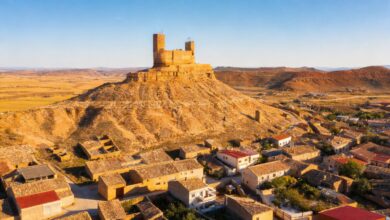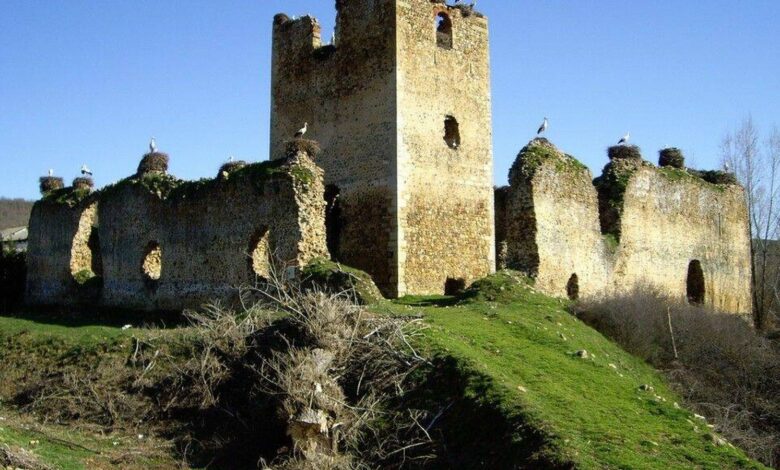
A significant milestone in the preservation of cultural heritage has been reached in the autonomous community of Castilla y León. Five iconic historical sites, once on the brink of complete disappearance, have been successfully restored and moved from the so-called ‘Red List’ to the ‘Green List.’ Years of neglect and decay are now in the past thanks to the joint efforts of government institutions, dioceses, and local residents. These architectural gems are once again open to visitors, unveiling new chapters in the region’s history.
One of the rescued landmarks is the Iglesia de San Salvador de Toro in the province of Zamora. This Romanesque-Mudejar church lost its parish status back in the 19th century and gradually fell into disrepair. In 2014, it was added to the list of endangered sites, but recent restoration efforts have reinforced the roof, walls, and restored the nave floor, reviving the building’s historical appearance.
In the same province of Zamora, the Iglesia de Santa María del Río has been given a new lease on life. The building faced deep cracks and collapsing masonry. Thanks to an investment of 60,000 euros, stabilization work was carried out, ensuring the structure’s safety for future generations.
In the province of Segovia, the palace of Contreras (Palacio de los Contreras) in Laguna de Contreras has been saved from total ruin. This fortified building from the 12th century had been on the “Red List” for more than ten years. Funding from the government of Castilla y León made it possible to reinforce the walls and chapel, halting the process of deterioration.
Another restored site is the Castillo de Valdecorneja in El Barco de Ávila. This Gothic fortress, closely linked to the House of Alba, had lost part of its enclosure and was in a dilapidated state. During the restoration, part of the perimeter wall was rebuilt, and the main tower received a new protective roof made of copper and wood.
Rounding out the list is the Castillo de Aguilar de Campoo in Palencia. This 11th-century defensive structure, which gave its name to the town, was added to the list of endangered sites in 2023 due to the risk of collapse and falling stone blocks. Recent conservation work and removal of vegetation that was damaging the walls have helped preserve this unique monument. The successful restoration of these five sites proves that cooperation between authorities and the public is key to safeguarding Spain’s rich cultural heritage.