In Cantabria, there is a place where the past doesn’t just linger, but takes you by the hand. The Vía Verde de Villaescusa is more than a walk through the woods—it’s a journey into a vanished era, where every step reveals new details of regional life from the days when trains thundered past and mining was in full swing. Today, this trail is a real treasure for those seeking not just scenic views but also a chance to experience authentic history.
The route stretches for eight kilometers along an old railway embankment that once connected Astillero and Obregón. There are no steep climbs or dangerous sections here—it’s perfect for a leisurely stroll or a family bike ride. But beneath its simple appearance lies a wealth of culture and unexpected discoveries. From the very first meters, it becomes clear: this is not just a woodland path, but a living chronicle of Cantabria’s industrial past.
Traces of the mining era
The route begins in Astillero, where an old railway bridge carries the trail over the rust-red waters of the Solía. This color is no accident—it’s a vivid reminder of how mineral extraction has transformed these landscapes. Locals still recall the days when coal and ore rumbled along these tracks, now silent but for the footsteps of the occasional tourist.
The road then leads to Liaño, a small village where old houses and fragments of railway infrastructure remain. Here, the contrast between past and present is particularly striking: what were once bustling stations are now peaceful spots, and instead of workers, you’ll find nature and history enthusiasts. In the distance, the Peña Cabarga massif is already visible—a landmark once used by train drivers, now a favorite place for photographers and birdwatchers.
A turn toward nature
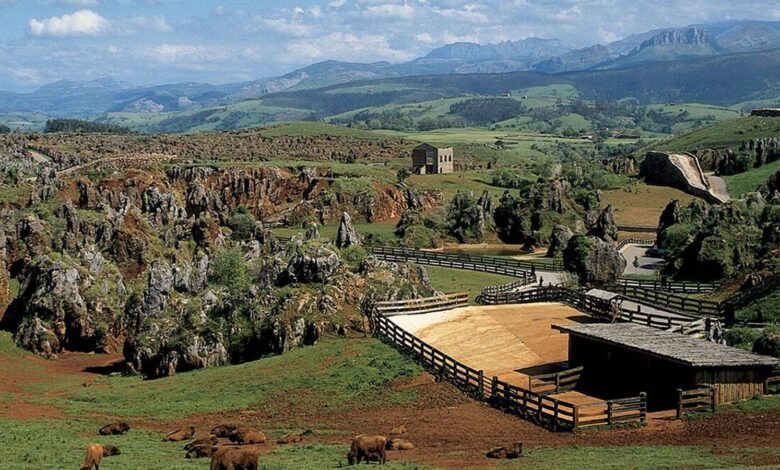
After Liaño, the route veers toward La Concha, another settlement where you can take a break and see how nature is slowly reclaiming land once occupied by people. This is also where the path begins that leads to the famous Cabárceno Nature Park. More than just a zoo, this park spans a vast area where animals from around the world live in conditions close to their natural habitats. For many travelers, it’s a destination in itself, but the trail remains appealing even alongside such an impressive neighbor.
The road winds through the trees, and the remains of sleepers and embankments are still visible underfoot. Occasionally, you come across old, moss-covered signs and half-ruined structures that were once part of the railway infrastructure. All of this creates a unique atmosphere—it’s easy to imagine the trains rumbling through here decades ago, while now only the wind rustles in the treetops.
End of the route
The final stretch runs over another iron bridge, once part of the region’s main transport artery. Here, the intertwining of nature and industry is especially clear: rusting metal stands beside dense greenery, and silence is broken only by birdsong. Soon, the trail leads to the old La Concha station—an astonishingly well-preserved building frozen in time. This spot often attracts photographers and inspires artists.
The endpoint of the route is Obregon. Here the journey ends, but the impressions linger. A walk along the Vía Verde de Villaescusa is not just a way to spend the weekend, but a chance to feel the pulse of history and see how past and present can coexist in one space. For many, this route is a revelation: even the most seemingly ordinary places can hold extraordinary stories.
Vía Verde de Villaescusa is a unique example of how industrial heritage can be integrated into the modern life of the region. The route not only preserves the memory of Cantabria’s mining past, but also attracts tourists, families, and anyone who values unhurried walks with a spirit of discovery. Here, everyone finds something of their own: some seek peace, others inspiration, and many gain new insights into their homeland.
The Cabárceno Nature Park, located along the route, holds a special place in the cultural and natural life of Cantabria. Established on the site of former quarries and mines, it not only preserved a unique landscape but also breathed new life into the area. Today, the park is recognized throughout Spain as a model of harmonious coexistence between people and nature. Its residents—animals from every continent—have become a symbol of change and renewal for the region. For many locals and visitors, this is truly a window into the wild, and for the Vía Verde route, it is a key landmark connecting the past and future of Cantabria.