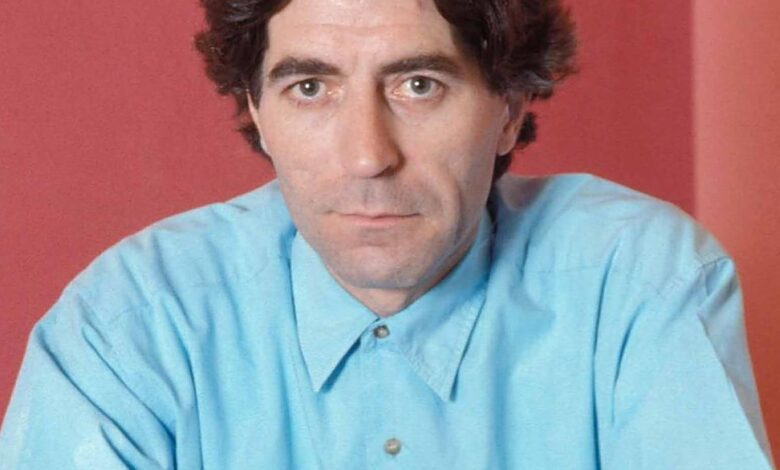
Today, the name Joaquín Sabina is inseparably linked with his wife, the Peruvian photographer Jimena Coronado, with whom he made his relationship official after many years together. However, there is a chapter in the maestro’s tumultuous life that few people know about. It involves his first, almost fictitious marriage to Lucía Correa, which took place far from his homeland, in foggy London, and was prompted more by necessity than by romance.
This story dates back to the 1970s, when a young Sabina was forced to flee from Francoist Spain. He spent seven years in exile in London, where he soon faced mandatory military service. The conditions in the barracks were, to put it mildly, Spartan, and any opportunity to taste a bit of freedom was priceless. It was during this time that he met Lucía Correa, a young woman from a family of Spanish emigrants.
Their union, formalized in 1977, became a lifeline for Sabina. The marriage gave him the legal right to a so-called ‘permiso de pernocta’—permission to spend nights outside the barracks. This allowed him to leave his post at three in the afternoon and return only the following morning. For a creative and free-spirited person like Joaquín, such a leave was invaluable. Lucía gave him tremendous support during that difficult time, becoming not just a wife on paper, but a true companion.
Divorce in the new Spain
A relationship built on such pragmatic grounds had little chance of lasting. As soon as the political situation in Spain changed and the country began to breathe the air of freedom, the need for this union disappeared. After Franco’s death and the democratization of society, divorce was legalized in Spain in 1981.
The couple took advantage of this opportunity and officially dissolved their marriage in 1985. Their paths parted as quietly as they had come together. Very little is known about the later life of Lucía Correa. It is believed that after the divorce, she returned to her parents in Barcelona, disappearing from public view and the press forever, leaving behind only a brief but important chapter in the biography of the great artist.
Other muses of the maestro
Despite his image as an eternal rebel and Don Juan, Joaquín Sabina always spoke respectfully of the women who played important roles in his life. After his divorce from Lucía, he had a long and meaningful relationship with Isabel Oliart, who gave him two daughters, Carmela and Rocío. Although they never married, Sabina and Oliart managed to maintain a warm friendship for the sake of their children.
His current wife, Jimena Coronado, has been his loyal companion for many years, standing by him through difficult times, including health challenges. Their love story began with professional interest—Jimena came to Lima to do a report on the musician, and ultimately became the leading woman in his life. Their marriage in 2020 was the natural culmination of their long romance, proving that even the most confirmed bachelors can find their safe harbor.
Notably, Joaquín Ramón Martínez Sabina, born in 1949 in Úbeda (Andalusia), is one of the most iconic figures in contemporary Spanish music. His career, spanning over four decades, has been marked by the release of dozens of successful albums. Sabina is known for his raspy voice and deeply poetic, often ironic lyrics that intertwine themes of love, politics, social critique, and personal experience. His work has greatly influenced several generations of musicians not only in Spain but throughout the Spanish-speaking world.