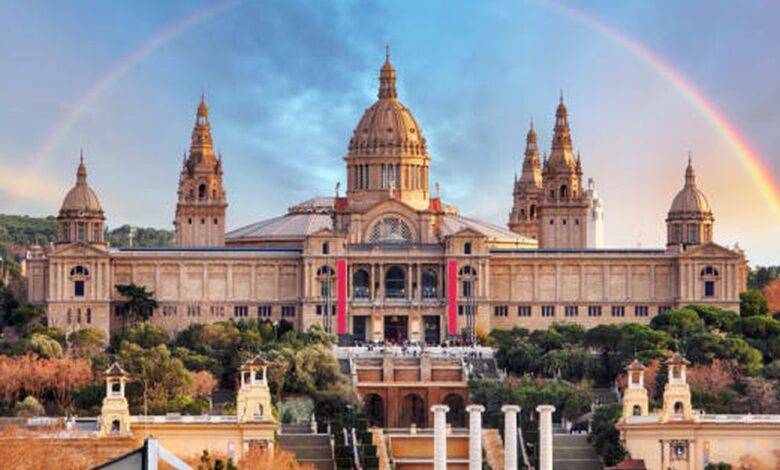
On Montjuïc hill, like a sentinel watching over the life of the Catalan capital, stands a monumental structure. Built for the International Exhibition of 1929, it still impresses with its scale today. Its central dome, inspired by St. Peter’s Basilica in Rome, is a recognizable feature of the city’s skyline. But the true grandeur of this place is revealed to those who enter beneath its arches to immerse themselves in a millennium of European artistic history.
The journey begins in halls steeped in the spirit of the Middle Ages. Here, one of the world’s most significant collections of Romanesque frescoes is assembled. In the last century, these murals were carefully removed from the walls of Pyrenean churches such as Sant Climent de Taüll. To preserve their authenticity, the original apses were recreated. Visitors find themselves in an atmosphere of mysticism, where Byzantine and Islamic motifs intertwine in the images of saints, and ancient paints have not lost their vibrancy.
The journey then leads through Gothic, Renaissance, and Baroque. These galleries showcase the full spectrum of artistic development on the Iberian Peninsula and the continent. Works by geniuses such as Jaume Huguet, Velázquez, Goya, Titian, and El Greco come together in a single narrative about centuries of creative flourishing. This is more than just an exhibition—it is an opportunity to trace how ideals of beauty and spiritual orientation have evolved over the centuries.
The upper floors are dedicated to later periods, from modernism to the avant-garde of the 20th century. Here you can see works by Gaudí, Ramon Casas, Rusiñol, and Miró. The sections covering Modernisme, Noucentisme, and the Civil War period illustrate the evolution of creative thought in the region. Paintings, sculptures, photographs, and posters create a vivid visual narrative that connects the past with the present.
However, this cultural space is more than just exhibition halls. The complex itself offers unforgettable experiences. The oval hall, spanning over two thousand square meters, impresses with its scale, while the Abcis restaurant, set in the former Throne Room, allows guests to dine in a historic setting. From the observation terraces, you can enjoy one of the city’s most breathtaking panoramic views, with the magical fountain sparkling at its foot. This is a place where history meets modernity.
Getting here is easy: the location is well connected to other districts by metro (lines L1 and L3 to Espanya station) and numerous bus routes. For those walking, escalators on Maria Cristina Avenue make the ascent easier. The doors are open from Tuesday to Saturday, with shorter hours on Sundays and public holidays. The general admission ticket costs 12 euros, but free entry is available every Saturday after 15:00 and on the first Sunday of each month—just reserve your visit online.