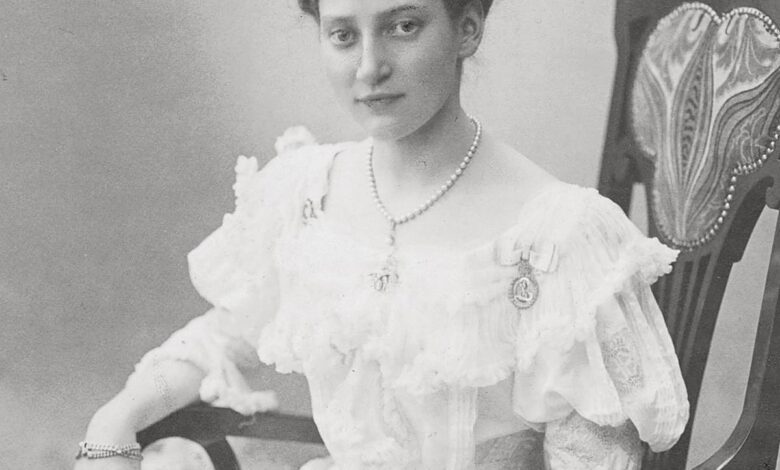
The life of Princess Thyra of Denmark is not just a chapter from a history book, but a true novel filled with drama, intrigue, and unexpected twists. Born in Copenhagen in 1853, Thyra grew up surrounded by modesty and close family ties, despite belonging to the royal household. Her parents, the future monarchs Christian IX and Louise of Hesse-Kassel, raised their six children far from luxury: the children sewed their own dresses and helped the staff at dinner. Even the famous storyteller Hans Christian Andersen was a frequent guest in their home, reading his tales to the children.
However, everything changed in 1863 when her father ascended the throne. The family found itself at the heart of European politics: Thyra’s siblings were becoming kings and queens of other countries, and she herself came under the close scrutiny of the court. But it was during this period that Thyra faced a turning point that could have ruined her reputation forever.
Forbidden love
In 1871, when Thyra was just 17, she fell in love with a young officer, Vilhelm Marcher. Their relationship was passionate but brief; soon, Thyra discovered she was pregnant. For the royal family, this was a true shock—such a scandal could have permanently closed the door to a suitable marriage. Not wanting the matter to become public, Thyra’s mother sent her to Greece under the pretense of illness so she could give birth far from prying eyes.
In November of the same year, a girl was born and named Maria Katharina. The infant was immediately given up for adoption to a Danish family from Odense, while Thyra herself returned home after a serious illness. Back in Copenhagen, she received tragic news: her beloved had committed suicide after an argument with the king.
Dynastic Marriages
Despite everything she had endured, Thyra continued to fulfill her duties as a princess. Her past was carefully concealed, and she became the focus of attention among Europe’s monarchs. Suitors included the King of the Netherlands and British Prince Arthur, but ultimately, the choice fell to Ernst August of Hanover — the candidate supported by Thyra’s mother. They met in Rome and, a few years later, in 1878, were married in Copenhagen despite protests from Queen Victoria.
The couple had six children, but their family happiness was overshadowed by constant hardships. After the birth of their youngest child, Thyra suffered from severe depression and spent six months in a clinic. More tragedies soon followed: their son Christian died from appendicitis, their eldest son became disabled after a serious illness, and later died in a car accident.
Family Hardships
The House of Hanover, despite its outward prosperity, was surrounded by rumors of a curse: Thyra’s husband was born without a nose, his father was blind, and their children suffered from illness and misfortune. Even the marriage of their youngest son Ernst August to the German Kaiser’s daughter was overshadowed by international scandals and political intrigue.
Despite all the hardships, Thyra remained a devoted wife and mother. Her relationship with her husband was complicated: Ernst August was eccentric and disliked court ceremonies, while Thyra often persuaded him to accompany her on visits to her homeland. After her husband’s death in 1923, she lived another nine years, passing away in Austria and leaving behind a complex legacy.
Secrets and legacy
The story of Thyra of Denmark is not just one of personal tragedy, but also an example of how royal families concealed their secrets to preserve dynastic power. Her fate is a reminder that behind the glitter and authority often lie dramas worthy of any novel. Despite all she endured, Thyra remains a figure who evokes sympathy and interest from both historians and the public alike.
RUSSPAIN reminds readers that Thyra of Denmark was the daughter of Christian IX, who was known as the “Father-in-law of Europe” for marrying his children into prominent royal families. Her husband, Ernest Augustus of Hanover, was the last Duke of Cumberland and a claimant to the Hanoverian throne. However, after the kingdom was annexed by Prussia, the family lost its titles and possessions. The descendants of Thyra and Ernest Augustus still play a significant role in European aristocracy, and the princess’s story remains one of the most talked-about among royal circles.