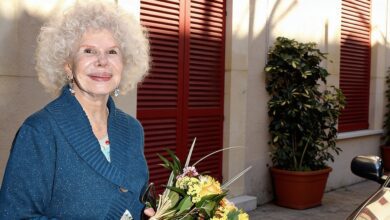
In Spain’s aristocratic circles, the name Ana Medina Fernández de Córdoba is spoken with a touch of sadness. She was destined to become the head of one of the country’s most distinguished houses, the Duchess of Medinaceli. However, a life marked by family dramas and personal loss took a different turn, and Ana never wore the coveted crown, passing away in 2012.
She was the sister of the infamous Duke of Feria, whose former wife, Nati Abascal, remains a style icon to this day. Their mother was Victoria Eugenia Fernández de Córdoba, known in high society as Mimi de Medinaceli, one of the most respected figures of her time. Married to Rafael de Medina, she had four children: Ana, the Marchioness of Navahermosa; Luis, the Duke of Santisteban del Puerto; Rafael, the Duke of Feria; and Ignacio, the Duke of Segorbe. Today, it is Ignacio who is locked in a lengthy legal battle with the current young duchess, his grandniece Victoria von Hohenlohe-Langenburg, who prefers to guard her privacy closely.
Ana Medina, who held the title Countess of Ofalia, married Maximiliano von Hohenlohe-Langenburg. Together they had three children: Marco, Pablo, and Flavia. Her life was far from easy; though Ana herself always tried to stay out of the spotlight and keep her affairs private, her family constantly found itself at the center of media attention—appearing not just in society columns, but in crime reports as well. A cruel illness cut her life short in March 2012, forever denying her the chance to inherit her family’s main title.
A series of tragedies haunted the family for decades. Ana’s father, Rafael Medina y Villalonga, a prominent figure of the Franco era and former mayor of Seville, passed away in 1992. Her mother, the legendary Mimi de Medinaceli, outlived him by twenty years and died in August 2013 at the age of 96. Ana’s death just a year before her mother’s became a devastating blow to the entire family and dramatically altered the line of succession. By that point, she had already buried two of her brothers, Rafael and Luis, leaving only the youngest, Ignacio, as the sole surviving child of Mimi’s four.
After her grandmother’s death, the title of Duke of Medinaceli, which by birthright was meant for Ana, passed to her eldest son, Marco von Hohenlohe-Langenburg. But tragedy struck him as well. Marco’s health was irreversibly damaged after a serious motorcycle accident, which left lasting consequences. He himself admitted that his physical condition did not allow him to fully bear the weight of the vast inheritance. His sister Flavia announced his death on social media on August 19, 2016, twenty years after the fateful accident. The title then passed to his daughter, Victoria.
The fate of Ana’s brother, Rafael, Duke of Feria, became a particularly dark chapter in the family’s story. His fall was rapid and public. After divorcing Nati Abascal, with whom he had two sons, his life spiraled downward, leading to prison and complete social oblivion. He died on August 6, 2001, in the family palace of Casa de Pilatos in Seville.
Ana Medina Fernández de Córdoba herself lived her life between her native Seville and Madrid. She divorced her first husband in 1985 and later married Jaime de Ursais y Fernández del Castillo, a union in which they had no children. She received an excellent cosmopolitan education, loved animals, and was among the first to befriend Queen Sofía after her arrival in Spain. Ana passed away at the age of 71, remaining in history as “the duchess who was never destined to rule.”
RUSSPAIN reference. The House of Medinaceli is one of Spain’s oldest and most influential aristocratic families, with a history spanning over six centuries. The head of the family holds the title Duke of Medinaceli, which is among the oldest and most prestigious titles in the country. The family possesses a vast cultural and historical heritage, managed by the Fundación Casa Ducal de Medinaceli. They oversee numerous palaces, castles, and works of art, including the famous Casa de Pilatos in Seville. The wealth and influence of the Medinaceli family have played a key role in Spanish history for centuries.