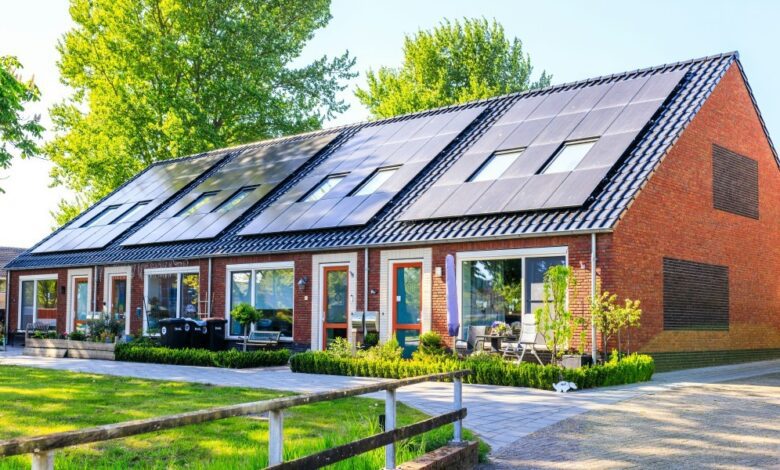
An innovative housing solution is gaining popularity in Spain, combining energy efficiency, environmental sustainability, and economic benefits. We’re talking about prefabricated homes equipped with solar panels. Integrating solar energy systems into industrialized housing not only significantly reduces the carbon footprint but also leads to substantial monthly savings on electricity bills, aligning with modern trends in eco-friendly construction.
Savings and Sustainability: Key Benefits
The combination of prefabricated building technologies and renewable energy offers significant advantages for those seeking a modern and responsible alternative to traditional construction. Living in a home that generates its own energy transforms the approach to resource management. In the long term, owners of such homes benefit from substantial utility savings, as the initial investment in solar panels typically pays off in 6–8 years. The use of renewable energy also reduces CO2 emissions, positively impacting the environment.
In addition, the government encourages the transition to green energy. Various national and regional subsidies make installing panels even more attractive. The ability to be partially or fully independent from the main power grid provides autonomy and protects against rising rates or supply interruptions. It’s also worth noting that eco-friendly, self-sufficient homes are increasingly sought-after in the real estate market, which over time boosts their value.
Which panels should you choose?
When choosing a prefab home with solar panels, it’s important to select the technology that best meets your needs. Two types of panels are most common in the residential sector. Photovoltaic panels convert solar radiation directly into electricity. They are ideal for powering household appliances, lighting, and other devices, significantly reducing utility bills.
The second type is solar thermal panels. These use solar energy to heat water, which is then used for household needs (showers, faucets) or the home heating system. This option is especially effective for optimizing overall energy consumption, as it covers a significant portion of hot water demand.
How much does such a home cost?
The price of a prefab house with an area of 100 square meters, equipped with solar panels, depends on many factors: quality of materials, design complexity, type of installed panels, additional equipment, and geographic location. Approximately, the base construction cost ranges from €55,000 to €80,000, while premium options with maximum energy efficiency and designer materials can range from €100,000 to €160,000.
Additional costs must be considered for the foundation, exterior works, interior finishing, and utilities. As a result, the total estimated turnkey project cost ranges from €89,000 to €149,000 for a standard option, and from €185,000 to €289,000 for a premium one. Installing a photovoltaic system with a capacity of 4–6 kWh will add between €6,000 and €14,000 to the total cost.
Tax benefits and permits
When planning to install solar panels, it’s important to be aware of the tax incentives offered by Spanish law. Currently, you can qualify for income tax (IRPF) deductions of up to 40% of your total investment, with a maximum limit of €5,000 to €7,000 per home per year. Many autonomous communities also provide additional reductions on property tax (IBI) and construction tax (ICIO), offering even more savings in the medium term.
It is important to remember that in Spain, you cannot install solar panels without obtaining the necessary permits. Although procedures have been simplified in recent years, you are still required to apply for a minor construction license or submit prior notice of installation. If the property is part of a homeowners’ association and the installation affects common areas, approval from the association is required; otherwise, fines may be issued.