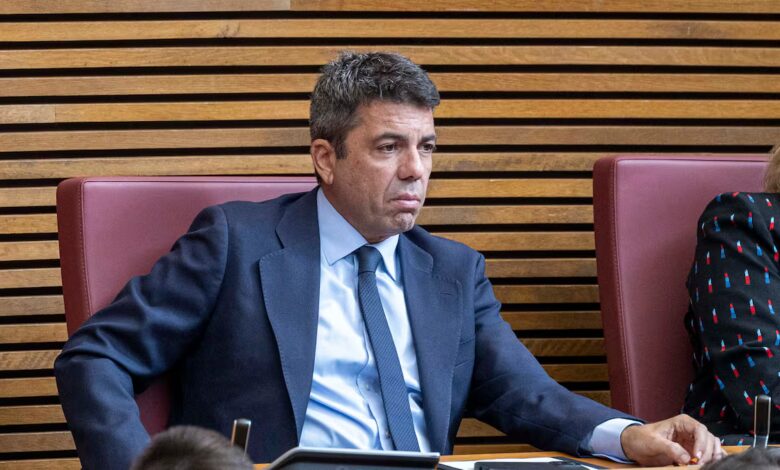
Spain continues to investigate one of the most tragic disasters in recent years—the flood that claimed 230 lives in Valencia in October 2024. Public attention is focused on the actions of the regional leadership on the day of the tragedy, since the fate of thousands of residents depended on their decisions. Judicial authorities are now relying on testimony from those closest to former regional president Carlos Mazón at the time of the disaster.
Judge Nuria Ruiz Tobarra from Catarroja has scheduled the questioning of three guards who accompanied Mazón on the day of the disaster for February 9. Their status is that of witnesses, which requires them to answer questions from all parties and speak only the truth. Their testimonies could shed light on how decisions were made during those critical hours, and why some actions by the authorities raised so many questions among local residents.
Route details
On the day the disaster struck Valencia, the meteorological agency Aemet declared a red alert—the highest level of warning. Despite this, Mazón chose not to alter his official schedule. In the morning, he attended three events and then spent nearly four hours at lunch with journalist Maribel Vilaplana at El Ventorro restaurant. Meanwhile, floodwaters were already beginning to spill from the Barranco del Poyo in the suburbs of Chiva and Cheste.
After lunch, which ended around 18:45, came the most mysterious period in Mazón’s movements — 37 minutes when he was unreachable. According to Vilaplana, after the restaurant Mazón accompanied her to the parking lot at Plaza Tetuán, where she picked up her car. Then, according to the official version, the former president headed to the government building and later to the Emergency Coordination Center (Cecopi) in L’Eliana, where a crisis management meeting had already been ongoing for several hours.
Criticism and questions
Mazón arrived at the Coordination Center only at 20:28 — 17 minutes after the Es Alert emergency warning was sent to residents’ mobile phones. Investigators believe that if this system had been activated earlier, more lives could have been saved. This time gap is precisely what raises the most questions among both investigators and the public.
The testimonies of the security guards should help piece together the exact chronology of events and clarify why the regional leader did not respond to the worsening situation. The legal proceedings are particularly sensitive, as Mazón still holds a parliamentary seat and enjoys immunity, meaning he can only be held accountable by decision of the highest judicial authority in the region.
New witnesses
As part of the expanded investigation, the judge has also summoned Avelino Mascarell, the regional environmental deputy who heads the provincial fire consortium, to give testimony. His hearing is scheduled for March 2. Previously, former fire chief José Miguel Basset had already been questioned; under his command, rescuers left the danger zone an hour and a half before the water spill.
Additionally, interrogations of two commanders from the Military Emergency Unit (UME), who took part in the disaster response, are scheduled for March 4 and 5. Investigators are trying to determine whether there were coordination errors between various services and why emergency measures were not taken in time.
Political context
The court’s decision to question Mazón’s close associates became possible after an appeals court in autumn 2025 required the Catarroja judge to broaden the circle of witnesses. Until then, the investigation had avoided directly scrutinizing the politician’s actions, citing his special status. Now, attention to the specifics of his route and decisions on the day of the tragedy has become a central element of the case.
The investigation continues, and each new testimony could change not only the course of the case but also the region’s political landscape. Questions about exactly how the authorities acted at the critical moment remain unanswered, while the public awaits further details.