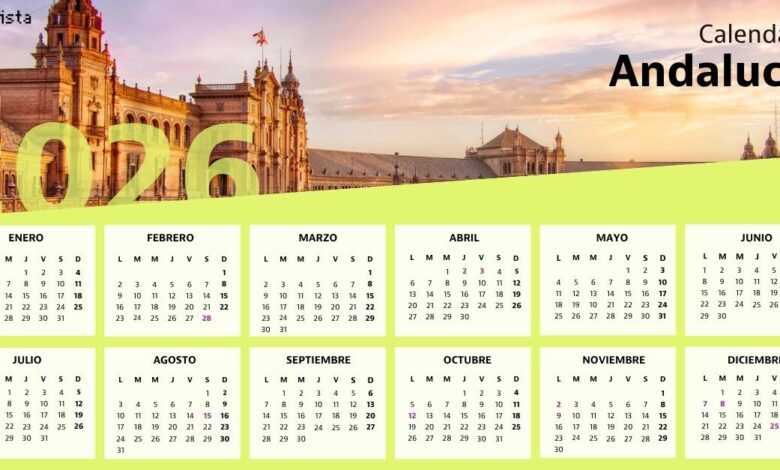
The Andalusian government has officially released the work calendar for 2026, granting residents a total of fourteen public holidays. The corresponding decree has already been approved, so it’s time to grab your planners and start mapping out future mini-breaks. As always, the calendar artfully blends national, regional, and local holidays, ensuring everyone can find a moment to pause and recharge.
Let’s start with the holidays observed across Spain. The new year kicks off with a day off on Thursday, January 1, giving everyone a chance to recover from New Year’s Eve celebrations. Just a few days later, on Tuesday, January 6, the country marks Epiphany, or Three Kings’ Day, celebrated with vibrant parades and traditional pastries. The spring holiday period begins with Good Friday on April 3, a day when the streets of Sevilla and Málaga are filled with their famous religious processions. A month later, on Friday, May 1, the whole country observes Labor Day.
Summer highlights include the Assumption of the Virgin on August 15, which in 2026 falls on a Saturday. In autumn, Andalusians can look forward to a long weekend thanks to Hispanic Day on October 12, which lands on a Monday. The year concludes with winter festivities: on Tuesday, December 8, the region celebrates the Immaculate Conception, and on Friday, December 25, Christmas brings a festive atmosphere of family warmth, carols, and nativity scenes.
In addition to national holidays, there are also Andalusian regional celebrations. The main one is Andalusia Day on February 28, which in 2026 falls on a Saturday. This day marks the anniversary of the regional autonomy referendum. Other designated regional holidays include Maundy Thursday, April 2, which comes before Good Friday and holds special significance in Granada, along with two ‘moved’ holidays. All Saints’ Day (November 1) will be observed as a day off on Monday, November 2, and Constitution Day (December 6) on Monday, December 7, creating two full long weekends.
In addition to these twelve days, each municipality in Andalusia will add two more of its own local holidays. This means that Almería, Cádiz, Córdoba, Granada, Huelva, Jaén, Málaga, and Sevilla will each have unique days off linked to local fairs, patron saint celebrations, or other important events. The complete list of these dates for every locality has also been published, allowing residents to plan not only their work schedules in advance but also participation in traditional fiestas.