In early 1905, nineteen-year-old Alfonso XIII, King of Spain, embarked on a months-long tour of Europe’s royal courts. His objective was clear: to find a wife, start a family, and provide the country with an heir to the throne. His mother, Queen María Cristina, insisted on an aristocratic Catholic candidate, preferably from Austria. However, the young monarch dreamed of marrying for love.
The Spanish newspaper ABC even conducted a special poll, inviting readers to choose the most suitable bride from eight princesses. Among the contenders were Luisa of Orléans, Victoria of Prussia, Patricia of Connaught, and Eugenia of Battenberg. Eugenia, known as Ena, won by a wide margin, receiving more than 18,000 votes. Her cousin Patricia came in second with 13,000 votes. Remarkably, the readers’ preferences matched those of the king himself.
The search for a bride for the king
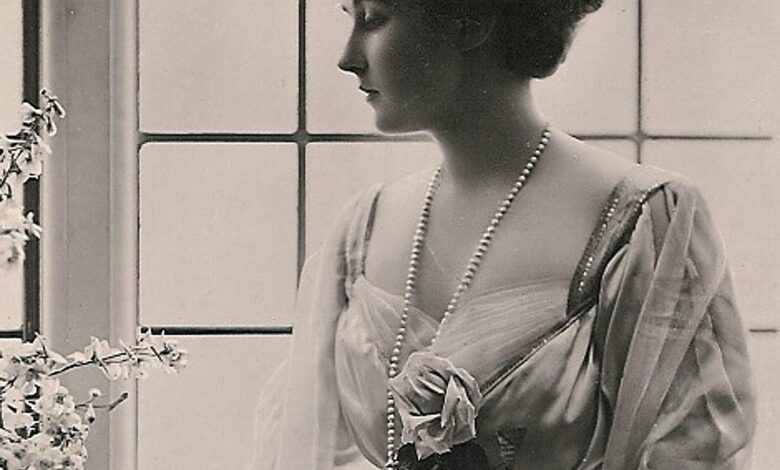
Initially, Alfonso XIII of Spain and Edward VII of Britain had very different plans. During his week-long visit to England, Alfonso was closely watched by Edward VII, who did everything he could to match him with his niece, Princess Patricia of Connaught. She was the daughter of Prince Arthur, Queen Victoria’s seventh child, and Princess Louise Margaret of Prussia. Patricia, or Patsy as her family called her, was renowned for her beauty.
Nevertheless, at every event where she encountered the Spanish monarch—most notably at the Buckingham Palace ball held in his honor—the princess displayed complete indifference. She openly told everyone she had no interest in marriage, much to the despair of her parents. It was at that ball that Alfonso XIII turned his attention to Victoria Eugenie, the younger niece of Edward VII. Her position was less advantageous: she bore the title of princess, but not royal princess, as her father did not belong to the ruling dynasty. But fate had other plans. Ena became Queen of Spain, while Patricia, to whom this role was once expected, ultimately renounced all her titles for love.
The Independent Princess
Victoria Patricia Helena Elizabeth, born on March 17, 1886 at Buckingham Palace, held the title of Her Royal Highness from birth. Queen Victoria referred to her as a “sweet and precious creature.” Although the princess spent her childhood at Bagshot Park in Surrey, her youth was filled with travel due to her father’s senior position in the Royal Navy. She visited India, Canada, Mediterranean countries, and North Africa. After her mother’s death from Spanish flu in 1917, Patricia took on the role of hostess, which required an active social life.
As Patricia and her elder sister Margarita grew up, they were considered the most beautiful princesses in Europe. Their uncle, King Edward VII, set himself the goal of marrying them off to European monarchs or heirs. The family visited Portugal to meet the sons of King Carlos I, but it led to nothing. They then traveled to Sudan and Egypt, where the sisters were to meet Crown Prince Gustaf Adolf of Sweden. It was expected he would pair with Patricia, but the prince fell head over heels in love with Margarita, and by the end of the trip they were already engaged.
Love versus title
Patricia was known for her disregard of British court traditions. She loved outdoor sports: golf, skiing, swimming, cycling, and riding astride—something considered improper for women at the time. Her faithful companion was a parrot that traveled with her everywhere, often perched on her shoulder. The princess also had a passion for art and painted in watercolor, becoming in 1957 the first member of the royal family admitted to the Royal Society of Watercolour Artists.
Despite unsuccessful matchmaking attempts with Portuguese and Swedish heirs, Patricia attracted the attention of numerous kings and princes over the course of a decade. Among her suitors were the King of Spain, the Count of Turin, and Grand Duke Mikhail Alexandrovich. However, she insisted that marriage was not of interest to her. Everything changed when she met her father’s aide-de-camp, Alexander Ramsay, a career officer of the Royal Navy and a war hero. Their romance remained secret for ten years. A royal princess’s relationship with a man without a title was unthinkable at the British court. They met in 1908, but only in 1918—after the First World War changed many traditions—did the palace give its consent for their marriage.
A New Life as Lady Ramsay
On her wedding day, February 27, 1919, with King George V’s permission, Patricia renounced her title of Princess and the style “Royal Highness,” becoming Lady Patricia Ramsay. She sought a more private life, away from royal duties. Her wedding was the first public royal wedding held in Westminster Abbey since 1320. Thousands lined the streets to witness the newlyweds’ procession.
The couple first settled in Paris and later moved to Canada. Patricia was an active supporter of the women’s suffrage movement, and the press dubbed them “pioneers.” They were often photographed dancing at trendy venues. Alexander rose to the rank of admiral and passed away in 1972 at the age of 91. Patricia survived him by a short time, dying on January 12, 1974, at the age of 87. They were survived by their only son, Captain Alexander Ramsay.
Incidentally, Alfonso XIII, whom Patricia declined, ruled Spain from birth (his mother’s regency lasted until 1902) until the proclamation of the Second Spanish Republic in 1931. His marriage to Victoria Eugenie of Battenberg was marred by tragedy on their wedding day, when an anarchist attempted to attack their procession. It was later revealed that the queen was a carrier of hemophilia, which she passed on to two of her sons. Political instability, the dictatorship of Primo de Rivera, and the ensuing economic crisis led to the fall of the monarchy. Alfonso XIII was forced to leave the country and died in exile in Rome in 1941. His grandson, Juan Carlos I, ascended the Spanish throne in 1975 after the death of dictator Franco.