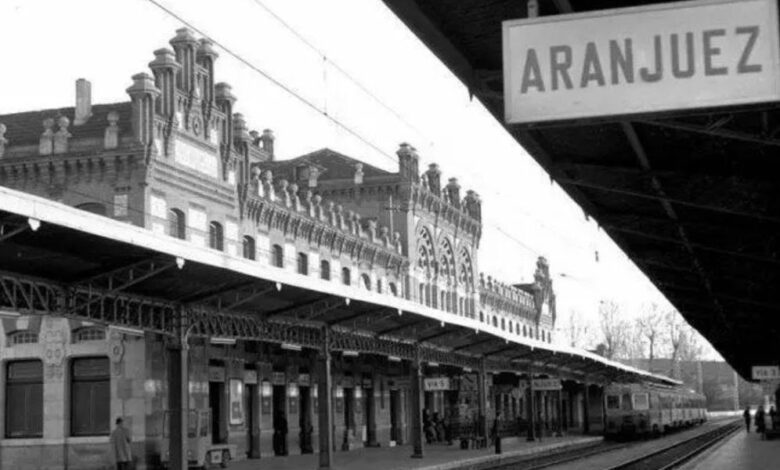
The anniversary of Madrid’s first railway line is more than just a historical date. It serves as a reminder of how a single decision can transform a city’s landscape and its national role. In 1851, the capital gained a direct connection to Aranjuez, marking a turning point for the region’s economic and social development. For the first time, Madrid appeared on the European railway map, allowing the city to catch up with other capitals in terms of transport and infrastructure.
The path to change
The idea to link Madrid with Aranjuez emerged as early as the 1830s. The project was not only technical but also strategic: it was intended to make travel between the city and the royal residence easier and to spur suburban growth. According to Elconfidencial, the initiators believed that the train would let Madrid residents reach Aranjuez quickly, spend time there, and return the same day. This became the first step towards the culture of short leisure trips, which would later become a signature of city life.
It took two decades to overcome bureaucratic and financial hurdles. In February 1851, trains traveled the 49-kilometer route for the first time, connecting Madrid with cities like Getafe, Pinto, Valdemoro, Seseña, and Aranjuez. This line opened the capital’s route to the south and east of the country, and a few years later became part of the main line to Alicante, turning it into Spain’s first major radial railway network.
Archives and memory
To mark the 175th anniversary of the line’s launch, the Spanish Railways Foundation (Fundación de los Ferrocarriles Españoles) has provided access to unique archival materials. Over a hundred documents and photographs are now available to everyone on the Docutren portal. Among them are construction records, operational reports, fare tables, timetables, as well as rare images of the first trains and stations. These materials offer insight into how the line has evolved from the mid-19th century to the present day, showcasing the development of infrastructure, including the station expansions and the modernization of rolling stock.
Photographs capturing key moments in history hold a special place: the installation of the Atocha station facade in 1891, the construction of the Aranjuez station in the 1920s, as well as the daily life of railway workers. Thanks to these images, one can vividly see how the city and its transport system have transformed over the years.
Modern significance
Today, the historic route remains active: the C-3 commuter rail line runs along its tracks, as does the famous ‘Strawberry Train’ (Tren de la Fresa), which since 1984 has recreated the atmosphere of the first journeys between Madrid and Aranjuez. Several organizations jointly support this project to preserve the memory of a pivotal stage in the capital’s transport development. The line is still in demand, serving as a reminder of how past innovations continue to shape the habits and opportunities of today’s residents.
Issues surrounding the development of railway infrastructure remain relevant today. For example, there was a recent discussion about the partial reconstruction of the Madrid-Seville line, where significant funds were spent but the work was not fully completed. This sparked a wave of criticism and debate about safety and the effectiveness of investments, as examined in detail in the article on the challenges of upgrading the railway between Madrid and Seville.
Historical context
Railways have always been a driving force for change in Spanish cities. In recent years, Spain has seen anniversaries of its oldest lines as well as the launch of new high-speed routes connecting major cities. In 2024, for instance, the opening of new AVE sections was discussed, allowing travel time between Madrid and Valencia to be reduced. Such events consistently spark interest and debate about the future of the country’s transport system, its role in the economy, and its impact on society. Each new project or anniversary provides a reason to reflect on how transport shapes the development of cities and the habits of their residents.