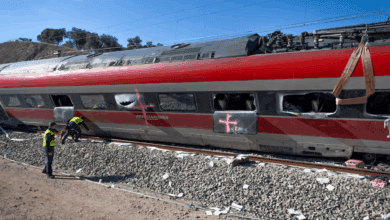
The situation on the Rodalies railway network in Catalonia remains tense: nearly three months after the Gelida accident, 179 temporary speed restrictions are still in place on the lines. For local residents, this means daily delays, fewer trains, and the need to adjust their usual routes. The return to normal schedules is progressing slowly, and the aftermath of the accident is still being felt, impacting the mobility of thousands of passengers.
According to El Pais, after the incident on January 20, the number of sections with speed restrictions grew sharply, exceeding 220 in February. Now, despite the gradual lifting of some measures, there are still nearly 180. Representatives from Adif and Renfe say that on weekdays, 846 trains are running daily—94% of the pre-accident volume. However, recovery is moving slower than expected, and authorities anticipate being able to fully lift all restrictions only by June.
Reasons for the restrictions
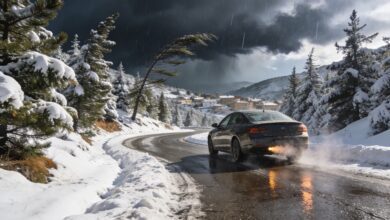
Temporary speed restrictions on Rodalies are due to various factors: adverse weather conditions, technical faults, repair works, and identified infrastructure defects. After the accident, which coincided with the severe storm Harry, Adif specialists inspected more than 690 railway infrastructure elements. They reinforced 33 embankment and excavation sections, and over 400 specialists, including 360 workers and engineers and 50 inspectors, were involved in the effort.
One of the risk reduction measures has been the large-scale removal of trees along railway lines: since the start of the year, 13,680 trees have been cut down, including 5,745 on the Maçanet-Portbou section. This is linked to the risk of trees falling onto the tracks or overhead lines, especially in areas prone to strong winds. As noted by El Pais, such measures are now part of a comprehensive safety program implemented after the accident.
Condition of Rodalies lines
The restoration of service differs across lines. On the R1 line (Molins de Rei — Maçanet-Massanes), 190 trains run on weekdays, matching pre-crisis levels, although the route is temporarily shortened due to ongoing works in Molins de Rei and Sant Feliu. Since April 7, direct service between Maçanet and L’Hospitalet has resumed, and the bus replacement between Blanes and Maçanet has been cancelled.
The R2 line (Sant Vicenç de Calders — Maçanet-Massanes), together with R2 Nord and R2 Sud, provides 267 trips daily, also at 100% of the previous frequency, but with a reduced timetable due to tunnel repairs in Garraf, expected to continue until June. On the R4 line (Sant Vicenç de Calders — Manresa), 140 trips are operated, which is 89% of earlier volume, and since April 7, service between Sant Vicenç de Calders and Terrassa Estació del Nord has been restored.
Most affected routes
The R3 line (l’Hospitalet de Llobregat — Puigcerdà) has been hit hardest: only 32 trips are operated daily, which is 49% of pre-crisis levels. The reasons are ongoing works in Montcada Bifuració, track doubling between Parets and La Garriga, and the aftermath of the storm, which has fully suspended service between Ripoll and Puigcerdà. A reduced schedule is in place between La Garriga and Ripoll, with bus transfers throughout the entire line.
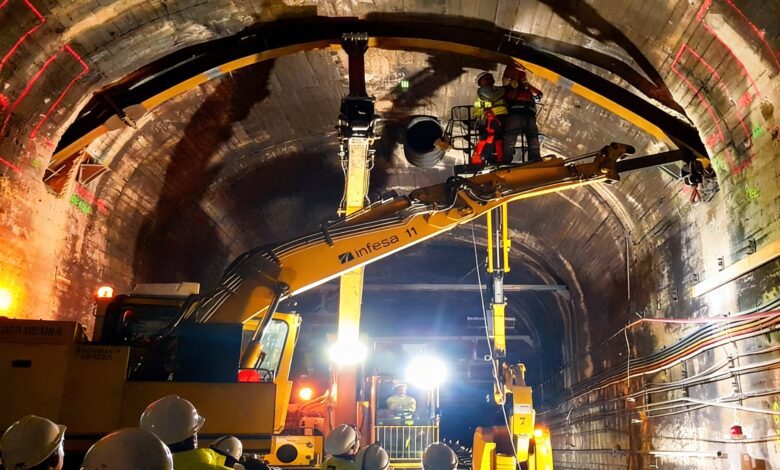
The R8 line (Martorell — Granollers) is operating only between Rubí and Granollers Centre, while buses are replacing trains between Rubí and Martorell due to repairs in the Rubí tunnel. In the tunnel’s critical section, the side ballast has already been removed, foundations have been reinforced along 130 meters, 44 trusses have been installed over 53 meters, and concreting and assembly of new structures are ongoing. This work began on March 14 and has completely halted freight traffic until May.
Background and recent developments
In recent years, Catalonia’s rail infrastructure has repeatedly faced major disruptions due to severe weather events, technical failures, and track wear. In 2023, similar restrictions were imposed after heavy rains in the Barcelona area, and in 2024 due to an embankment collapse on the R4 line. Each time, repairs required months of work and significant investment. According to russpain.com, such incidents are becoming increasingly common as the infrastructure ages and passenger numbers grow, demanding new safety solutions and investments in railway modernization.