In Extremadura, political tension has reached its peak: negotiations between Vox and the People’s Party (PP) have hit a deadlock, and the fate of the regional government remains uncertain. For local residents, this means uncertainty regarding the budget, social programs, and government stability. The possibility of new elections could usher in a prolonged period of instability, a prospect that is already causing concern among local businesses and ordinary citizens.
Negotiations yield no results
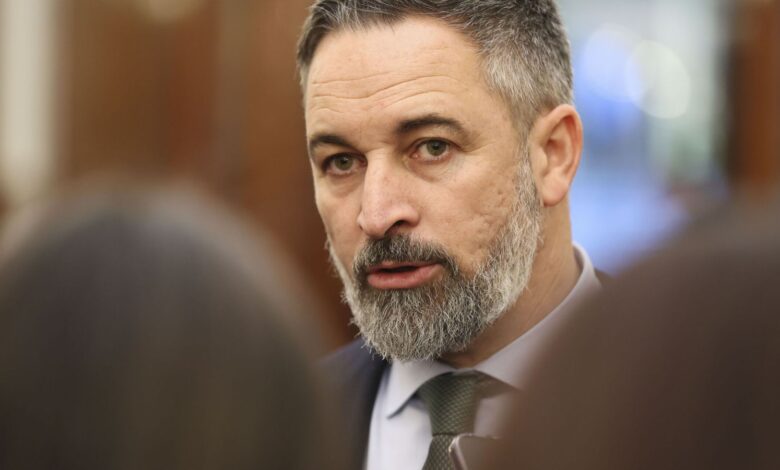
Santiago Abascal, leader of Vox, openly stated that he does not rule out new elections in Extremadura if an agreement with PP on a coalition cannot be reached. According to him, the party demands not just a formal agreement, but real participation in managing the region. The reason for such a firm stance, in Vox’s opinion, is a loss of trust in their negotiation partners. Abascal emphasized that all scenarios remain on the table—from forming a joint government to sending voters back to the polls.
Speaking to journalists in the corridors of Congress, Abascal made it clear that it is the PP’s turn to make the next move. He recalled that agreements have already been reached in other regions and that Vox’s interests are well known to their opponents. However, the situation in Extremadura has become more complicated, and now the party is demanding additional guarantees to avoid repeating past mistakes.
Internal disagreements
Special attention has been drawn to María Guardiola, who is currently serving as acting head of the region. Abascal did not rule out the possibility of demanding her resignation if it would help break the negotiation deadlock. At the same time, he noted that the final decision on this matter rests with the PP, not Vox. According to the politician, the main disputes and disagreements are taking place within the Partido Popular, which is preventing them from forming a unified position.
Abascal also voiced dissatisfaction with the way the negotiations are proceeding. In his view, the PP changes its position too frequently, making meaningful dialogue nearly impossible. He noted that any attempts by Guardiola to reach out to Vox are immediately blocked by the party leadership at the national level. According to Vox, this demonstrates a lack of seriousness on the part of their partners.
Possible scenarios
The Vox leader emphasized that he is not ready to rule out any possible developments. According to him, the negotiations are currently not constructive, making the outcome difficult to predict. Abascal made it clear that the decision on the future government of Extremadura should be made by the PP leadership, not by individual local party members.
He also added that Vox does not intend to discuss negotiation details through the media, considering such an approach ineffective and damaging to the process. The party insists on conducting talks with a serious partner who sticks to a single line and doesn’t change the terms along the way.
Context and consequences
The situation in Extremadura echoes recent developments in other regions, where Vox has been actively vying for influence in local parliaments. For example, in a report about how the party is strengthening its position in small towns, it was noted that Abascal’s strategy often relies on tough demands and ultimatums. This approach has already led to protracted negotiations and even repeat elections in some autonomous communities.
In recent years, Spain has repeatedly faced situations where coalition formation dragged on for months. In 2023, a similar crisis erupted in Murcia, where parties struggled to agree on cabinet allocations, while in Castilla y León, negotiations were marred by public disputes between leaders. Such political deadlocks often fuel voter distrust and weaken traditional parties. As a result, even smaller parties have a chance to boost their influence, and regional governments become hostages to internal party disagreements.