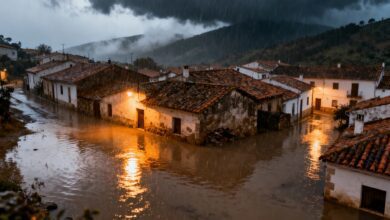
Unrest in Cádiz as hundreds evacuate homes due to flood threat. Authorities in Andalucía ordered the urgent evacuation of 470 homes located downstream from the Guadarranque reservoir as Storm Francis brought torrential rains and dangerously high water levels. Residents of San Roque and Los Barrios woke to anxiety, fearing the situation could spiral out of control at any moment.
The reservoir water reached a critical level, with the 4 a.m. high tide adding to the tension. Fortunately, rain stopped by morning, allowing some evacuees to return. Yet concerns remain: water at Guadarranque peaked at 99.83%, and only luck spared the region from severe flooding. Local authorities said the emergency spillway was close to overflowing but held for now. The situation has since stabilized, river flow has decreased, and experts hope any further releases will stay under control.
Roads buried under snow
While the residents of Cádiz battled flood threats, the rest of Spain faced a different ordeal—heavy snowfall. Overnight, the storm swept across the country, and by morning, 32 roads were reported in difficult conditions, including several major transport arteries. For example, the A-2 in Barcelona was completely shut down after an accident near Cervera. The problems didn’t end there: traffic was seriously disrupted on the A-2 in Fraga, the A-3 in Arganda del Rey, and the A-42 in Casarrubelos. In Castilla y León, snow and fog turned roads hazardous, and in Salamanca, the DSA-191 section through the Candelario mountains was totally closed to traffic.
In Madrid, snow began falling before dawn, but the city was prepared for the challenge. Municipal services deployed 154 vehicles to spread salt on main roads, hospital access points, and tunnels. Thanks to these efforts, major incidents were avoided, even though the morning was tough for drivers. Not all regions coped as well, however: on secondary roads in Castilla y León, traffic moved with significant delays and drivers had to exercise extreme caution.
A test for the regions
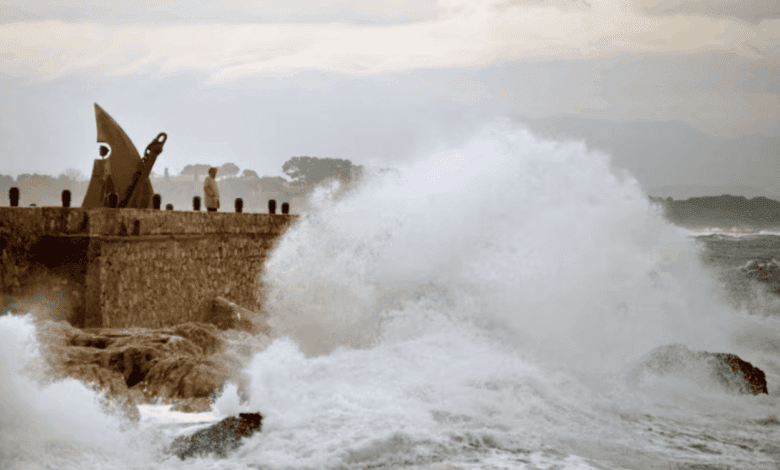
Storm Francis spared no part of the country except Extremadura and the Canary Islands. Weather warnings were issued in all other regions. The north and center of Spain were hit especially hard, with rapidly dropping temperatures and heavy snowfall replaced by thick fog. Authorities urged residents not to travel unless absolutely necessary and to closely monitor changing weather conditions.
In Castilla y León, despite the frost and snow, serious accidents were avoided. However, heavy traffic and poor visibility proved a real challenge for drivers. Regional authorities emphasize that the situation remains tense and it’s too soon to let your guard down. On some mountain roads, driving is only possible with chains, while on others it is completely prohibited.
Response and aftermath
The entire country is on alert, wondering what tomorrow may bring. In Cádiz, people anxiously watch the water levels, while in Madrid and Barcelona, all eyes are on the weather forecasts. Spaniards are no strangers to nature’s whims, but this winter seems determined to test their resilience. Authorities are responding swiftly, but not all consequences of the storm can be prevented.
The evacuation in Andalucía showed that even with thorough preparation, nature can deliver unexpected surprises. Still, people remain optimistic, hoping the worst is behind them. But it’s too soon to relax—Storm Francis has not fully passed, and new challenges may still lie ahead.