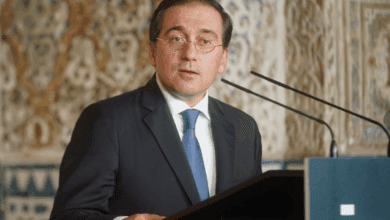
A heated debate has erupted in Aragón ahead of the elections over an unexpected personnel decision. Five days before the vote, Jorge Azcón, the incumbent president and People’s Party candidate, announced his intention to appoint Eva Valle as the new economic advisor. This move immediately became a hot topic among politicians and economists, as this is a key position that will shape the region’s development in the years to come.
The focus on this appointment is fueled not only by its timing—just days before the election—but also by Valle’s impressive track record. Her résumé includes roles at institutions such as the World Bank, the Bank of Spain, and the Economic Office under the presidency of Mariano Rajoy. Such a choice could be a signal to voters of the future government’s intention to prioritize professionalism and international experience.
Reaction and expectations
Azcón’s announcement was made at a press conference at Teruel Airport, immediately sparking a wave of comments. Many experts note that such decisions are rarely taken before the official election results, especially when the outcome is still unclear. However, polls predict a win for Azcón, though he will likely need support from the Vox party to secure a majority.
The candidate himself emphasized that Aragón is not just experiencing a period of economic growth, but undergoing profound change. According to him, the region is poised to become a leader in development rates among Spain’s autonomous communities. In this context, the choice of an experienced economist appears to be an attempt to strengthen trust in the future cabinet and demonstrate the seriousness of their intentions.
A professional choice
Eva Valle, according to Azcón, has an “outstanding” career. She has not only held senior positions in national and international financial institutions, but also oversaw economic policy at the highest level. Such a profile, Azcón’s supporters believe, is essential for implementing ambitious plans for Aragón’s development.
At the same time, critics point to the unusual timing: announcing an appointment before the elections may be seen as an attempt to influence voters’ opinions or even as a sign of overconfidence. Political circles continue to debate whether this move is justified and how it will impact the election results.
Economic prospects
Azcón is betting on independent economists’ forecasts of steady growth for Aragón in the coming years. According to him, this is exactly why the team needs to strengthen its economic wing with a specialist of international standing. Valle, in the view of the future government head, is capable not only of supporting but also accelerating positive trends.
However, one question remains: how will voters react to such an early announcement, and will expectations for an economic breakthrough be met? In a situation where the region’s political climate remains tense, every personnel decision takes on added importance.
Context and analogies
In recent years, Spain has repeatedly faced situations where candidates for key positions were announced before the electoral process had concluded. For example, similar moves in Catalonia and Madrid have sparked lively debates and sometimes led to unexpected election outcomes. In some cases, early appointments helped strengthen the party’s position; in others, they drew criticism and even prompted a change in strategy. Such decisions always impact the political climate and can shift the balance of power at the last moment.