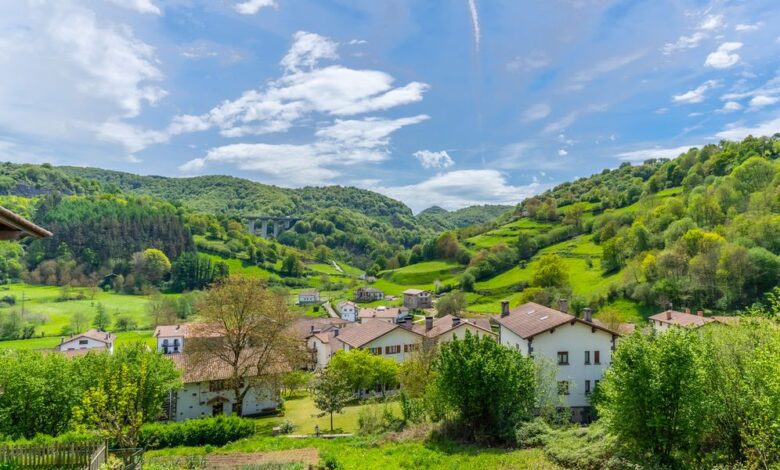
Nestled in the heart of the green valleys of northern Navarra, just a few kilometers from the Basque Country border, lies a place where nature, tradition, and history come together as one. This is Areso—a tiny municipality with just over 300 residents that has managed to preserve its pristine rural character. Clustered cozily around an ancient church, the village showcases traditional architecture featuring heraldic houses and farm buildings with wooden balconies and gabled roofs, reflecting the cultural blend of the two regions.
Arriving here, you feel as if time slowed down several decades ago. The surrounding mountains, covered with beech and oak groves, turn into a real work of art in autumn, painted in golden and ocher hues. For travelers, this place becomes a genuine retreat from the hustle and bustle of city life, offering the chance to enjoy nature without crowds of tourists. Its location between the Larraun valley and the Gipuzkoan region of Tolosaldea gives it strategic importance and a unique local flavor.
Areso is part of that very ‘green’ and mountainous Navarre, which in autumn offers some of the most breathtaking landscapes in northern Spain. The surrounding forests turn into a vibrant mosaic of colors, drawing photographers and fans of leisurely strolls. The area around the Sierra de Aralar range is a paradise for hikers: majestic beech forests, deep caves, open meadows, and one of the densest clusters of megalithic monuments in the region. Every trail here has its own story, and every step invites you to pause and take in the scenery.
Among the most popular routes is the path to the Larraspil Dolmen. This moderately challenging trail winds through an enchanting beech forest and ends at a small summit with panoramic views over the valley. For cyclists, the ‘Greenway’ of Plazaola is the perfect choice—once a narrow-gauge railway connecting Pamplona with San Sebastián. Today, it’s a scenic route through tunnels, meadows, and hidden villages, letting you soak up both the landscape and the region’s railway heritage at an unhurried pace.
The cultural heritage of Areso is also worth noting. The local church of San Esteban, founded in the Middle Ages, has preserved its Romanesque and Gothic elements despite numerous renovations. Surrounding it are historic manor houses with family crests carved in stone—reminders of a time when the valley thrived on livestock and agriculture. Traditions remain alive here: during local festivals, music and dance mingle with the sounds of the txalaparta, while residents don the traditional costumes of northern Navarra. In autumn, Areso becomes a hotspot for mycologists. Its forests are rich in mushrooms, drawing gourmets and mushroom hunters from across the region every year. It’s also a great opportunity to try the famous Idiazabal cheese, made from the milk of Latxa sheep—a breed unique to this area.