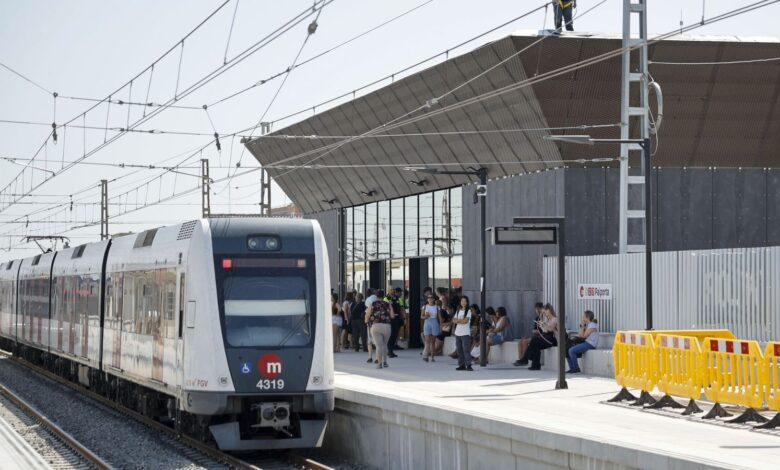
The restoration of Metrovalencia’s infrastructure after the devastating flood in autumn 2024 involved not only urgent repair works, but also a series of violations during contract awards. The regional audit office (Sindicatura de Cuentas) in its latest report points to numerous deviations from legal requirements in emergency procurements carried out by Ferrocarrils de la Generalitat Valenciana (FGV). The audit covered fifteen contracts that were hastily signed after the overflow of the barranco del Poyo stream and found that in several cases, prices were set without proper justification and the contractor selection process lacked transparency.
Experts note that under force majeure circumstances, FGV did not always adhere to public procurement laws. Specifically, there were no detailed project plans or analyses of actual needs, which resulted in inflated estimates and the need for subsequent revisions. For example, a contract for the restoration of stations in Paiporta and Picanya with Vilor Infraestructuras, worth 2.2 million euros, later had to be reduced after discrepancies were discovered.
Contractor selection
In five of the reviewed cases, auditors found no documentation explaining why certain companies were chosen. The only justification was their willingness to start work quickly and the availability of necessary equipment, but this was insufficient for a transparent process. The report emphasizes that such practices violate principles of openness and competition.
Special attention was given to the largest contract, worth 23 million euros, which involved the restoration of the València Sud complex. The project was split into three parts, awarded to Torrescámara, Eiffage Infraestructuras, and Vialobra. In two out of three cases, the deadlines had to be extended until 2026, and the contract terms were revised.
Questionable urgency
The Court of Auditors also questioned the need for emergency procedures in some procurements. For example, the contract with Nokia to supply equipment for the FGV command center was signed under a fast-track process, but work had not begun even six months after its signing. Auditors believe that in this case, a standard or accelerated procedure could have been used, ensuring greater transparency and competition.
The report notes that such decisions lead to project delays and increased costs. In the case of the new València Sud command center, execution was delayed by several months, and the 641,000-euro contract was not completed on time.
Procurement fragmentation
Another violation was the artificial splitting of contracts. For instance, 4.4 million euros were allocated to organize temporary bus routes replacing trains on the southern line. The order was split among three companies: Castrimil, Tomás Granero, and Autobuses Vialco. There was no explanation as to why less restrictive procedures, such as accelerated or negotiated procurement, were not used.
Auditors identified eleven cases where services and supplies were split into smaller contracts to avoid open tenders. Such practices violate the principles of competition and transparency, as directly stated in the report.
Lack of oversight
In 2024, FGV failed to implement mechanisms to identify and prevent conflicts of interest when signing emergency contracts. Declarations of no conflict of interest were only signed in March 2025, months after most agreements had already been concluded.
Moreover, the 2024 annual report did not reflect 28 emergency contracts totaling €18.3 million. The documents made no distinction between regular and emergency procurements, even though the latter accounted for more than a third of FGV’s total annual expenditures.
In case you didn’t know, Ferrocarrils de la Generalitat Valenciana (FGV) is a state-owned company that operates the railway and metro systems in the Valencian Community. It is responsible for running and developing the Metrovalencia network and tram lines in Alicante. FGV was established in 1986 and has since become a key transportation operator in the region, serving millions of passengers every year. The company regularly undertakes large-scale infrastructure projects and is considered one of Spain’s largest transportation entities.