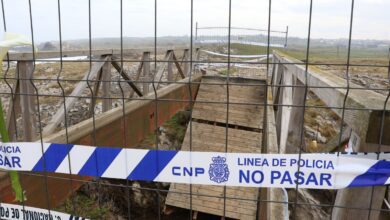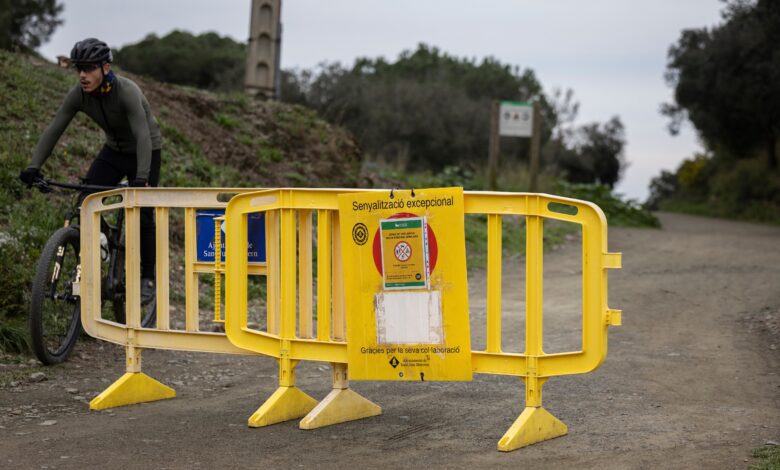
An outbreak of African swine fever in Barcelona has led to unprecedented restrictions for residents and visitors. After an infected wild boar was discovered within the city limits, Catalan authorities decided to completely close off access to natural areas to prevent the spread of the virus. This measure affects not only outdoor enthusiasts and athletes but also impacts businesses and daily life in nine municipalities, including Barcelona itself.
Starting March 14, all entrances to Collserola Natural Park, which spans 83 square kilometers and stretches from Nou Barris to Les Corts, have been shut down. According to El Pais, the restrictions cover all forest trails, fields, riverbanks, and even farmland outside the city. The only exception is for paved roads and road shoulders, where movement is still allowed. Any other activities—running, cycling, walking, excursions—are now strictly prohibited.
Authorities emphasize that these measures are essential to prevent the virus from being spread on shoes, car wheels, or by pets. Hunting is permitted only under the supervision of specialists from the Department of Agriculture, and the movement of domestic pigs is completely banned. Violating the new rules could have serious consequences for animal health and the region’s economy.
What is allowed
Despite strict restrictions, access to residential homes located in the Collserola area remains open. Restaurant owners and other businesses can continue operating, but their customers will not be able to walk in the forest. Educational institutions and sports complexes in the mountainous areas of Barcelona continue to operate as usual. According to El Pais estimates, the Tibidabo amusement park will also remain open to visitors, as its grounds are paved.
Agricultural herds of sheep and goats within Collserola may remain in place, but moving animals outside the risk zone is prohibited. Owners of pigs for personal consumption are also not allowed to move their animals. These measures are aimed at minimizing any risk of the virus spreading beyond the infected area.
Control and warnings
The Department of Agriculture strongly urges citizens not to touch any dead wild boars they find and to report such cases immediately by calling 112. In addition, it is strictly forbidden to feed, approach, or try to chase away wild animals. Violating these rules may lead to new infections and a worsening of the epidemic.
The introduction of such strict measures is due to the high rate of spread of African swine fever and its threat to agriculture. The virus is easily transmitted not only by animals, but also by humans via clothing, footwear, and vehicles. Therefore, enforcement of the new rules will be extremely stringent, and any attempts to bypass the restrictions will be stopped.
Recent cases and experience
In recent years, Europe has faced several outbreaks of African swine fever, leading to mass culling and significant economic losses. In 2024, similar restrictions were introduced in certain regions of Germany and Poland, where the virus spread through wild boars. At that time, the measures helped localize outbreaks, but agricultural recovery took months. In Spain, similar cases were previously recorded in Galicia and Aragón, but such large-scale restrictions for a metropolis like Barcelona are being applied for the first time.