Barcelona has announced the launch of a new platform that will bring together artists and scientists to collaborate on innovative projects. The program, called ‘Plataforma Dalí’, will kick off in early 2026 and culminate with a large-scale exhibition in 2029. The event is dedicated to the centenary of Salvador Dalí’s first exhibition, which took place in 1929.
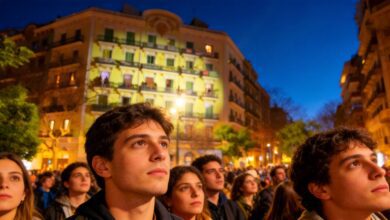
The presentation was held at the iconic La Pedrera building, bringing together representatives from the scientific and artistic communities. Among the participants were Juan Ignacio Cirac, director of the Max Planck Institute of Quantum Optics in Germany, and Mexican artist Tania Candiani, who has already been named one of the program’s first fellows.
A partnership between science and art
As part of the platform, five leading research centers in Barcelona will open their doors to artists. These include the Barcelona Supercomputing Center (BSC-CNS), the Institute of Photonic Sciences (ICFO), the Institute of Marine Sciences (ICM-CSIC), the Institute for High Energy Physics (IFAE), and the Barcelona Biomedical Research Park (PRBB).
Each of these centers will serve as a space for creative experiments, where artists can immerse themselves in the scientific environment and produce new works at the intersection of disciplines. Project topics will span physics, biology, supercomputing, marine research, and photonics. Organizers emphasize the goal is not only to inspire artists but also to give scientists an opportunity to view their work from a new perspective.
Fellowships and residencies
The program offers two forms of participation: long-term fellowships and short-term residencies. Fellows will be able to spend up to a year and a half in Barcelona conducting research and developing new projects. The residencies provide for a month-long immersion in one of the scientific centers, where artists will work side by side with scientists.
Throughout the year, regular meetings and workshops are also planned to facilitate the exchange of experience between research groups and creative teams. This will foster direct dialogue among representatives from different fields and make the process of creating new works as open and dynamic as possible.
Participants and ideas
Among those invited to participate are renowned dancer and choreographer Israel Galván, the Catalan art collective Taller Estampa, South African artist and researcher George Mahashe, as well as the previously mentioned Tanya Candiani. Each is known for an unconventional approach to art and a drive for experimentation.
Tanya Candiani noted that, for her, participating in the project is an opportunity to combine textiles, sound, literature, and technology in new forms. She emphasized that such initiatives create a unique space for dialogue and the search for new meanings. In her words, Dalí was a true ‘detonator of radical imagination,’ and the platform will serve as a continuation of his ideas in a contemporary context.
Science and society
In a year declared by the UN as the Year of Quantum Science, special attention is being given to fundamental research and its role in culture. Juan Ignacio Cirac, a member of the platform’s advisory board, emphasized that such projects help scientists go beyond their usual circles and bring their discoveries to a wider audience. He noted that the exchange of methods and ideas between science and art can not only enrich both fields, but also make scientific knowledge more accessible to society.
Organizers are confident that the platform will become a hub for talented people from around the world and launch new forms of collaboration between science and art. The culmination of the program will be a major exhibition in 2029, showcasing the results of joint work by artists and scientists in Barcelona.