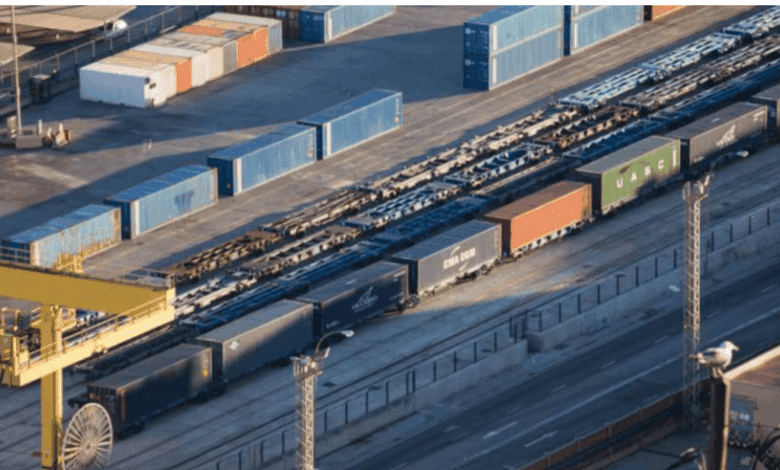
The Catalan authorities have officially approved a plan to create the largest rail hub within the Port of Barcelona. This infrastructure project, with an investment of €265 million, is set to become a key element in the development of freight transport and the improvement of environmental conditions in the region. The new transport complex will be located in the southern part of the port and will form part of the major Mediterranean Corridor, connecting Spain with the rest of Europe.
The project includes the construction of a modern terminal area providing facilities for receiving, dispatching, loading, and unloading cargo. Special attention is being given to the creation of the Nou Llobregat terminal, which is already under construction. In addition, two more terminals are planned along the former riverbed, significantly increasing the rail infrastructure’s throughput capacity.
Environmental benefits and relieving road congestion
The launch of the new hub is expected to shift up to 640,000 containers and 46,000 semitrailers per year from road to rail—freight that was previously transported by truck. This move will significantly ease the strain on Barcelona’s roads and the port area, and result in a noticeable reduction in harmful emissions. Experts estimate that, last year alone, the development of rail freight helped prevent nearly 50,000 tons of carbon dioxide from entering the atmosphere.
In addition to transport infrastructure, the project provides for the creation of green zones covering over 130 hectares. These spaces will form part of a natural corridor connecting urban neighborhoods with industrial areas and will also enhance links between Barcelona and El Prat de Llobregat. A total of 26 million euros has been allocated for landscaping and compensation for land expropriation, with 3 million earmarked for payments to private owners.
Construction and management of terminals
Most of the funding will come from the Port of Barcelona administration and a joint venture with railway operator Adif, Trainport. Three out of six new terminals will operate under concession agreements, attracting private investment and improving management efficiency. The largest of the planned sites will be built on the territory of the former riverbed and become the central feature of the entire complex.
All facilities are scheduled to be operational by 2032. By then, new access routes and roads will be completed, ensuring convenient connections to the port for freight trains and vehicles. Design work on these routes is already underway, and authorities are confident that deadlines will be met.
Economic impact and the port’s future
The implementation of the project will mark an important step in transforming the port of Barcelona into one of the leading logistics hubs in the Mediterranean. According to the Catalan government, developing the rail infrastructure will not only reduce environmental impact but also enhance the region’s competitiveness in the international freight market.
In 2024, the share of rail transport at the port has already reached 12% for containers and 45% for vehicle shipments. Authorities expect that upon completion of the construction these figures will rise even higher, and the port will become a model of sustainable development for other European cities.
City and Port: New Prospects
The area covered by the new plan is 131 hectares, making this one of the largest urban logistics projects in history. The authorities of Barcelona and El Prat de Llobregat have supported the initiative, highlighting its importance for the future of the region. The plan is expected to boost cargo turnover, create new jobs, and improve the quality of life for residents in neighboring areas.
According to city officials, the project will serve as a launching point for further port modernization and its transformation into an environmentally-oriented transport hub. In the coming years, Barcelona may become a model for other European cities, where innovation, environmental care, and economic growth go hand in hand.