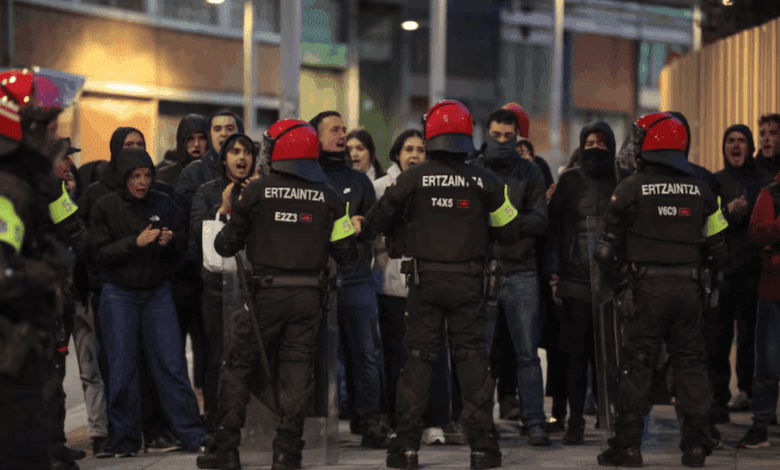
The Basque Country has seen significant changes in law enforcement practices: from now on, when reporting arrests, the regional police (Ertzaintza) will disclose not only the age and gender but also the geographical origin of detainees. This is the first such case in Spain and it has instantly sparked a heated public debate.
Previously, information about detainees’ origins was withheld to avoid possible stigmatization of specific groups. Now, however, official press releases specify the world region a person comes from—for example, ‘Maghrebi,’ ‘Latin American,’ ‘European,’ ‘Asian,’ or ‘Sub-Saharan.’ The specific country is not mentioned, except in cases involving Spanish citizens. This approach is justified by a desire for greater transparency and to prevent distorted interpretations of crime data.
Political controversy and public outcry
The decision by the authorities of the Basque Country (Euskadi) has sparked fierce debate among politicians. Left-wing party representatives argue that this practice could increase bias and discrimination while fueling xenophobic attitudes. They stress that revealing detainees’ origins offers no real benefit to public awareness and merely encourages negative stereotypes.
At the same time, supporters of the new measure believe that withholding such information only fuels mistrust and encourages speculation. In their view, transparency on safety issues helps prevent manipulation and promotes honest discussion of problems. Regional authorities emphasize that the decision was made after analyzing the situation and in response to growing public concern about crime.
Reaction from human rights advocates and organizations
Civil organizations working with migrants have also voiced concerns. They argue that emphasizing the detainees’ origins could stigmatize entire communities and undermine the presumption of innocence. In their opinion, such practices may hinder migrant integration and increase social tension.
Some experts note that even indicating the region rather than the country of origin can still be perceived as implying collective responsibility. They call for people to be judged by their actions, not their origins, and stress the importance of protecting personal data and identity.
Statistics and context
According to recent data, more than 28,000 cases resulting in arrests or investigations were registered in the Basque Country during the first nine months of this year. Just over half of these involved Spanish citizens, while the rest were people of foreign origin. Meanwhile, foreigners make up about 10% of the region’s population, and the number of people born outside the country has increased by nearly 10% over the past year.
The introduction of this new practice has already sparked debate at the parliamentary level and among public organizations. Authorities promise to closely monitor its impact and, if necessary, adjust their approach to prevent discrimination and maintain a balance between transparency and the protection of individual rights.