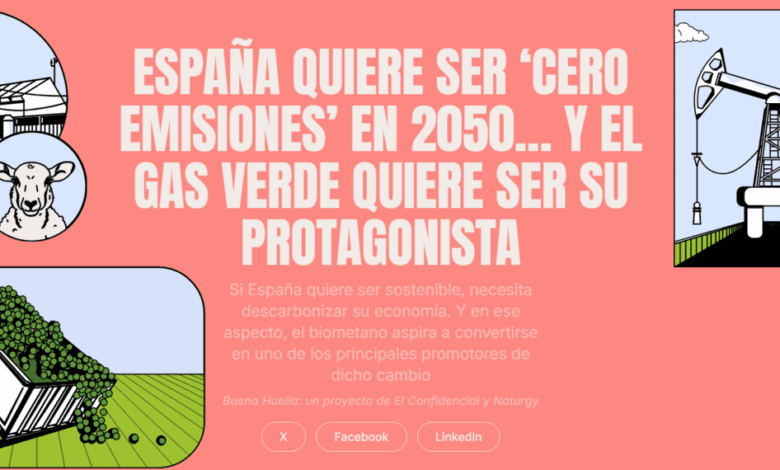
Spain is making steady progress toward its goal of becoming climate neutral by 2050. The focus is on reducing greenhouse gas emissions and transitioning to sustainable energy sources. One of the key tools on this path is biomethane, which can not only lower the carbon footprint but also support the development of a circular economy.
The potential of biomethane to reduce emissions
Experts estimate that if Spain fully harnesses its biogas production potential — up to 34.46 terawatt-hours annually — the country could avoid emissions of between 8.6 and 13.3 million tons of CO₂ equivalent each year. This represents up to 5% of total emissions in 2019 and up to 6% in 2020. If energy crops are included, emission reductions could reach 17% versus 2019 levels and 20% compared to 2020.
Biogas and biomethane act as effective traps for methane and carbon dioxide, significantly reducing the concentration of greenhouse gases in the atmosphere. Their use also helps improve air quality in both urban and rural areas.
Impact on the energy sector and energy independence
Spain’s strategy calls for gradually replacing part of its natural gas consumption with biomethane. This could lower the gas sector’s carbon footprint by 20–56%. Importantly, biomethane can be blended with conventional gas, paving the way for negative emissions throughout the entire fuel lifecycle.
In agriculture and livestock farming, biomethane not only helps capture and prevent emissions but also serves as an alternative to diesel fuel for machinery. In the residential sector, where gas accounts for about 21% of energy consumption, the adoption of biomethane makes heating and cooking more environmentally friendly. Industrial facilities that cannot switch to electricity also benefit from using this renewable gas.
Circular Economy and New Opportunities
Biomethane is produced from various types of waste: municipal, agricultural, food industry, and wastewater. This approach not only reduces the amount of waste but also turns it into valuable raw material for further use. It’s a vivid example of a circular economy, where waste becomes a resource for new production.
The use of biomethane promotes the development of new jobs and technologies, as well as stimulates investment in infrastructure. As a result, the country gains not only environmental but also economic benefits.
European Context and Prospects for Spain
As part of a pan-European strategy to reduce dependence on fossil fuels, the European Union plans to produce up to 35 billion cubic meters of biomethane by 2030. Although Spain has already achieved a reduction in energy dependence, it still exceeds the EU average. Developing the biomethane sector will strengthen the country’s energy independence and help achieve Europe-wide climate goals.
The shift to biomethane is becoming an integral part of Spain’s energy transformation. In the coming years, this renewable gas could take a central role in the country’s energy mix, supporting sustainable development and reducing environmental impact.