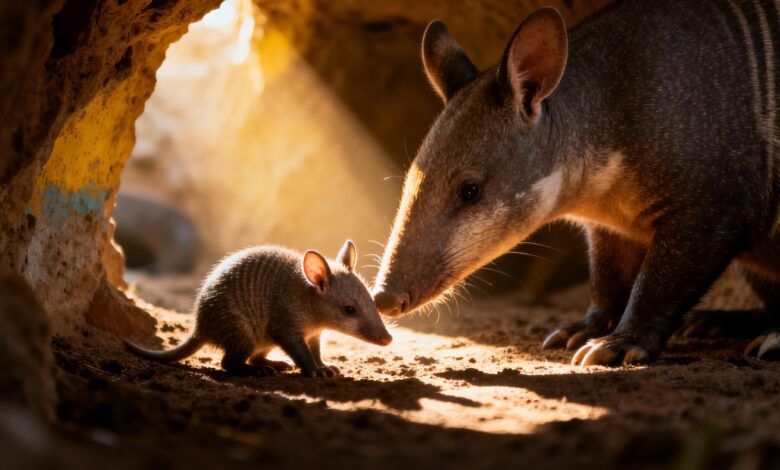
The birth of an aardvark calf at Bioparc Valencia has become a significant event across Spain. This is not just another addition to the collection of exotic animals, but an important step in the conservation of endangered species. For Spanish specialists and park visitors, the opportunity to observe the development of such a rare animal is a real stroke of luck, as such cases are extremely rare.
In recent years, there has been growing attention in the country to biodiversity and the conservation of unique species. Bioparc Valencia has become the only center in Spain where aardvark breeding is carried out under strict scientific supervision as part of an international program. This means every stage of the calf’s life is recorded and analyzed, allowing experts to gather valuable data for future conservation projects.
Rarity and significance
The aardvark, or ‘cerdo hormiguero,’ is distinguished by its unusual appearance: a long, pig-like snout, large ears, strong claws, and a prehensile tail. In the wild, this African species is becoming increasingly rare, and its appearance in European zoos is an exception. At Bioparc Valencia, the calf has already reached one month old and can now be seen with its mother in a specially equipped burrow.
Park staff note that the birth of the baby is the result of years of work to create optimal conditions for keeping and breeding aardvarks. Attention is paid not only to diet and microclimate, but also to minimizing stress for the animals. Thanks to these efforts, a unique result has been achieved—a healthy offspring has been born.
Contribution to science
Each new generation of aardvarks born in European zoos offers scientists the opportunity to study the behavior, physiology, and developmental traits of this little-known species. Bioparc Valencia conducts ongoing monitoring of both the calf and its mother, allowing for timely responses to any changes and adjustment of care conditions as needed.
The collected data is sent to international databases, where it is analyzed by experts from different countries. This helps to develop effective strategies for conserving aardvarks in the wild and preventing their extinction. According to russpain.com, such projects are increasingly in demand as the number of rare animals declines globally.
International cooperation
Bioparc Valencia takes part in an international program for the conservation of aardvarks, bringing together zoos and research centers from Europe and Africa. Joint efforts make it possible to share expertise, develop new care and breeding methods, and raise public awareness of the challenges facing endangered species.
In Spain, such initiatives are supported at the state level, which fosters the development of scientific research and draws attention to environmental issues. The birth of the aardvark cub has become a symbol of the specialists’ successful work and an example of how modern approaches can deliver real results.
In recent years, isolated cases of aardvark births in captivity have been recorded in different European countries, but most attempts have ended unsuccessfully. Until now, no such events had occurred in Spain. Other European zoos, for instance in France and Germany, also run programs to conserve rare African species, but only select centers can boast successful breeding of aardvarks. Such achievements provide opportunities for knowledge sharing and broader international cooperation in biodiversity conservation.