In the coming days, the European Commission will officially release the text of the agreement between the United Kingdom and the European Union regarding Gibraltar’s future status. For Spain, this event carries special significance: it concerns the possible removal of the physical border between Andalusia and the British territory, which would directly impact the lives of thousands of Spaniards who cross this section daily for work and business.
According to El Confidencial, publication of the document will be the first step toward launching the ratification process. Only after approval by the EU Council, the European Parliament, and the British Parliament will the agreement come into force. The main intrigue is the lifting of the so-called ‘Verja’ (La Verja), which for decades has divided Spain and Gibraltar, creating difficulties for residents of the border areas.
The path to ratification
Last week, the European Commission already forwarded the agreement text for consideration by the Council and the European Parliament. According to El Confidencial, London is also awaiting the start of parliamentary procedures. The agreement is expected to take effect in trial mode as early as April 10, provided all parties complete the formalities in time.
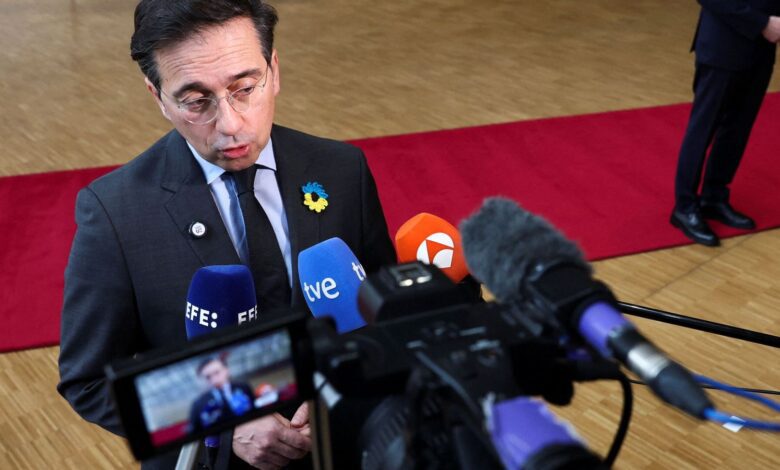
The British representative for EU affairs, Nick Thomas-Symonds, confirmed during a visit to Madrid that the parties are close to publishing the final text. Spanish Foreign Minister José Manuel Albares noted that all key provisions are already known, and consultations with representatives of Andalusia and regional municipalities took place immediately after political agreement was reached.
Changes for the region
Among the main changes is the removal of the physical border barrier, which should make it easier for people and goods to move across. For residents of Campo de Gibraltar and commuters who cross the border daily, this means less time spent at checkpoints and simpler access to workplaces. The regional economy may receive a further boost thanks to increased trade and tourism.
At the same time, the agreement provides for the introduction of a new European Entry/Exit System (EES), which will alter the rules for crossing the EU’s external borders. This will also apply to Gibraltar, where control will be conducted according to new standards. Spanish authorities emphasize that the negotiation process has been conducted with maximum transparency: discussions have involved local authorities, and the details of the agreement were presented at parliamentary hearings.
Expectations and details
Despite statements on transparency, some aspects of the agreement have yet to be disclosed to the general public. According to El Confidencial, no debate has yet been scheduled in the European Parliament, while in Spain there is ongoing interest in exactly how the new regulations will be implemented and what impact they will have on Gibraltar’s sovereignty and tax policy.
The Spanish authorities say that informing all stakeholders is a priority. Once the text of the agreement is published, anyone can review it on the European Commission’s website. The final approval of the document is expected to mark an important step toward stabilizing relations between Spain, the United Kingdom, and Gibraltar after Brexit.
In recent years, negotiations over Gibraltar’s status have repeatedly caused tension between Madrid and London. Following the United Kingdom’s exit from the EU, the issue of the border and crossing rules became particularly acute. In 2024, the parties announced preliminary agreements, but the details remained undisclosed. A similar situation was seen in other European regions with special status, where issues of control and free movement were resolved through individual agreements. The introduction of new control systems at the EU’s external borders was also discussed in the context of migration and security, making each such agreement a subject of close scrutiny.