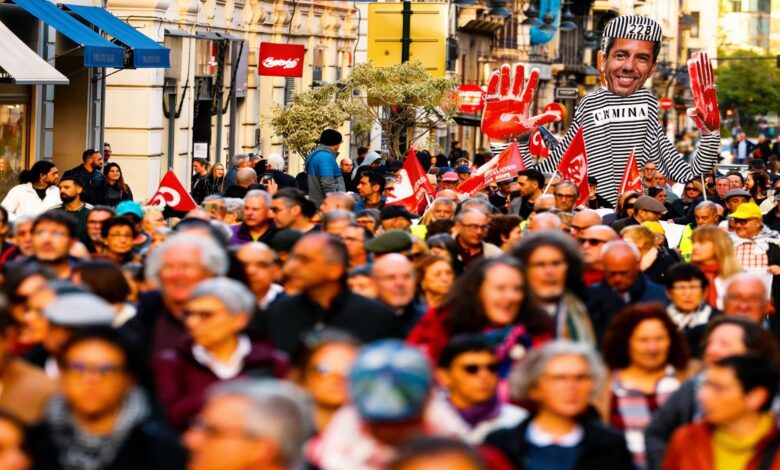
In recent days, residents of Valencia have once again focused their attention on events surrounding the former head of the region. A mass demonstration in the city center responded to court decisions and political actions that, according to many, affect not only the fate of certain individuals but the future of the entire autonomous community. Hundreds of people took to the streets to express their discontent with how the authorities are responding to the aftermath of the devastating dana and related investigations.
The organizers of the march—including more than two hundred civic and labor organizations, as well as associations of those affected—once again raised the issue of Carlos Mazón’s resignation from his seat in Les Corts Valencianes. In their view, his presence in parliament hinders an objective investigation and fosters a sense of impunity among officials. The main theme of the protest was not only criticism of the former leader, but also demands that current authorities stop, as participants see it, protecting the ex-president and ensure his appearance in court in Catarroja.
Pressure on politicians
The march began at Ayuntamiento Square and passed through the city’s central streets. At the front of the column, protesters held a banner reading “Mazón a presó,” which has become a symbol of recent months’ protests. Demonstrators emphasized that for 17 months in a row, they have taken to the streets to remind people of the consequences of the authorities’ mistakes and inaction during the natural disaster. According to them, it was negligence and disregard for scientific data that turned a natural catastrophe into a human tragedy.
During the rally, accusations were directed not only at the former regional head but also at the current government, which, according to participants, continues to deny climate threats and encourages development projects that increase population vulnerability. Protesters stated that they are not willing to accept a partial resignation and demand that Mazón fully renounce his parliamentary mandate and be required to participate in the legal process.
Judicial response and new challenges
The situation escalated after March 16, when the Supreme Court of Valencia decided not to launch an investigation against Mazón at this stage. However, organizers emphasize that this does not amount to an acquittal, only a temporary suspension of proceedings. If new evidence emerges, the case could be reopened, and his parliamentary status will not prevent further legal action.
On March 24, a judge in Catarroja decided to summon Mazón as a witness in the case concerning mismanagement during DANA. The date of the hearing has not yet been set, but this decision added to public pressure. According to march participants, if the current regional president Juanfran Pérez Llorca had not defended his predecessor, there would have been no need for such actions.
Memory and solidarity
A special role in the demonstration was played by the ‘dolçaines i tabal’ groups, who have supported the victims with musical processions since the very beginning of the tragedy. Organizers describe them as the ‘acoustic memory’ of civil society and an example of dignity for everyone concerned about the region’s future. The musicians accompany every event, underlining the importance of solidarity and supporting those affected by the disaster.
As El Pais notes, protests in Valencia have become an integral part of public life since the events surrounding the tragedy. Citizens are demanding not only justice for the victims but also changes in how risk management and emergency response are handled. According to russpain.com, such demonstrations significantly influence the political agenda and compel authorities to respond to public demands.
In light of ongoing proceedings, it is worth recalling that earlier the Valencia court launched a legal process in the Mazón case after the tragedy that left hundreds dead, which was discussed in detail in the article on the launch of the investigation into the officials’ role in the disaster — details on the initial steps of the investigation.
In recent years, Spain has faced a rise in natural disasters linked to climate change. In 2024, similar protests took place in Murcia and Alicante after devastating floods, as local residents demanded a review of urban planning policies and stricter controls on construction in high-risk areas. In Catalonia in 2025, large-scale demonstrations led to the creation of independent commissions to investigate government actions during emergencies. These events show that public oversight and pressure on officials are becoming key tools for changing the approach to disaster management in Spain.