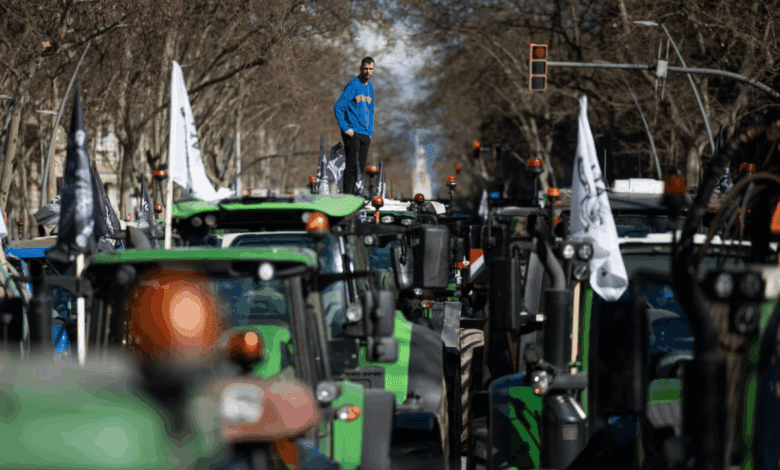
Catalan farmers made their presence felt once again by organizing a large-scale convoy of tractors and cars heading toward Barcelona. This event sent a strong signal to Spain’s entire agricultural sector: two years after a major demonstration in the Catalan capital, farmers say nothing has changed and are calling for a reassessment of how their problems are addressed. The protests are impacting not just the region’s economy, but are also raising questions about the future of agriculture amid growing competition and administrative hurdles.
The Road to Barcelona
The morning began with dozens of tractors and cars setting out from various corners of Catalonia. Nine starting points scattered across the region merged into several major convoys. By midday, participants were gathering in cities such as Molins de Rei and La Roca del Vallès, to head together toward the Department of Agriculture building on Gran Via de les Corts Catalanes.
Despite concerns about traffic jams, traffic on main roads remained relatively smooth. Organizers had carefully planned the route: instead of the AP-7 highway, farmers from Girona chose the C-35, then planned to enter the city via the C-17 and Meridiana Avenue. The convoys occupied only one lane, helping avoid serious transport disruptions.
Reasons for Discontent
The main goal of the protest is to draw attention to the sector’s longstanding issues. According to representatives of the Revolta Pagesa movement, two years after the previous large-scale demonstration, the situation has barely improved. Farmers are still facing excessive bureaucracy, which complicates their work, as well as unfair competition from foreign producers.
Farmers are particularly outraged by the agreement between the European Union and Mercosur, which, in their view, puts local producers at a disadvantage. Questions about transparency and fairness in trade relations remain unresolved, and decisions made by European institutions are raising increasing concerns among farmers.
Symbolism of the protest
Two years ago, around two thousand tractors entered Barcelona, making it one of the most visible events in the city’s protest history. At that time, farmers demanded an end to rising costs and bureaucratic requirements, as well as protection of the local market from cheap imports. This time, the protest is more symbolic, but its significance for public opinion remains just as strong.
Farmers plan to spend the night outside the Department of Agriculture building, repeating their actions from two years ago. Their goal is to show the public and authorities that rural problems have not disappeared but have only worsened. The protests serve as a reminder of the need for change and new solutions.
Context and consequences
In recent years, Spain has repeatedly become the scene of agrarian protests. In 2024, similar demonstrations took place in Andalusia and Valencia, where farmers also protested against bureaucracy and pressure from large retail chains. In other European countries, such as France and Germany, farmers’ movements have achieved temporary concessions, but systemic change has so far proved elusive.
Catalan protests stand out for their particular persistence and organization. Local farmers have repeatedly shown their willingness to engage in dialogue, yet continue to take to the streets. These events reflect a European trend: rural populations are demanding a review of policies and greater attention to their needs. Issues regarding the future of agriculture, support for local producers, and fair competition conditions remain at the center of public debate.