Political tensions are once again escalating in Catalonia over the approval of this year’s budget. Alicia Romero, the Generalitat’s top economic official, remains optimistic: she is confident the region will secure an approved budget within the next few months. However, the situation is far from calm — the ERC (Esquerra Republicana de Catalunya) party is demanding changes to the personal income tax collection system, arguing that discussion of finances is pointless without these reforms.
Republican leader Oriol Junqueras signaled after talks with Pedro Sánchez that the conditions for negotiation are not yet in place. In recent weeks, ERC representatives have repeatedly insisted that without progress on allowing Catalonia to collect personal income tax (IRPF) independently, they will not engage in serious budget talks. Nevertheless, Romero maintains that technical and legal hurdles can be overcome if the Catalan Tax Agency is adequately prepared and the necessary legislative amendments are made.
Budget shortfalls
Catalonia is currently operating under an extended 2023 budget, which, according to Romero, is costing the region two billion euros. The total budget stands at 65 billion euros, supported not only by the Socialists but also by ERC and other leftist groups. Officials are convinced that a new funding mechanism for the autonomous region will help unblock the situation and speed up approval of the budget.
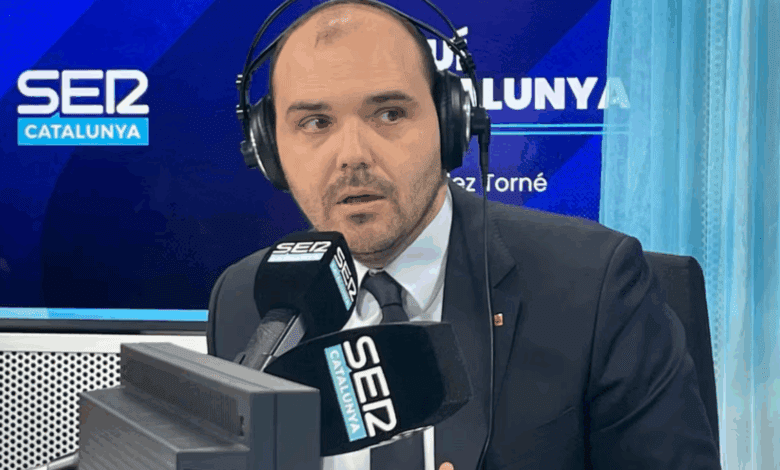
However, the key to solving the problem lies with Junts per Catalunya. Their position could prove decisive when it comes time to vote in Congress. Albert Dalmau, who serves as presidential affairs advisor, believes the government has time and resources to convince Junts to support the funding reform. In a radio interview, he called for patience and expressed hope that, when the moment comes, Junts will not stand aside.
Junts’ stance
Junts has traditionally taken a tough stance on financial autonomy. They demand a special economic status for Catalonia, similar to the Basque concert system. Dalmau acknowledges that Junts’ desire for greater control over finances is understandable, but urges not to stand in the way of the agreements already reached between the government and ERC. In his view, patriotism is not about blocking solutions, but about seeking compromise among different political forces.
The advisor also questioned the realism of Junts’ plans to leave the shared tax system. He recalled that in recent decades, Catalan parties have had several opportunities to secure more from Madrid, but this has not materialized. In his words, an ‘all-or-nothing’ approach has led to stagnation and brought no tangible results to the region.
Internal Party Disagreements
Despite the official stance of Junts, there are diverse opinions within the party. Some mayors and former ministers, including Jaume Giró, have voiced support for a compromise. This gives hope that parliamentary debates could yield common ground and help move the process forward.
Junts, in turn, accuse ERC of announcing a purported agreement on an economic arrangement comparable to the Basque model. Dalmau denies these claims, stating that the discussion concerns not a concert but a new financing mechanism that would grant Catalonia greater autonomy, though not full fiscal independence.
Negotiations are ongoing
Alongside budget talks, negotiations continue between Socialists and Republicans on granting Catalonia the authority to collect IRPF. Dalmau emphasizes that dialogue remains open and expresses cautious optimism that a compromise might be reached in the coming weeks.
The situation remains tense, but there is a growing sense that political stakeholders recognize delays threaten not only financial losses but further fragmentation of Catalan society. The future of regional financing is becoming a litmus test for Spanish politics in 2026.