Catalonia has ended its unique agreement in Spain between regional authorities and an energy company to protect low-income families from energy poverty. With the expiration of this document, thousands of residents have been left in limbo, while social organizations are sounding the alarm and demanding immediate action from the autonomous government.
The agreement, signed in 2021 between the Generalitat de Catalunya and Endesa, was designed for four years and expired on December 31, 2025. During its lifespan, it became the only example of such cooperation between the state and the energy sector in the country. The document required Endesa to assist vulnerable families by writing off unpaid bill debts and installing special meters in occupied flats to reduce the risk of accidents and fires.
However, despite its stated goals, the agreement was never fully implemented. Social organizations note that debts were forgiven only for the period from 2015 to 2021, while new debts accumulated after that date remain unresolved. In addition, the number of social meters installed fell far short of requirements.
Public response
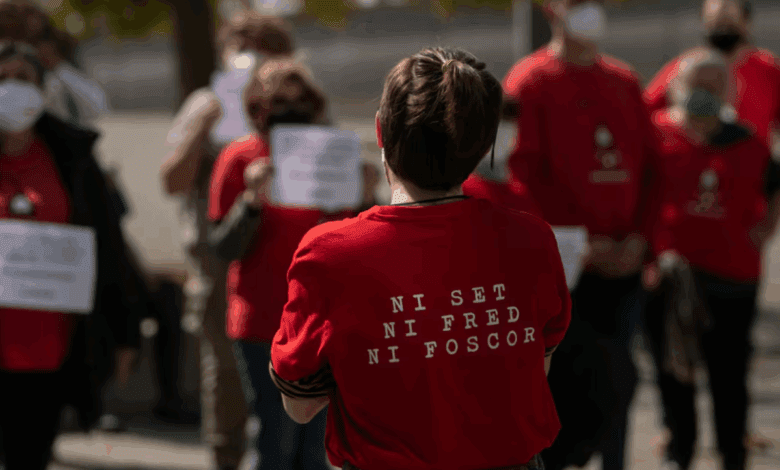
With the expiration of the agreement, Catalan social organizations such as Taula del Tercer Sector and Aliança contra la Pobresa Energètica (APE) made strong statements. They are calling on the government to urgently convene a special commission on energy poverty and implement emergency measures to protect the most vulnerable populations.
According to them, the lack of a new agreement is deepening anxiety among families already on the edge of survival. Organization representatives stress that without clear guarantees and support mechanisms, thousands of people could lose access to basic services, directly affecting their health and dignity.
There is particular concern over the fact that neither Endesa nor the Catalan authorities have offered a real alternative to the expired agreement. Officials point to new state assistance tools, such as electricity social discounts and the so-called ‘social shield,’ but experts believe these measures are insufficient.
Implementation problems
The 2021 agreement had two key provisions: debt cancellation and the installation of social meters. Endesa agreed to write off the debt of about 41,000 families accrued from 2015 to 2021, taking on €28.1 million, while the Catalan government absorbed another €10.6 million. However, debts accumulated from 2022 to 2025 were left unaddressed, and their fate remains unresolved.
The second initiative—the installation of meters in occupied apartments where vulnerable families live—was also implemented with significant difficulties. Over the entire duration of the agreement, only 117 such devices were installed, which, according to NGOs, falls far short of the region’s actual needs. Moreover, these meters are valid for only one year, and without a new agreement, further installations are in doubt.
Statistics and Challenges
According to official data, Catalonia’s energy poverty rate in 2024 stood at 17.6%. This is lower than in 2023, when the figure reached 20%, but still considerably higher than the pre-crisis level in 2008 (5.9%). At the same time, social electricity discounts are provided to only about 185,000 people, whereas the number of those truly in need exceeds 1.4 million.
Legislation adopted in recent years does prohibit cutting off electricity to families officially recognized as vulnerable. However, experts point out that these measures do not address the root of the problem. Many families are unable to access benefits due to bureaucratic hurdles or lack of information, while existing programs fail to cover all those in need.
The situation is further complicated by the fact that other energy companies operating in the region have shown no interest in signing similar agreements. Endesa remains the only major player that has engaged with the authorities on this issue. Now that this cooperation has also ended, the prospect of new initiatives appears highly uncertain.
Prospects and Expectations
Catalan authorities and Endesa representatives acknowledge that they do not plan to extend the agreement. They claim that the market situation has stabilized and government support programs have become more effective. However, public organizations strongly disagree. In their view, without special agreements, the region risks facing a new wave of energy poverty.
The question of future support for vulnerable families in Catalonia remains unresolved. Social organizations continue to call for urgent talks and the search for new solutions. Meanwhile, thousands of families are left waiting, uncertain if they will be able to pay their electricity and heating bills in the coming months.