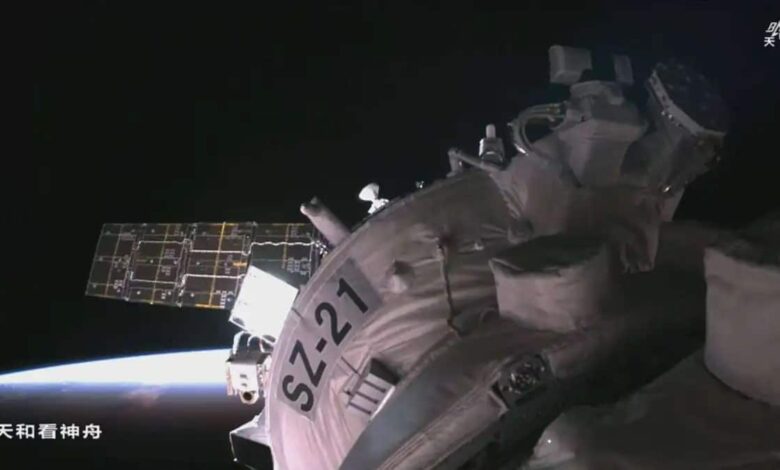
China has decided to launch the Shenzhou-22 spacecraft to the Tiangong orbital complex ahead of schedule. Originally, this vessel was set to launch only in spring 2026 with a new crew, but circumstances have forced a change in the timeline.
The reason was an emergency situation with the Shenzhou-20 spacecraft. In early November, the crew was scheduled to return to Earth, but a damaged window—caused by a collision with space debris—was discovered. Due to the threat of depressurization, their return had to be postponed, and ultimately use of this craft for reentry was cancelled.
As a result, the astronauts were evacuated aboard the recently arrived Shenzhou-21, which was originally intended for the new crew. Now, only one crewed spacecraft remains at the station, increasing the risk in the event of an onboard emergency.
Given the situation, China’s space agency decided to speed up preparations for Shenzhou-22 and send it to the station without a crew. The launch of the Long March 2F rocket from the Jiuquan launch site is scheduled for late November. The primary mission is to deliver extra food supplies, expendable materials, and equipment to orbit, as well as to provide the crew with a backup vehicle for emergency evacuation.
Previously, China announced its readiness to keep the next crewed spacecraft and rocket on high alert to enable a launch within 8–9 days if necessary. However, in practice, preparations took almost three weeks. The timeline was affected by weather conditions, the availability of launch pads, and the technical status of the equipment.
The damaged Shenzhou-20 remains docked to the station for now, but specialists have deemed it unsafe for return to Earth. A crack in the heat-protective glass of the porthole could cause the craft to break apart during atmospheric reentry. The spacecraft is expected to be used for scientific experiments in the future and later deorbited.
The urgent launch of the uncrewed spacecraft was a necessary measure to ensure the safety of the crew and the continuous operation of the orbital complex. China continues to demonstrate its ability to respond promptly to emergencies in space, despite challenges and unforeseen circumstances.