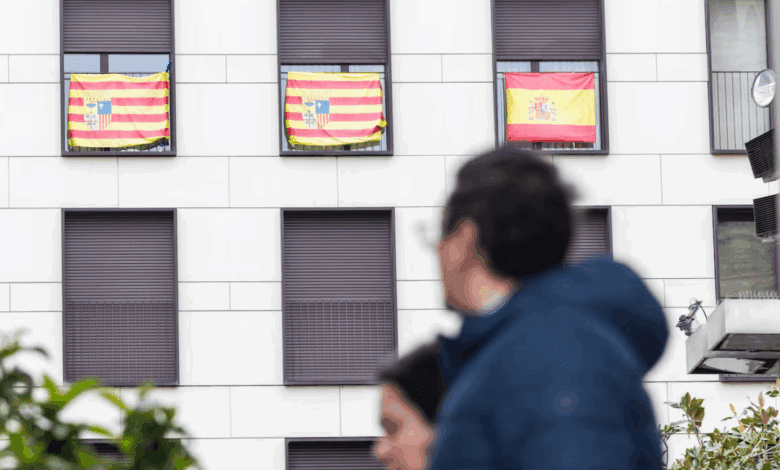
The question of returning the famous frescoes from the Sijena Monastery has once again become one of the most heated topics for the residents of Aragon. This dispute not only concerns cultural heritage but also affects the political climate in the region, especially on the eve of elections. For many Spaniards, what is happening is not just another conflict between neighbors, but a sign of how historical grievances can become a tool of political struggle.
In the evening, as the cold seeps through the surroundings of the Santa María Monastery on the outskirts of Villanueva de Sijena, 65-year-old Alfonso Salillas pays no mind to the chill. What keeps him warm is not just his thick jacket, but his passion for returning the frescoes that were moved to Barcelona nearly 90 years ago after a fire. Some say the artworks were rescued, others believe Aragon lost a part of its soul. Salillas, former mayor and the driving force behind the legal fight, openly voices his distrust of the Catalan authorities, whom he accuses of delaying the Supreme Court’s order for the return of the artworks.
Politics and grievance
The issue of ‘damage’ from Catalonia has become the main trump card for the Partido Popular (PP) in Aragón. Regional leader Jorge Azcón never misses an opportunity to accuse his eastern neighbor of injustice—whether it’s about frescoes, rail connections, or the allocation of budget funds. In recent speeches, he has sharply criticized the central government for what he claims is special treatment of Catalan demands, especially following the railway tragedy in Andalusia, and has called for an immediate plan to repair the tracks between Zaragoza and Madrid.
However, the most frequently cited argument is the reform of the regional financing system, agreed upon by the government and Catalan nationalists. For Azcón and his party, this is not just an economic issue, but a symbol of ‘betrayal’ and ‘humiliation’ for Aragón. It is no coincidence that Partido Popular leader Alberto Núñez Feijóo signed a statement in Zaragoza against the ‘separatist quota,’ with financing becoming the main topic of debate with the socialists.
Historical roots
Experts note that anti-Catalan sentiment in Aragon has deep historical roots. Sociologist David Pac emphasizes that such rhetoric has always resonated with part of the population, and the current political climate has only intensified this effect. Historian Alberto Sabio recalls events at the turn of the 19th and 20th centuries, when economic hardship and mass emigration to Catalonia left a mark on collective memory. Later, protests against transferring water from the Ebro and supplying energy to Catalan industry further deepened mutual distrust.
Symbolic gestures, such as disputes over the name of the Crown of Aragon or doubts about the competence of Aragonese specialists restoring frescoes, are seen as new sources of offense. Even linguistic disagreements—for example, the refusal to call Catalan-speaking dialects in border areas ‘Catalan’—have become part of the political game.
The economy and its paradoxes
Despite ongoing political clashes, economic ties between the regions remain strong. Catalonia is Aragon’s main trading partner, with mutual trade worth billions of euros annually. Nevertheless, political leaders on both sides never miss a chance to highlight their differences and longstanding grievances, especially during election campaigns.
Interestingly, even former Aragon president Javier Lambán, a socialist, has often sharply criticized Catalan nationalists, calling their actions a “historic folly” and an “insult” to Aragon. Attempts to foster cooperation, such as a joint bid for the Olympic Games, have also ended in quarrels and accusations of discrimination.
Public opinion
Political analysts note that the rise of distrust toward Catalonia in Aragon is linked not only to politicians’ actions but also to broader societal changes. The strengthening of Catalan nationalism and subsequent concessions by central authorities have sparked a wave of Spanish patriotism, especially in Zaragoza. According to surveys, the number of people in the region supporting centralized power has risen significantly over the past two years, setting Aragon apart from other autonomous communities.
At the same time, many locals admit that despite political discord, close family and business ties persist between the regions. For some, anti-Catalan rhetoric is merely a convenient tool for politicians; for others, it reflects genuine sentiments. In any case, this conflict has once again moved to the forefront of national attention.