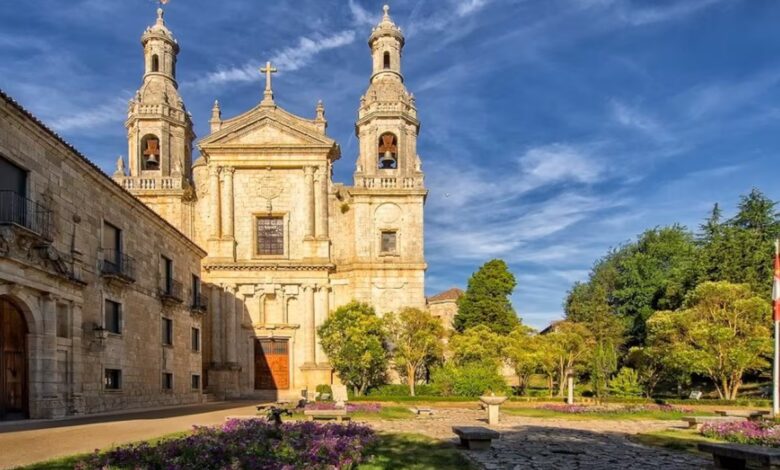
In the midst of the Christmas festivities, an incident occurred at the Monastery of La Santa Espina in Valladolid province that shocked not only the local parishioners but the entire Catholic community of Spain. Unknown individuals broke into the church and, ignoring all valuables, took only the consecrated hosts from the tabernacle. Neither works of art nor church utensils interested the intruders—their sole target was the sacred forms kept for the next Mass. The event took place on the evening of December 28, a day traditionally associated with pranks and jokes in Spain, but this time the situation was far more serious.
Immediately after discovering the theft, the monastery’s abbot contacted the Civil Guard and informed Archbishop Luis Argüello of Valladolid, who is also the head of the Spanish Episcopal Conference. The response was swift: a special Mass was announced as an act of atonement and to restore spiritual balance. The service, held on January 3, was attended not only by clergy, but also by municipal leaders and believers from across the region.
Sacrilege and its consequences
The monastic community did not attempt to hide what had happened. An official statement appeared on their website, giving a detailed account of how, on the evening of December 28, unknown individuals broke into the chapel and committed an act of desecration, taking only the consecrated wafers. The statement emphasized that the material value of the stolen items was negligible, but the spiritual loss was immense. Abbot Francisco Casas filed a report with the police, but recovering the stolen items has proven nearly impossible.
Archbishop Argüello was the first to be informed of the incident. In his address to the congregation, he urged people not to remain indifferent to such a grave offense and invited everyone to take part in an act of penance. On the evening of January 3, the monastery church held a special mass dedicated to restoring spiritual justice and strengthening faith. The church was filled to capacity, with not only local residents but also worshippers from neighboring towns attending.
Historical context
The monastery of La Santa Espina was founded in 1147 and has since been regarded as one of the most important religious centers in the region. Its name is tied to a relic—a thorn from Christ’s crown of thorns—that has been kept here for almost nine centuries. This sacred object continues to attract pilgrims and remains a focus of special veneration.
The incident sparked outrage among the faithful. Monastery representatives reminded that such thefts are not unprecedented: just a few months ago, a similar incident occurred at Santa María de la Vega church in Arroyo de la Encomienda, also in Valladolid province. In that case as well, only consecrated hosts were stolen, underscoring the targeted nature of these crimes.
Investigation and public reaction
The Guardia Civil launched an investigation, questioning witnesses and analyzing fingerprints found at the scene. It was soon determined that the theft was committed by a homeless individual who broke into the church and took both the hosts and their container. Despite these findings, the stolen items have yet to be recovered.
The local community took the incident as a personal affront. Church officials urged parishioners to pray and to be especially vigilant in safeguarding holy items. The monastery’s website launched a special section for people to leave messages of support and express their solidarity with those affected. Many posted their names and email addresses to show they care about the fate of their church.
Spiritual response
Archbishop Argüello, speaking to those gathered, emphasized that such acts are not merely crimes against property but a profound affront to the very essence of the Catholic faith. He called on everyone to make an “act of faith” and reminded them that even in such moments it is important to maintain dignity and unity. According to him, incidents like this require not only investigation but also a spiritual response—through prayer, repentance, and mutual support.
La Santa Espina Monastery remains a symbol of spiritual resilience and historical memory. Despite the shock, the community holds on to its faith and continues to live by its traditions, supporting one another and calling for love even in the most difficult times. This, perhaps, is the true strength of Spanish Catholicism—the ability to unite in the face of adversity and not allow evil to prevail.