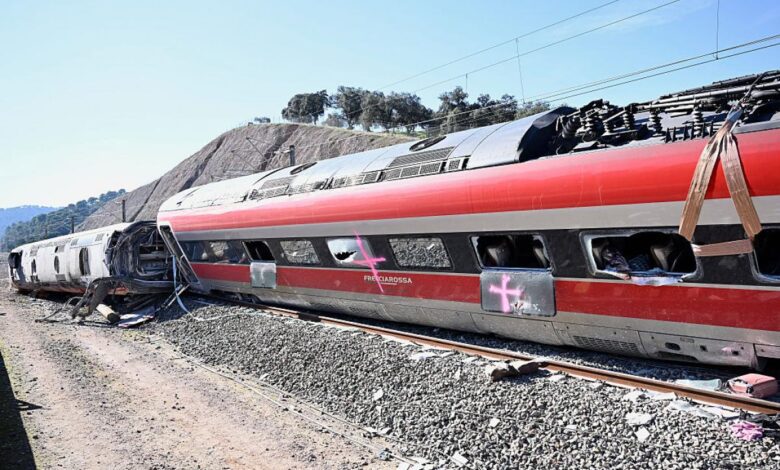
Railway safety issues in Spain have returned to the spotlight after a high-profile accident in Adamuz, near Córdoba. For thousands of Spaniards who rely on trains every day, this story has become an alarming wake-up call—just how reliable is the infrastructure supporting today’s modern rail service? The consequences of the incident could affect not only passengers but the entire system of quality control on the country’s rail lines.
The investigation has revealed details that were not previously disclosed. According to Iñaki Barrón, head of the Railway Accident Investigation Commission (Comisión de Investigación de Accidentes Ferroviarios, CIAF), the main cause of the disaster was not just a broken rail, but the failure of a welded joint between new and old track sections. This detail could change how risk assessment is approached on Spain’s railways.
Technical chain
Experts note that connecting rails manufactured in different years is not a violation in itself. However, in this case, we’re talking about a weld between a new rail installed in 2023 and an element that has been in service since 1989. According to preliminary reports, it was at this very spot that the rupture occurred, leading to the derailment of the Iryo train.
Transport Minister Óscar Puente had previously suggested that the accident could have been caused either by a welding defect or by deformation of the rail itself. However, Barón’s latest statements indicate that it was the welded joint that turned out to be the weak link. The question remains as to why this defect was not detected during the recent upgrade of the line.
Gaps in oversight
Many expected that after thirty years in operation, the Madrid-Seville line would undergo a full reconstruction. In reality, as it turned out, only certain segments and switch points were renewed, while a significant portion of the track was left without a thorough inspection. This situation raises questions about the contractors and the technical supervision system.
The welding was carried out by Redalsa, a company more than half-owned by the state operator Adif. Such subcontracting arrangements are common, but now attention is focused on the quality of the work performed and the control procedures. The commission’s preliminary report notes that marks on the wheels and deformation of the rail indicate that the break occurred precisely at the welding site.
Independence of the investigation
The question of the independence of the commission investigating the accident is also being discussed within the professional community. Although the CIAF is formally subordinate to the Ministry of Transport, Barrón emphasizes that this time the commission worked without pressure or external directives. The minister personally assured that experts could freely express their conclusions without fear of interference.
Nevertheless, the public demands transparency and objectivity. After all, the outcome of the investigation will affect not only the reputation of the authorities but also the future of the entire railway sector. Questions regarding contractors, the quality of welding, and the control system remain unanswered.
Implications for the sector
The situation in Adamus has prompted a review of railway safety standards. There is already discussion about the need for more thorough inspection of all welded joints, especially in areas where rails of different ages are used. For passengers, this could mean possible delays and additional checks, while for companies it brings new requirements for work quality.
The incident near Córdoba could become a turning point for far-reaching changes in the approach to railway infrastructure maintenance. The question of how such incidents could be prevented remains open. But one thing is clear: attention to detail and transparent investigations are becoming key demands of the times.