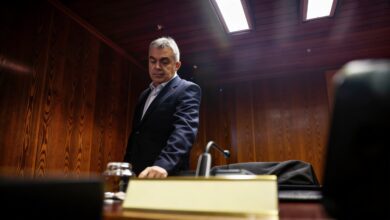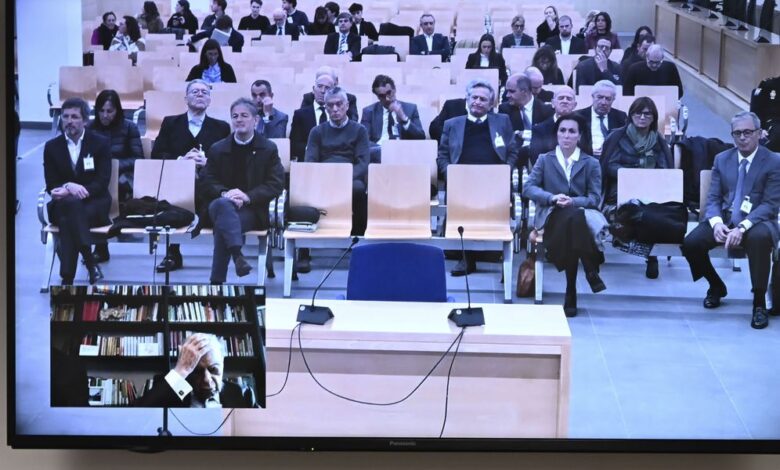
A high-profile trial involving the Pujol family continues at Spain’s National Court. At the latest hearing, judges agreed to hear testimony from five witnesses connected to the so-called ‘Operation Catalonia.’ However, presiding judge José Ricardo de Prada immediately set strict boundaries: questions must directly pertain to the case, and all five witnesses will testify on the same day. The judge stressed he would not allow the proceedings to become a debate over political intrigue or unrelated investigations.
Defense attorneys argue that the Pujol family has become the target of a politically motivated campaign against Catalonia’s pro-independence movement. They sought a judicial request to Andorra, where a parallel investigation is underway, and demanded that Spain’s government declassify documents related to the case. The court denied both motions, ruling them irrelevant and unnecessary for the matter at hand.
Who will testify
The list of witnesses includes former deputy police director Eugenio Pino, ex-commissioner José Manuel Villarejo, former head of the economic crimes unit Marcelino Martín Blas, as well as police officers Celestino Barroso and Bonifacio Díaz. The defense hopes their testimonies will cast doubt on the legality of evidence gathered, particularly a screenshot of the family’s bank records in Andorra.
According to the defense lawyers, these witnesses could confirm that Victoria Álvarez, the former partner of Jordi Pujol Ferrusola, was guided by the police when making statements about financial misconduct. The defense hopes this could lead to some evidence being declared inadmissible and result in the cancellation of the trial.
Court restrictions
Judge de Prada made it clear he would not allow the scope of the proceedings to be expanded. He refused to send further requests to Andorra, calling such actions unnecessary and ineffective. Instead, he suggested the parties submit existing testimonies from the Andorran case if they deemed it necessary. The court also declined to ask the Council of Ministers to declassify documents, emphasizing he did not intend to turn the trial into a “trial within a trial.”
The judge stated that only evidence directly relevant to the substance of the charges would be admitted. He warned that any attempts to politicize the proceedings would be curbed. As a result, only five witnesses will testify, and only on strictly specified matters.
Charges and Defendants
The case involves former Catalan president Jordi Pujol and all his children: Jordi, Josep, Marta, Pere, Mireia, and Oleguer Pujol Ferrusola. Also among the accused are Pujol’s former daughter-in-law Mercè Gironès and about ten entrepreneurs who, according to investigators, obtained lucrative contracts from Catalan authorities and transferred money to the companies of Pujol’s eldest son for fictitious services. They are charged with forming a criminal organization, money laundering, and tax offenses.
The court also rejected all motions to suspend the proceedings and to exclude certain tax authority documents from the case that were submitted after the investigation had ended. The judge explained that these materials would be reviewed separately for validity but saw no grounds to annul them at this stage.
Testimony of the secretary
At one of the hearings, Jordi Pujol Ferrusola’s former secretary and ex-wife of Mercè Gironès, Cristina de Francisco, testified. She stated that she was unaware of secret accounts in Andorra but confirmed that she arranged meetings, phone calls, trips, and prepared invoices at the direction of management.
De Francisco said that Pujol Ferrusola was a co-owner of a hotel in Mexico and had business interests in Argentina, where, through Inter Port Rosario, he invested in the port of Rosario. She denied knowledge of another firm—Bantridge Holdings—which, according to investigators, was used to transfer funds between companies and hide money offshore.
The judge continues to review all submitted materials without making premature conclusions about the admissibility of specific evidence. The proceedings are expected to be lengthy and complex, considering the number of defendants and the intricate schemes they are accused of.
Jordi Pujol is the former president of the Generalitat of Catalonia, a position he held from 1980 to 2003. His family was long considered one of the most influential in the region. After leaving politics, Pujol found himself at the center of a corruption scandal linked to hiding large sums in overseas accounts. The Pujol case became one of the most high-profile anti-corruption trials in Spain’s recent history.