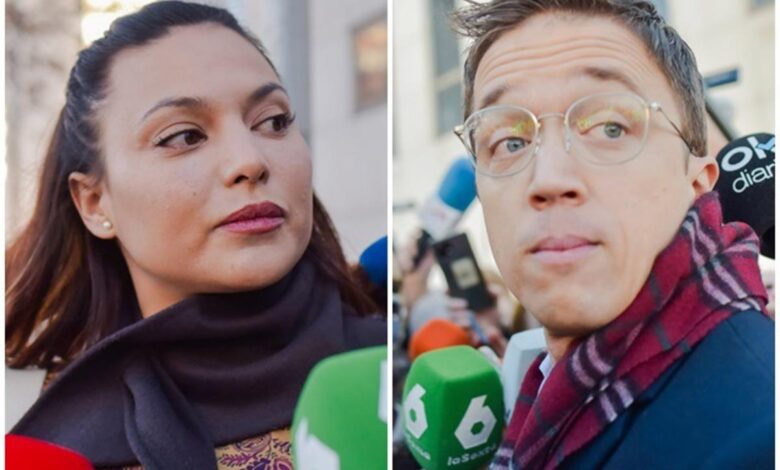
The court’s decision in the Íñigo Errejón case came as an unexpected turn for many Spaniards following high-profile trials involving politicians. The judge refused to close the case of alleged sexual assault, despite the prosecution’s ambiguous position and actress Elisa Mouiláa’s temporary withdrawal of her accusations. This decision may affect public perception of such cases and spark new debates about the transparency of judicial procedures in Spain.
The judicial proceedings are ongoing, and the former deputy is required to appear in court on February 17 to be officially notified of the start of the substantive hearings. The judge noted that the case contained signs of a crime that had not been fully refuted by either the defendant’s testimony or the evidence he provided. This approach by the court underscores that even if the victim’s stance changes, the process can continue if there remain grounds for the case to be heard.
Positions of the parties
Actress Elisa Mouiláa, despite temporarily withdrawing her accusation for personal and medical reasons, did not retract the substance of her statements. She later reaffirmed her intention to seek a court hearing. The prosecution, in turn, called for Errejón’s acquittal, considering the evidence insufficient. However, the judge decided not to halt the proceedings but to allow both sides to present their arguments during an open trial.
Errejón himself, who previously held high-ranking political positions, has filed an appeal demanding the case be dropped, but for now is forced to prepare for hearings. In response to the accusations, he has filed a countersuit against the actress, accusing her of defamation. The events in question took place in October 2021 at a private party hosted by acquaintances of Muilaá. The actress is demanding a three-year prison sentence for the former MP.
Legal nuances
It was expected that Errejón would receive official notice of the trial start last week, but the process was postponed pending clarification of the victim’s stance. After Muilaá confirmed her intention to pursue the accusation, the court set a new date. The court’s decision emphasizes that the withdrawal of the accusation was not total, but rather related to personal circumstances, and did not affect the substance of the case.
During the proceedings, the position of the prosecution attracted attention as it deemed the evidence insufficient for pressing charges. Nevertheless, the judge decided that the available materials were enough to proceed with hearings. In such cases, Spanish courts often find themselves having to balance the rights of the accused and the victim, as well as public opinion.
Context and parallels
In recent years, Spain has seen a rise in high-profile court cases involving politicians that spark widespread public resonance. For instance, Madrid recently held hearings on an alleged attempt to discredit anti-corruption bodies, where the judge called for special caution during interrogations, a topic examined in detail in the article about complex interrogations in cases against anti-corruption officials. Such proceedings highlight how difficult it can be to establish the truth under pressure and with conflicting testimonies.
Recalling other recent cases, it is worth noting that in Spain there have been several situations where victims changed their stance, yet courts continued the proceedings if they believed sufficient grounds for prosecution remained. These cases often spark public debate, and judges’ decisions influence future handling of similar accusations. Attention to detail and procedural transparency remain key demands the public places on the judicial system.