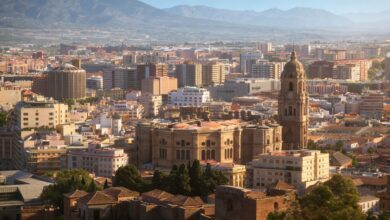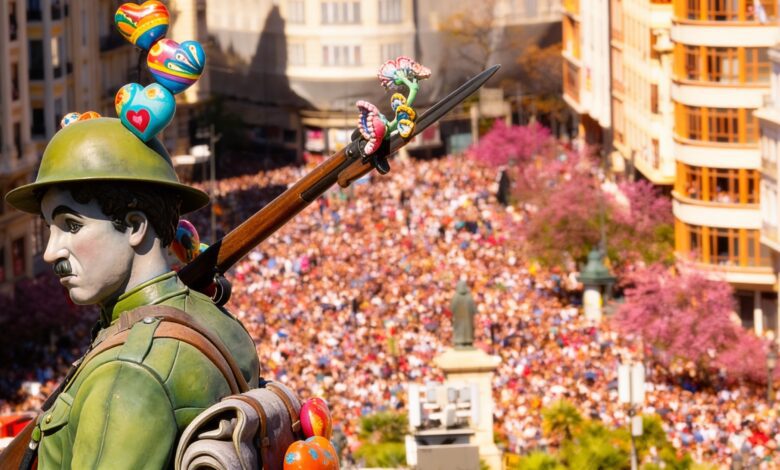
In recent years, the center of València has faced growing tension due to major changes in the organization of the Fallas festival. For local residents and shop owners, the consequences have become clear: historic streets are turning into crowded party zones, and access to traditional shops has become more difficult. This situation has raised concerns not only among business owners but also the wider public, as it affects the preservation of cultural heritage and the balance of interests between different groups.
Businesses under pressure
The Comercios Centro Valencia association has openly expressed dissatisfaction with how the historic center becomes an improvised venue for street parties and informal trade during Fallas. According to them, the current festival format not only disrupts shops’ operations but also harms the city’s image. Store owners note that makeshift market stalls with flashy signs and bulky structures obscure the facades of historic buildings and block access to shops specializing in local products and crafts.
Particular frustration is caused by the fact that many street vendors ignore trading regulations, occupying several sides of the street and blocking shop entrances. Business representatives have called on city authorities to review current rules and tighten enforcement to protect the interests of permanent entrepreneurs and preserve the unique character of the city center.
Residents’ voices
It’s not just business owners feeling the effects of these changes. Residents of central Valencia are also voicing frustration over the early installation of festival tents and street closures. They say such measures lead to traffic jams, changes in public transport routes, and restricted access to their homes. The issue has been especially pronounced this year, as preparations for Fallas began ten days before the main week of the celebration.
The federation of city residents’ associations has repeatedly raised the need for stricter regulations on the timing and organization of events. They insist that mass festivities and loud parties—authorized until four in the morning—should take into account the interests of all citizens. According to activists, city authorities must enforce established time limits and step up control over noise and safety.
Authorities’ and politicians’ response
Valencia mayor María José Catalá and her team acknowledge the problems and promise to adjust their approach to organizing the festival next year. In particular, moving the tent installations to later dates is under discussion, aiming to minimize inconvenience for residents and businesses. However, opposition representatives in the city council consider these measures insufficient. In their view, the city administration is failing to manage the situation and cannot strike a balance between tradition and daily urban life.
The future of the Fallas festival format is becoming increasingly relevant, especially on the tenth anniversary of its recognition as a UNESCO Intangible Cultural Heritage. As El Pais notes, a discussion about new regulations is inevitable, as large-scale events affect the interests of thousands and require a comprehensive approach.
Other parties to the conflict
Animal rights advocates have also joined the critics, demanding restrictions on the use of pyrotechnics during the festival. They insist on seeking alternatives to reduce harm to animals, people with hypersensitivity, and the environment. Overall, the situation around Fallas reflects a broader trend: more and more Spanish cities face the need to rethink traditional formats for mass events to take into account the interests of different groups.
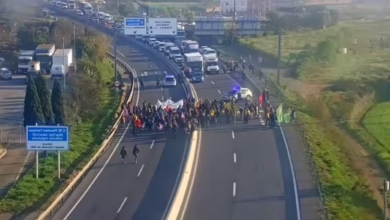
Similar tensions have arisen in other regions of the country. For example, in Catalonia, authorities recently had to take emergency measures due to a sharp rise in water levels and the threat of flooding, sparking debates over urban management priorities and the protection of residents’ interests. For more details on such situations, see our coverage of measures taken in Girona — details on the actions taken by Catalonian authorities during the emergency.
In recent years, Spain has increasingly debated the regulation of mass festivities and the protection of historic city centers. In Madrid and Barcelona, there have been instances where residents and businesses have opposed large-scale events that disrupt their daily routines. Authorities are compelled to seek compromises between preserving traditions and maintaining order and comfort for all city dwellers. According to RUSSPAIN.COM, this trend is expected to strengthen further as tourism grows and urban celebrations become larger.