In March 2026, Castilla y León once again finds itself in the spotlight due to regional elections that could reshape the political landscape of the autonomous community. After Vox left the coalition in the summer of 2024, the government was left vulnerable, and now the region’s future hinges on how votes are distributed among both established and emerging political forces. For residents, this is more than just another election — the stability of the administration and the potential formation of new alliances are at stake, which could influence decisions on the economy, social policy, and infrastructure development.
This time, ballot papers feature both new and familiar names. A total of 131 candidate lists from 26 parties have been registered, but only nine are represented in every province. This highlights strong competition and signals that the contest for the presidency of the autonomous community will be tight. According to russpain.com, the current president, Alfonso Fernández Mañueco, once again leads the Partido Popular ticket and hopes to remain in office despite lacking a majority. His experience working with various coalitions could prove decisive if compromise is again needed to form a government.
Candidates and their strategies
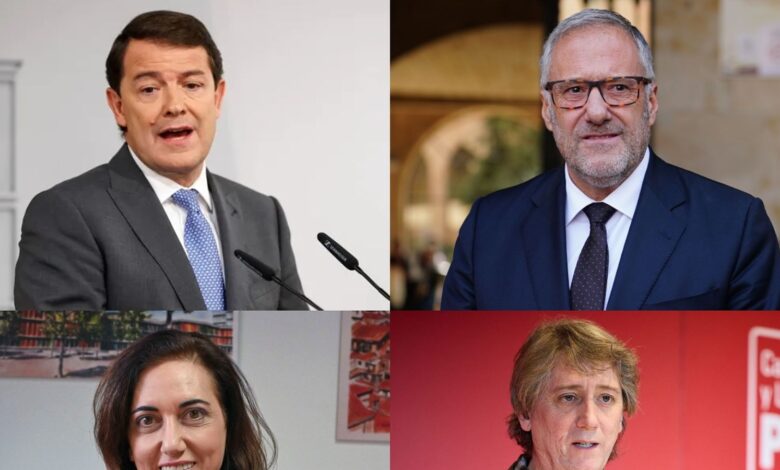
Partido Popular is betting on stability and continuity. Alfonso Fernández Mañueco, who succeeded Juan Vicente Herrera in 2019, has already twice formed a government through coalition agreements—first with Ciudadanos, then with Vox. However, after the coalition with Vox broke up in the summer of 2024, his position weakened, and he now faces the challenge of proving he can hold on to power even in a fragmented parliament. According to several polls, Partido Popular may once again become the most popular party, but an absolute majority appears out of reach, forcing it to look for new allies.
Partido Socialista heads into the election with a new leader. Carlos Martínez Mínguez, mayor of Soria since 2007, is leading the socialist slate at the regional level for the first time. His political trajectory has unfolded locally, where he has consistently secured majority support from voters. Now, he aims to project his image as an effective municipal leader across the entire autonomous community to challenge Partido Popular and shift the balance of power in parliament.
Changes in party line-ups
Vox has also refreshed its team: this time the party is represented by Carlos Pollán, who has chaired the regional parliament since 2022. His political career began relatively recently, but by 2022 he had already become a notable figure, heading the Vox ticket in León and winning a seat. After the coalition with Partido Popular, he took on a key role. Now, his task is to hold the party’s ground—in the last election, Vox secured 13 seats in parliament.
Among the new faces, Alicia Gallego from Unión del Pueblo Leonés (UPL) stands out—she is the only woman among the candidates for the regional leadership post. She has led the municipality of Santa María del Páramo since 2015 and achieved an absolute majority in the latest local elections. Her successes at the municipal level have bolstered support from voters looking for an alternative to traditional parties.
Established players and new challenges
Some parties have retained their leaders: José Ángel Ceña once again heads the Soria ¡Ya! list, and Pedro Pascual Muñoz remains the face of Por Ávila. Their participation adds intrigue, as in the previous parliament they already secured three and one seats respectively, enabling them to influence decision-making.
The results of the 2022 elections showed just how fragmented the parliament could be: Partido Popular won 31 seats, Partido Socialista took 28, Vox—13, UPL and Soria ¡Ya!—three each, and Por Ávila, Ciudadanos, and Podemos—one each. This balance forced parties to seek compromises and form unexpected alliances. This time, a similar scenario may unfold, putting the formation of a government once again in doubt.
In recent years, regional elections in Spain have increasingly become a stage for the emergence of new political forces and unexpected alliances. For example, in Galicia and Andalusia in 2024 and 2025, voters also faced situations where no single party could gain an absolute majority, and government formation was delayed for weeks. These processes have led to a rise in the influence of smaller parties and require leaders to be flexible in negotiations. As a result, the country’s political landscape is becoming increasingly complex, and decisions made at the regional level are having a growing impact on the national agenda.